
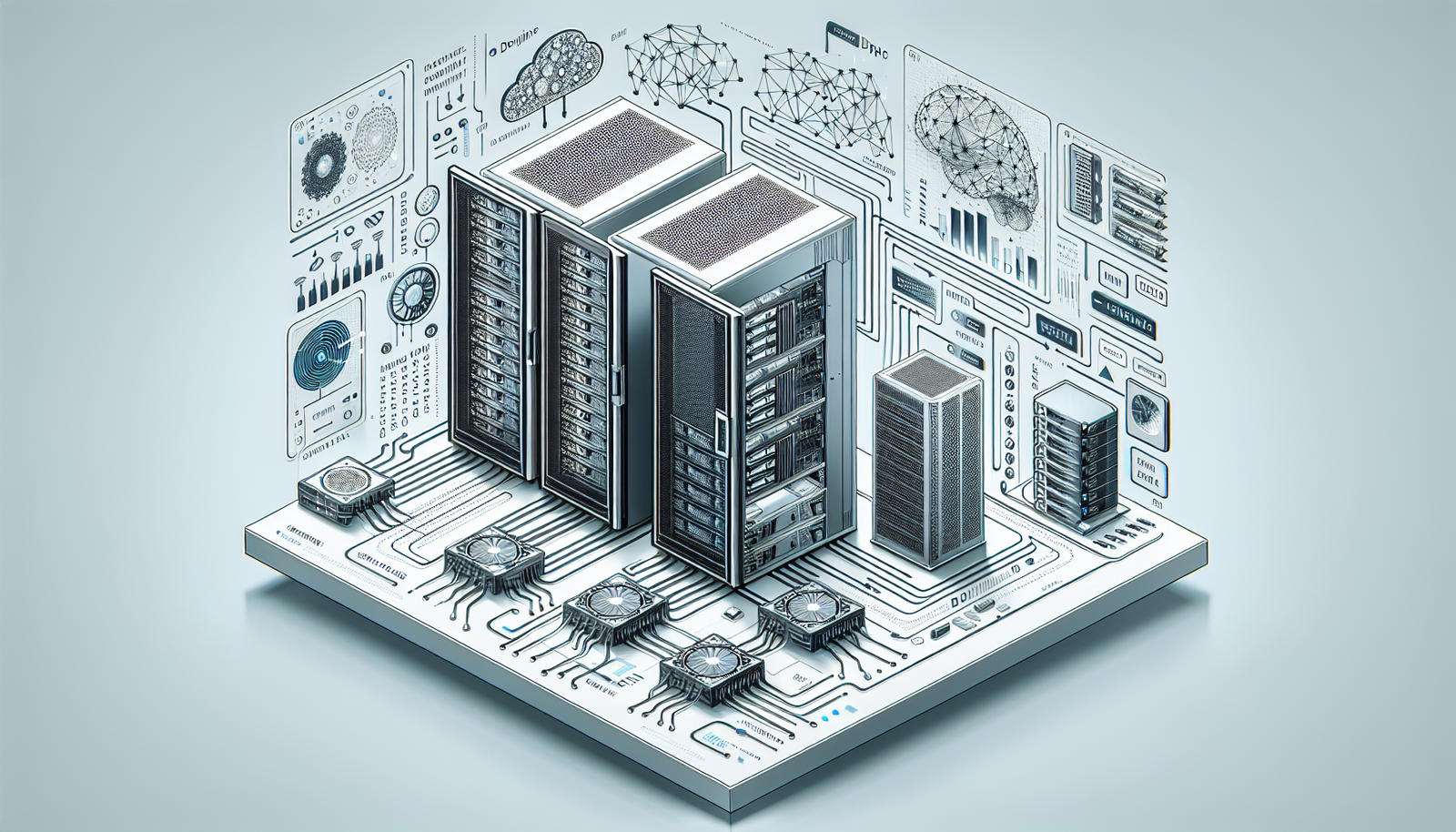
Understanding AI Data Center Infrastructure: Trends and Implications
“`html
AI data center infrastructure refers to specialized systems designed to support the unique requirements of artificial intelligence applications. Recently, Fluidstack, an AI data center startup, is reportedly in talks for a $1 billion funding round at an $18 billion valuation, following a significant $50 billion contract with Anthropic to build tailored data centers. In this post, we will explore the implications of this funding, the technical architecture behind AI-centric data centers, and what developers need to know moving forward.
What Is AI Data Center Infrastructure?
AI data center infrastructure refers to a specialized computing architecture optimized for the demands of artificial intelligence workloads. These infrastructures differ significantly from traditional data centers, as they are designed to maximize performance for tasks like machine learning, deep learning, and data processing. Recent developments, such as Fluidstack’s partnership with Anthropic, highlight the growing importance of this sector.
Why This Matters Now
The rapid advancement of AI technologies has created unprecedented demand for robust data processing capabilities. Companies like Anthropic require more than just traditional cloud services; they need dedicated infrastructure that can handle massive data flows and complex computations. The $50 billion deal between Fluidstack and Anthropic is a testament to this need, significantly positioning Fluidstack as a key player in the AI data center landscape. As AI continues to evolve, developers must understand how these infrastructures can influence application performance and scalability.
Technical Deep Dive
AI data centers like those developed by Fluidstack incorporate several key technologies and methodologies to optimize for AI workloads:
- Custom Hardware: Fluidstack designs hardware tailored specifically for high-performance computing tasks, using GPUs and TPUs that are optimized for parallel processing.
- Network Architecture: Advanced networking solutions ensure low-latency communication between nodes, which is critical for training large models. Technologies like InfiniBand are often utilized.
- Scalability: These data centers are built with a modular architecture that allows for seamless scaling up or down based on demand.
- Data Management: Efficient data pipelines and storage solutions are implemented to handle vast amounts of training data, utilizing tools like Apache Kafka and distributed file systems.
# Example of setting up a distributed file system using Hadoop
# This is a simplified setup for managing large datasets.

hadoop jar hadoop-streaming.jar \
    -input /path/to/input \
    -output /path/to/output \
    -mapper mapper.py \
    -reducer reducer.py \
    -file mapper.py \
    -file reducer.py
Fluidstack’s data centers are also designed to support a hybrid cloud strategy, allowing AI companies to leverage both on-premise and cloud resources efficiently. This flexibility is crucial for companies like Anthropic that need to balance control and scalability.
Real-World Applications
1. AI Research
Fluidstack’s infrastructure is particularly beneficial for AI research institutions that require high-performance computing capabilities to train complex models.
2. Financial Services
Companies in finance utilize AI for risk assessment and fraud detection. Fluidstack’s tailored solutions can provide the computational power necessary for real-time data analysis.
3. Autonomous Vehicles
AI systems for autonomous vehicles require massive datasets for training. Fluidstack’s infrastructure can handle the vast amounts of data generated by these systems.
4. Healthcare Analytics
Healthcare organizations can leverage AI for predictive analytics. Fluidstack offers the necessary infrastructure to process and analyze large medical datasets efficiently.
What This Means for Developers
As Fluidstack and similar companies continue to innovate, developers need to adapt their skills to work effectively with AI data center infrastructures. Understanding the architecture and tools used in these environments will be crucial. Developers should focus on:
- Learning about GPU programming and parallel computing.
- Familiarizing themselves with data pipeline technologies.
- Understanding the principles of distributed computing.
💡 Pro Insight: The emergence of AI-focused data centers signifies a shift in how we approach cloud computing. As the demand for AI capabilities grows, we can expect more specialized infrastructure that prioritizes performance and efficiency. This trend will likely lead to innovations in hardware and software designed specifically for AI, making it essential for developers to stay ahead of the curve.
Future of AI Data Center Infrastructure (2025–2030)
In the coming years, AI data center infrastructure is expected to evolve significantly. As AI applications become increasingly complex, the demand for more powerful and efficient data centers will rise. Companies will likely invest heavily in:
- Edge Computing: More AI workloads will be processed closer to data sources to reduce latency.
- Energy Efficiency: As environmental concerns grow, data centers will need to adopt more sustainable practices.
- Quantum Computing: The integration of quantum computing into AI data centers could revolutionize capabilities, providing unprecedented processing power.
Fluidstack’s advancements in this area may set industry standards, prompting other companies to adopt similar strategies.
Challenges & Limitations
1. High Initial Costs
Building specialized data centers like those from Fluidstack requires significant capital investment, which may deter smaller companies.
2. Scalability Issues
While modular architectures allow for scaling, managing a large-scale AI data center can introduce complexities that require specialized expertise.
3. Data Security Concerns
As AI data centers handle sensitive information, ensuring robust security measures is critical. Any breach can have severe consequences.
4. Market Competition
The competition among AI data center providers is intensifying, with larger players like AWS and Google Cloud also investing heavily in AI infrastructure.
Key Takeaways
- AI data center infrastructure is essential for meeting the demands of modern AI applications.
- Fluidstack’s recent funding and partnerships signify the growth potential within this sector.
- Understanding the technical architecture of AI data centers is crucial for developers.
- Future advancements will focus on energy efficiency, edge computing, and potentially quantum computing.
- Challenges like initial costs and scalability must be addressed for widespread adoption.
Frequently Asked Questions
What are AI data centers?
AI data centers are specialized facilities designed to meet the unique computational needs of artificial intelligence applications, focusing on aspects like high-performance hardware and low-latency networking.
How do AI data centers differ from traditional data centers?
Unlike traditional data centers, which serve a variety of computing needs, AI data centers are specifically optimized for handling large datasets and complex computations required by AI applications.
What industries benefit from AI data centers?
Industries such as finance, healthcare, autonomous vehicles, and AI research significantly benefit from AI data centers due to their need for high-performance computing capabilities.
For more insights on AI and cloud computing, follow KnowLatest for the latest updates and analysis.
“`


