
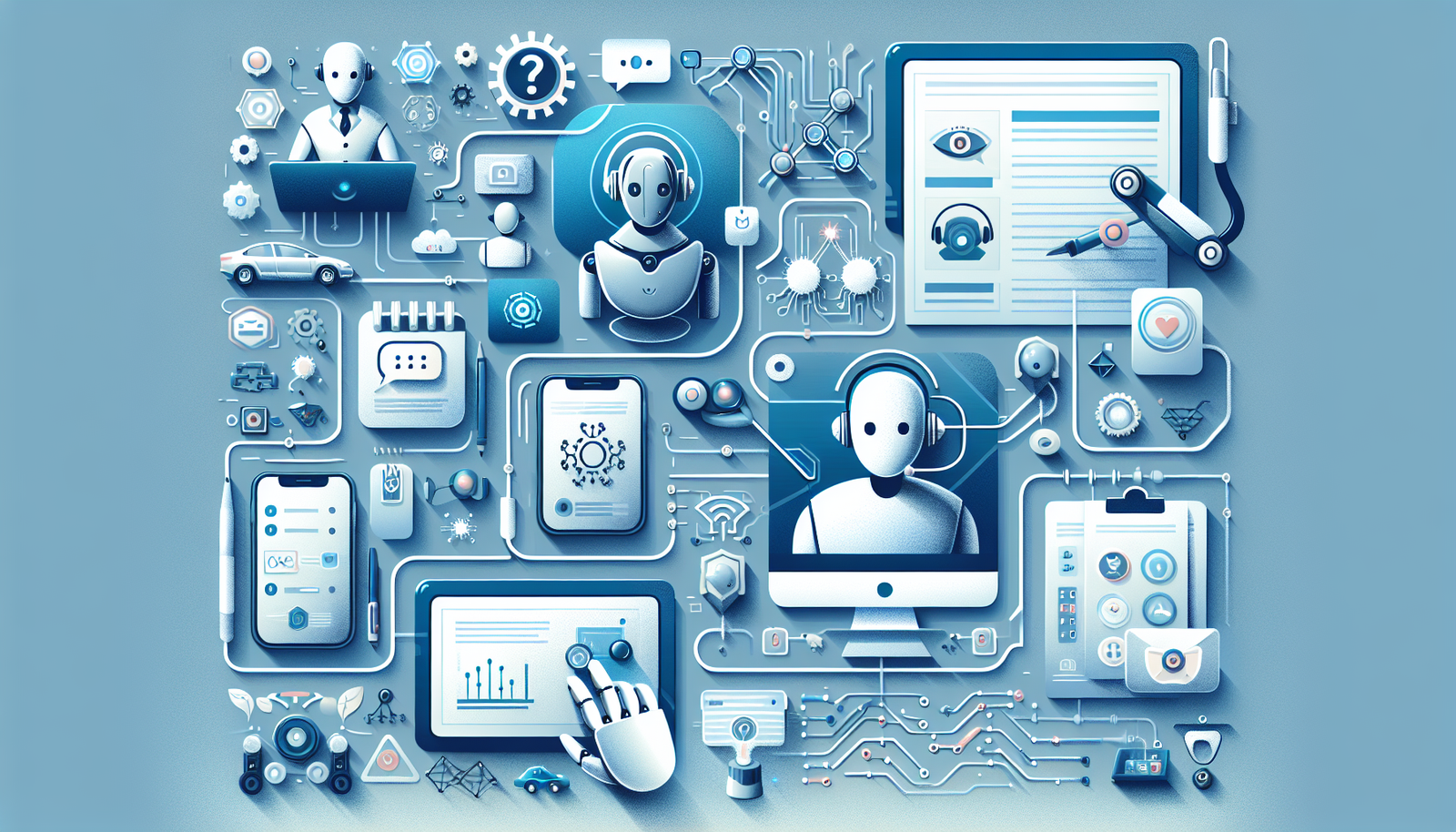
AI Customer Service Automation: Trends and Insights
“`html
AI customer service automation refers to the use of artificial intelligence technologies to streamline customer service processes. Recently, Bret Taylor’s startup Sierra has acquired the YC-backed startup Fragment, which focuses on integrating AI into customer service workflows. This acquisition highlights the increasing importance of AI in enhancing customer experiences. In this post, you’ll learn how AI customer service automation is evolving and what it means for developers.
What Is AI Customer Service Automation?
AI customer service automation utilizes machine learning, natural language processing, and other AI technologies to handle customer interactions without human intervention. This technology allows businesses to improve efficiency, reduce costs, and enhance customer satisfaction by providing instant responses to inquiries. The recent acquisition of Fragment by Sierra underscores the growing trend towards integrating AI into customer service workflows, making it essential for developers to understand this evolving landscape.
Why This Matters Now
The increasing demand for personalized customer experiences is driving the adoption of AI customer service automation. As companies strive to improve their customer service efficiency, they turn to AI solutions that can operate 24/7. The acquisition of Fragment, which specializes in AI integrations, by Sierra exemplifies this trend. Developers should care about this now because AI is not only transforming customer service but also creating new opportunities for innovation in workflow automation.
Technical Deep Dive
To effectively implement AI customer service automation, developers must understand the technical components that power these systems. Key technologies include:
- Natural Language Processing (NLP): Enables machines to understand and respond to human language.
- Machine Learning (ML): Allows systems to learn from data and improve over time.
- Chatbots: Automated agents that simulate human conversation.
Here’s a basic implementation example using Python with the transformers library to create a simple chatbot:
from transformers import pipeline

# Load the conversational pipeline
chatbot = pipeline("conversational")

# Sample conversation
user_input = "What are your business hours?"
response = chatbot(user_input)

print(response)  # Outputs the chatbot's response
Additionally, integrating AI into existing customer service platforms involves several steps:
- Identify customer interaction points.
- Choose appropriate AI technologies (NLP, ML, etc.).
- Train the AI model on historical customer data.
- Integrate the AI solution into the existing customer service framework.
- Monitor and refine the model based on user feedback.
It’s also essential to consider the architecture of AI systems, focusing on scalability and security. Implementing microservices for AI components can enhance performance and maintenance.
Real-World Applications
1. E-commerce
AI customer service automation is widely used in e-commerce platforms to handle inquiries regarding product availability, order status, and returns. Companies like Amazon utilize chatbots that can provide immediate assistance, significantly reducing customer wait times.
2. Banking and Finance
In the banking sector, AI solutions address customer queries about transactions, account balances, and loan applications. Institutions like Bank of America leverage AI assistants, such as Erica, to provide personalized financial advice.
3. Telecommunications
Telecom companies employ AI to manage customer service inquiries related to billing, technical issues, and service upgrades. By automating these processes, businesses can focus on enhancing customer relationships.
4. Travel and Hospitality
AI customer service agents assist travelers with booking inquiries, itinerary changes, and travel advisories. Many airlines and hotels use chatbots to offer round-the-clock service, improving customer satisfaction.
What This Means for Developers
Developers need to adapt their skills to include AI technologies, particularly in machine learning and natural language processing. Key areas of focus should include:
- Mastering AI frameworks like TensorFlow and PyTorch for model building.
- Understanding natural language processing libraries such as NLTK and SpaCy.
- Implementing APIs for AI integrations into existing systems.
- Focusing on data privacy and security when handling customer information.
💡 Pro Insight
💡 Pro Insight: The integration of AI in customer service is not just about efficiency; it’s about creating a personalized customer journey. As developers, we must focus on the ethical implications and ensure that AI systems enhance human interaction rather than replace it.
Future of AI Customer Service Automation (2025–2030)
In the next few years, AI customer service automation is expected to evolve significantly. One notable trend is the increased emphasis on emotional intelligence in AI systems. Future AI agents will likely incorporate sentiment analysis to better understand customer emotions and adjust their responses accordingly.
Moreover, as businesses seek to enhance their brand loyalty, we can anticipate a rise in AI agents that provide proactive customer engagement. Rather than waiting for customers to initiate contact, these systems will predict needs based on previous interactions, leading to a more intuitive service experience.
Challenges & Limitations
1. Data Privacy Concerns
As AI systems process vast amounts of personal data, ensuring compliance with regulations like GDPR becomes critical. Developers must implement robust data protection measures to safeguard user information.
2. Technology Limitations
While AI has advanced, it still struggles with understanding complex queries and context. Developers should be aware of these limitations when deploying AI systems and provide fallback options for users.
3. Integration Complexity
Integrating AI into existing customer service frameworks can be challenging. Developers must ensure that AI solutions work seamlessly with legacy systems to avoid disruptions.
4. Customer Acceptance
Some customers may prefer human interaction over AI, resulting in resistance to automated systems. Developers should consider user preferences and design systems that allow for easy transitions between AI and human agents.
Key Takeaways
- AI customer service automation enhances efficiency and customer satisfaction.
- Integrating AI technologies like NLP and ML is crucial for modern customer service.
- Real-world applications span multiple industries, including e-commerce and finance.
- Developers should focus on mastering AI frameworks and ensuring data privacy.
- Future AI agents will likely incorporate emotional intelligence for improved interactions.
Frequently Asked Questions
What are the benefits of AI customer service automation?
AI customer service automation improves efficiency, reduces operational costs, and enhances customer satisfaction by providing immediate responses to inquiries.
How does AI customer service work?
AI customer service operates using technologies like natural language processing and machine learning to understand customer queries and provide relevant responses, often through chatbots or virtual assistants.
What challenges do developers face with AI customer service automation?
Developers face challenges such as data privacy concerns, technology limitations, integration complexity, and customer acceptance of automated systems.
Stay updated on the latest trends and insights in AI and developer technologies by following KnowLatest.


