
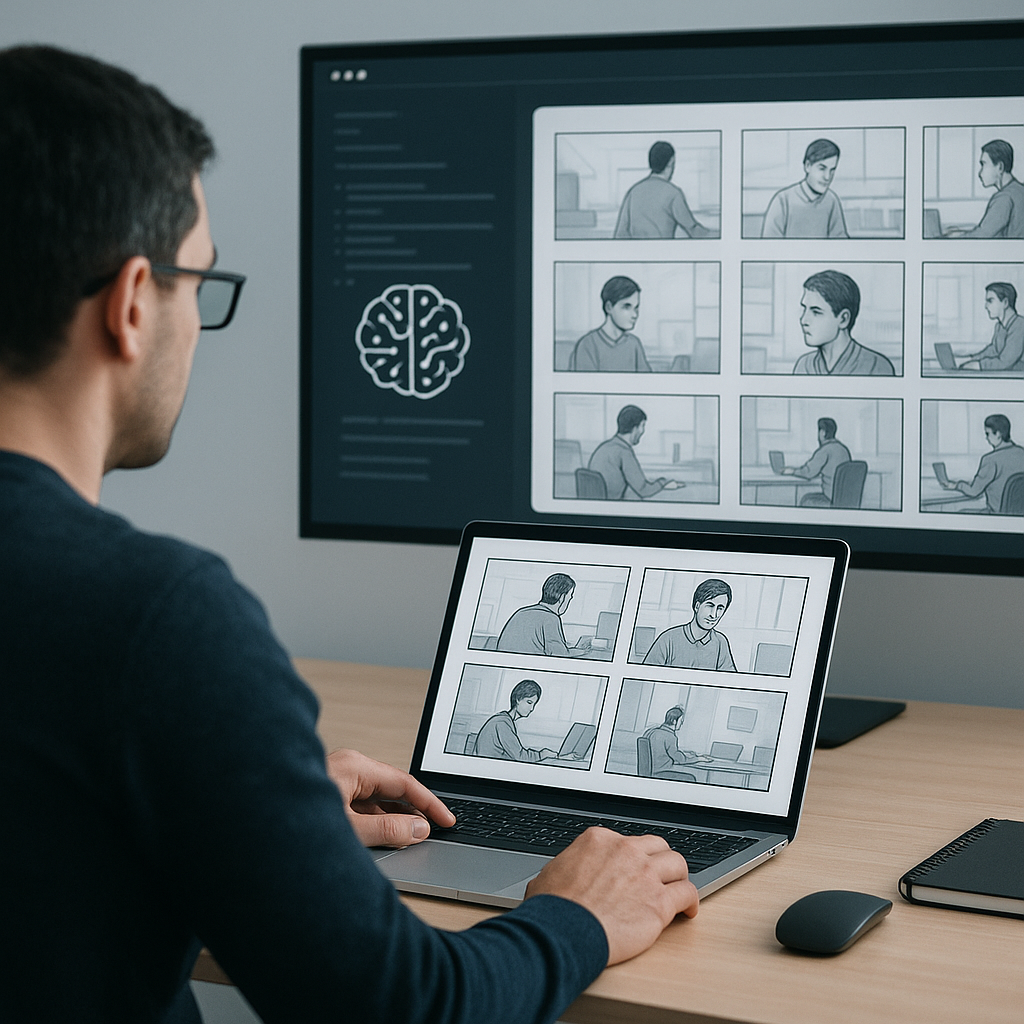
Generative AI Storyboarding Insights for Developers
Generative AI storyboarding is a technique that leverages artificial intelligence to create visual representations of scenes and sequences in film and media. Recently, renowned director Martin Scorsese has embraced this technology through his involvement with Black Forest Labs, a German AI image-generation startup. This article will explore how generative AI is transforming storyboarding and what developers need to know about its implications in the creative industry.
What Is Generative AI Storyboarding?
Generative AI storyboarding refers to the use of artificial intelligence to automate the creation of visual storyboards for films, animations, and other media projects. This approach allows filmmakers to visualize scenes quickly and communicate their vision more effectively. Scorsese’s recent collaboration with Black Forest Labs highlights the increasing acceptance of AI technologies in Hollywood, particularly in creative processes.
Why This Matters Now
The integration of AI in creative processes is gaining traction due to its potential to enhance productivity and streamline workflows. As Martin Scorsese noted, AI helps him present his ideas to cinematographers and designers more efficiently. With the rise of generative AI tools, industries are beginning to adapt, reflecting a shift in traditional practices. Developers should recognize that this evolution signifies a broader trend towards automation in creative sectors, prompting the need for understanding AI capabilities and ethical implications.
Technical Deep Dive
Generative AI storyboarding utilizes advanced machine learning models to create images based on textual descriptions or existing media. Here’s a detailed look at how these systems work:
- Model Architecture: Many generative models are based on Generative Adversarial Networks (GANs) or diffusion models, capable of producing high-quality images.
- Training Data: These models require large datasets, often comprising thousands of images and relevant annotations to learn effectively.
- Implementation: Developers can use libraries such as
Hugging Face TransformersorStable Diffusionto integrate generative AI into their projects.
Here’s a simplified example of how to use a pre-trained model for image generation using Python:
from transformers import StableDiffusionPipeline

# Load the pre-trained model
pipeline = StableDiffusionPipeline.from_pretrained("CompVis/stable-diffusion-v1-4")

# Generate an image from a prompt
prompt = "A beautiful sunset over a mountain range"
image = pipeline(prompt).images[0]

# Save the generated image
image.save("sunset.png")
This code snippet showcases a basic implementation of a generative model that can be adapted for storyboarding purposes. By inputting different prompts, filmmakers can visualize various scenes that align with their script.
Real-World Applications
1. Film and Television Production
Filmmakers can use generative AI to create storyboards, allowing for rapid iteration on visual concepts, thereby saving time in pre-production.
2. Game Development
Game developers can generate environments and character designs, enhancing the creative process and providing inspiration for artists.
3. Advertising
Marketing teams can develop visual campaigns quickly, testing multiple concepts before settling on a final design.
4. Animation
Animators can use AI-generated storyboards to outline scenes, which can then be elaborated upon with detailed animations.
What This Means for Developers
Developers should focus on acquiring skills in AI model integration and understanding the ethical implications of using AI in creative fields. Familiarity with libraries like TensorFlow, PyTorch, and Hugging Face can empower developers to build and customize generative models for specific applications, enhancing their employability in an evolving job market.
💡 Pro Insight: As industries like film and gaming continue to adopt AI technologies for creative tasks, developers who can navigate this intersection will be invaluable. The ability to adapt and innovate will define success in future creative tech roles.
Future of Generative AI Storyboarding (2025–2030)
As generative AI technologies advance, we can expect significant improvements in the quality and speed of image generation. By 2030, it’s likely that AI will be capable of producing fully interactive and adaptable storyboards that respond to changes in scripts or artistic direction. This will not only enhance the efficiency of the creative process but also open new avenues for storytelling, where AI-generated visuals can evolve in real-time based on audience feedback.
Challenges & Limitations
1. Quality Control
While generative AI can produce impressive visuals, ensuring the quality and relevance of the output remains a challenge. Developers must implement robust validation mechanisms to ensure generated content aligns with artistic visions.
2. Ethical Considerations
The use of AI in creative fields raises ethical questions about authorship and originality. Questions around intellectual property rights need to be addressed as AI-generated content becomes more prevalent.
3. Dependence on Training Data
Generative models rely heavily on the quality and diversity of their training data. Limited datasets can lead to biased or low-quality outputs, which developers must be cautious of.
4. Integration with Existing Workflows
Integrating AI tools into traditional creative workflows can be complex. Developers will need to work closely with creative teams to ensure that AI complements artistic processes rather than disrupts them.
Key Takeaways
- Generative AI storyboarding is revolutionizing the filmmaking and creative industries.
- Martin Scorsese’s partnership with Black Forest Labs showcases a shift in Hollywood’s stance on AI.
- Developers should focus on understanding AI integration and ethical implications.
- The future may see fully interactive and adaptable AI-generated storyboards.
- Quality control and ethical considerations are significant challenges to address.
Frequently Asked Questions
What is generative AI?
Generative AI refers to algorithms that can generate new content, such as images, text, or audio, based on existing data patterns. It is widely used in creative industries for tasks like storyboarding, design, and content creation.
How is AI used in film production?
AI is employed in film production for various tasks including script analysis, storyboarding, and even video editing, helping filmmakers visualize and iterate their ideas more efficiently.
What are the ethical implications of AI in creative fields?
The ethical implications include questions of authorship, originality, and the potential for biases in AI-generated content. It is crucial to establish guidelines to navigate these challenges responsibly.
For more insights on AI and developer news, follow KnowLatest.


