
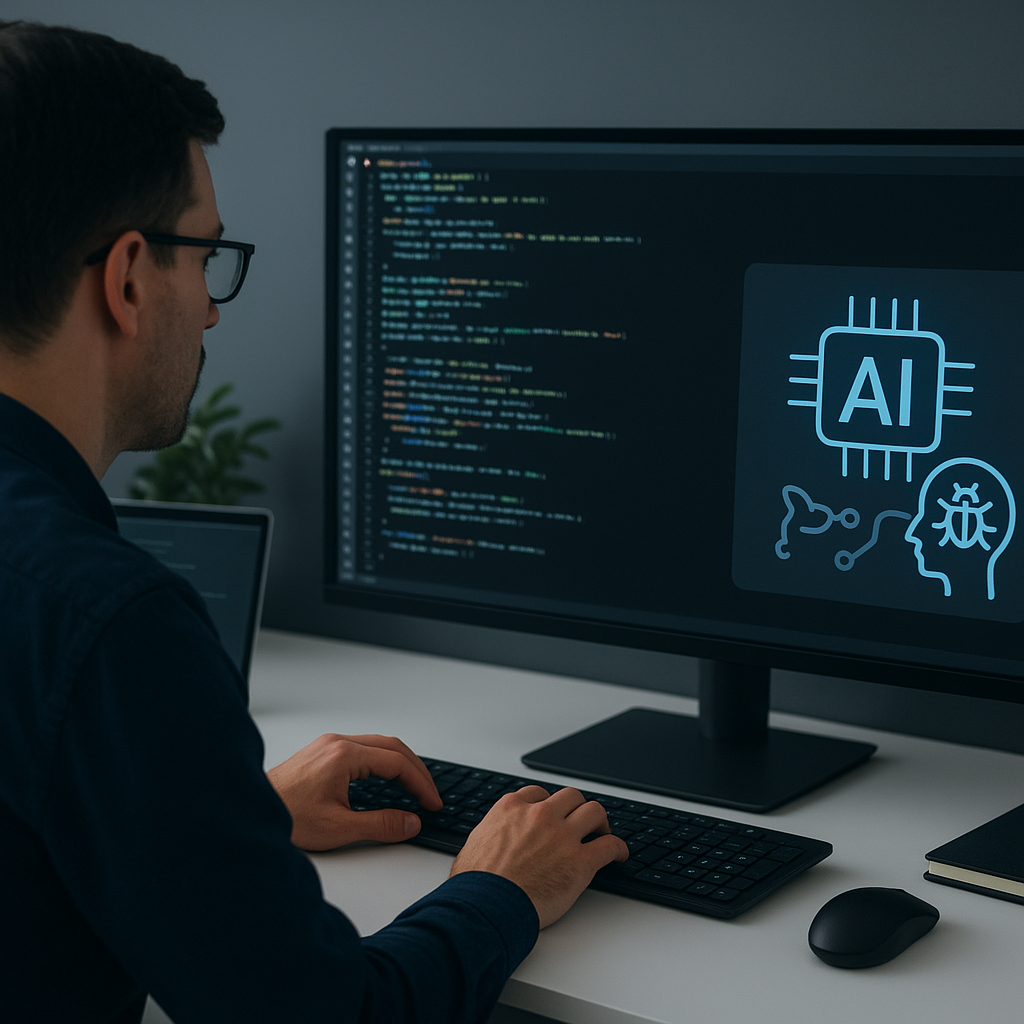
AI in Site Reliability Engineering: The Future of Bug Detection
AI-powered bug detection tools are becoming essential in software development. DeductiveAI, a startup focused on automating bug resolution, is set to be acquired by Elastic for up to $85 million, highlighting the growing importance of AI in software reliability. This article will explain the significance of AI in site reliability engineering (SRE) and how developers can leverage these advancements.
What Is AI in Site Reliability Engineering?
AI in Site Reliability Engineering (SRE) refers to the application of artificial intelligence technologies to automate and enhance the processes involved in maintaining software systems. With the increasing complexity of applications and the prevalence of AI-generated code, AI-driven SRE tools help in identifying and resolving bugs more efficiently. This emerging field is crucial as organizations look to improve their software reliability while reducing the time spent on manual debugging tasks.
Why This Matters Now
The recent acquisition of DeductiveAI by Elastic underscores a significant trend: established companies are increasingly investing in AI-native startups to augment their existing product offerings with intelligent automation capabilities. This acquisition is particularly relevant given the massive influx of AI-written code, making traditional debugging methods insufficient. Developers need to embrace these AI tools to keep pace with evolving software demands and improve operational efficiency.
- AI Automation: Reducing manual intervention in bug resolution.
- Increased Efficiency: Allowing SRE teams to focus on product development rather than constant firefighting.
- Integration of AI Tools: Enhancing observability platforms with real-time performance monitoring capabilities.
Technical Deep Dive
To understand how AI enhances SRE processes, we must explore the underlying technologies and methodologies. AI in SRE primarily leverages machine learning algorithms to analyze system performance metrics and identify anomalies indicative of bugs. Here’s a breakdown of how this technology works:
- Data Collection: Gathering logs, metrics, and traces from various sources.
- Data Preprocessing: Normalizing and transforming raw data into usable formats.
- Model Training: Using historical data to train machine learning models capable of detecting anomalies.
- Anomaly Detection: Implementing real-time monitoring to flag unusual patterns that could indicate underlying issues.
- Automated Resolution: Employing AI tools to suggest or implement fixes automatically.
Below is an example of a simple AI model using Python and the scikit-learn library for anomaly detection:
import numpy as np
from sklearn.ensemble import IsolationForest

# Sample data representing system metrics
data = np.array([[1, 2], [1, 1], [2, 1], [10, 10], [10, 11]])

# Create the model
model = IsolationForest(contamination=0.2)

# Fit the model
model.fit(data)

# Predict anomalies
predictions = model.predict(data)

print(predictions)  # -1 indicates an anomaly
This simple example can be scaled to incorporate more sophisticated features, including integrations with real-time monitoring systems to catch and resolve bugs as they arise.
Real-World Applications
1. Cloud Services
Cloud service providers can utilize AI in SRE to monitor applications and automatically address performance issues, ensuring high availability and reliability.
2. E-Commerce Platforms
AI-driven tools can help e-commerce companies proactively identify and resolve issues that could affect user experience, such as slow-loading pages or transaction failures.
3. Financial Services
In the financial industry, real-time monitoring powered by AI can detect fraudulent activities and system anomalies, ensuring compliance and security.
What This Means for Developers
Developers need to adapt to the increasing reliance on AI tools by enhancing their skills in machine learning and data analysis. Understanding how to integrate these tools into existing workflows will be critical. Developers should focus on:
- Learning machine learning frameworks such as TensorFlow or PyTorch.
- Familiarizing themselves with monitoring tools like Prometheus and Grafana.
- Understanding data preprocessing techniques to improve model accuracy.
💡 Pro Insight: As AI continues to evolve, the ability to leverage machine learning for automated bug resolution will become a competitive advantage for software teams, enabling them to focus on innovation rather than maintenance.
Future of AI in SRE (2025–2030)
Looking ahead, the integration of AI into SRE practices is expected to deepen. By 2030, we might see AI systems capable of not just identifying but also predicting potential failures based on usage patterns and environmental changes. Moreover, as technology evolves, we can expect:
- Advanced natural language processing (NLP) capabilities that will allow engineers to interact with monitoring systems using conversational queries.
- Greater emphasis on security, with AI tools designed to identify vulnerabilities in real-time.
- Wider adoption of AI-driven continuous integration/continuous deployment (CI/CD) pipelines that automate not just testing but also deployment and rollback processes.
Challenges & Limitations
Data Privacy Concerns
As AI tools require access to extensive data sets, maintaining user privacy and compliance with regulations like GDPR will be challenging.
Model Accuracy
AI models can sometimes produce false positives, leading to unnecessary alerts or incorrect resolutions, which can undermine trust in automated systems.
Integration Complexity
Integrating AI tools with existing systems can be complex and resource-intensive, requiring significant changes to current workflows.
Key Takeaways
- AI is transforming site reliability engineering by automating bug detection and resolution.
- The acquisition of DeductiveAI by Elastic indicates a growing market for AI-driven SRE tools.
- Developers should enhance their skills in machine learning and data analysis to stay relevant.
- AI tools can improve operational efficiency and reduce the time spent on manual debugging tasks.
- Future advancements may include predictive capabilities and enhanced security measures.
Frequently Asked Questions
What is AI in site reliability engineering?
AI in site reliability engineering refers to the use of artificial intelligence to automate processes related to monitoring and maintaining software systems, thereby improving reliability and efficiency.
How does AI improve bug detection?
AI improves bug detection by analyzing large sets of performance data to identify anomalies, allowing for quicker resolution of issues compared to traditional manual methods.
What skills should developers focus on for AI in SRE?
Developers should focus on learning machine learning frameworks, data preprocessing techniques, and familiarizing themselves with monitoring and observability tools.
To stay updated on the latest in AI and developer tools, follow KnowLatest for more insightful articles.


