
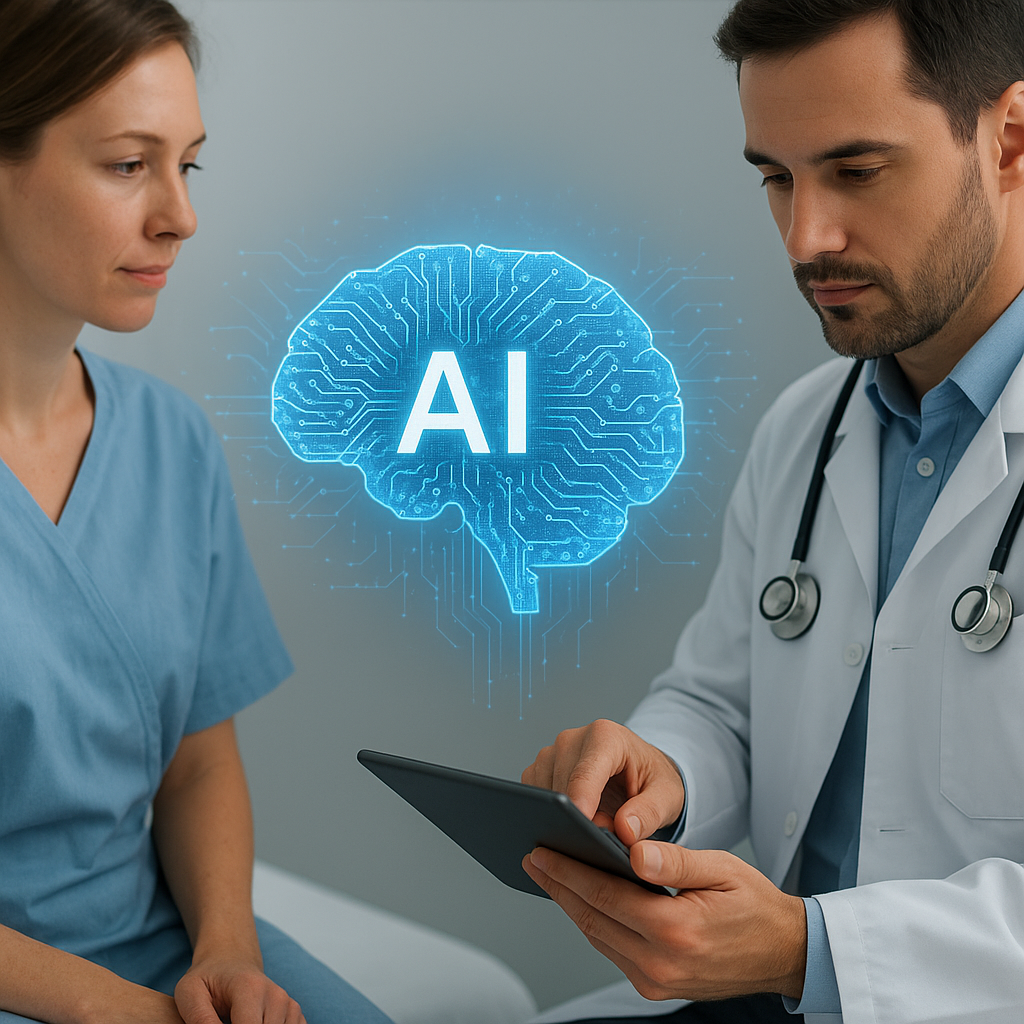
AI in Healthcare: Transforming Patient Treatment with Data
AI-driven healthcare solutions are revolutionizing patient treatment and management. Connor Christou’s recent experience with cancer illustrates how advanced AI can enhance personal health monitoring and treatment strategies. In this post, we’ll explore how developers can leverage AI tools to optimize health data management and patient outcomes.
What Is AI in Healthcare?
AI in healthcare refers to the use of artificial intelligence technologies to analyze complex medical data, improve patient care, and enhance treatment outcomes. This concept is increasingly significant as healthcare providers seek more efficient ways to manage vast amounts of patient data and tailor treatments to individual needs. Connor Christou’s experience with AI-driven health management exemplifies this trend, showcasing how data integration can lead to better decision-making in critical health situations.
Why This Matters Now
The integration of AI in healthcare is timely due to rising healthcare costs, an increasing volume of patient data, and a growing emphasis on personalized medicine. As seen in Connor Christou’s journey, the ability to leverage AI tools allows individuals to take charge of their health actively. AI can provide insights that traditional healthcare systems may overlook, especially in complex cases like cancer treatment, where precise data analysis is crucial. This shift is essential for developers interested in creating impactful health applications that can empower patients and healthcare providers alike.
Technical Deep Dive
Implementing AI for personalized health monitoring involves several key components and methodologies. Here’s an overview of the technical aspects that developers should consider:
- Data Collection: Integrating various data sources such as blood results, scan data, and wearable outputs.
- Data Processing: Utilizing AI algorithms to analyze collected data and generate actionable insights.
- Machine Learning Models: Developing models that predict health outcomes based on historical data.
- Visualization Tools: Creating dashboards to present data insights in an easily digestible format for users.
For instance, using Python and libraries like pandas and scikit-learn, developers can create a data pipeline to manage and process health data. Below is an example of how to preprocess data for analysis:
import pandas as pd
from sklearn.model_selection import train_test_split

# Load health data
data = pd.read_csv('health_data.csv')

# Preprocess data
data.fillna(method='ffill', inplace=True)  # Fill missing values
X = data.drop('target', axis=1)  # Features
y = data['target']  # Target variable

# Split data into training and testing sets
X_train, X_test, y_train, y_test = train_test_split(X, y, test_size=0.2, random_state=42)
By employing machine learning, developers can enhance predictive analytics in healthcare, enabling more informed decisions in treatment plans.
Real-World Applications
1. Personalized Cancer Treatment
AI can analyze patient-specific data, leading to tailored chemotherapy regimens like those chosen by Christou. By comparing treatment options based on detailed data analysis, patients can select the most effective therapies.
2. Fitness and Health Monitoring
Using wearables such as Whoop and Oura rings, developers can create applications that track and analyze health metrics in real-time, providing users with insights into their health status and helping them adjust their lifestyles accordingly.
3. Chronic Disease Management
AI tools can assist in managing chronic diseases by monitoring patient data continuously, predicting potential complications, and alerting healthcare providers for timely interventions.
4. Telemedicine Integration
AI can enhance telemedicine platforms by providing diagnostic support based on patient data submitted during virtual consultations, enabling doctors to make better-informed decisions remotely.
What This Means for Developers
For developers, this integration of AI in healthcare presents numerous opportunities:
- **Skill Development:** Learning about machine learning frameworks and data analysis tools is essential to build effective health applications.
- **Interdisciplinary Collaboration:** Working alongside healthcare professionals to understand their needs and how technology can meet them.
- **Focus on Data Security:** Ensuring that patient data is handled responsibly and securely in compliance with regulations like HIPAA.
💡 Pro Insight
💡 Pro Insight: As the integration of AI in healthcare continues to evolve, developers must prioritize patient-centric designs that enhance user engagement and trust. The future of healthcare will rely heavily on accurate data analysis and the ability to present insights that empower patients to make informed decisions about their health.
Future of AI in Healthcare (2025–2030)
Looking ahead, the role of AI in healthcare is expected to expand significantly. By 2030, AI algorithms will likely become integral in diagnostic processes, potentially reducing the time required for accurate diagnosis from weeks to mere hours. Moreover, as wearable technology becomes more sophisticated, expect AI to integrate seamlessly with these devices to provide predictive analytics, helping users manage their health proactively.
Furthermore, personalized medicine will become the norm, with AI-driven platforms offering treatment recommendations tailored to individual genetic profiles. This shift will not only enhance treatment efficacy but also streamline healthcare processes, making them more efficient and accessible.
Challenges & Limitations
1. Data Privacy Concerns
Handling sensitive health data raises significant privacy concerns. Developers must navigate legal frameworks and ensure compliance with regulations to protect patient data.
2. Algorithm Bias
AI algorithms can inherit biases present in training data, leading to inequitable healthcare outcomes. Continuous monitoring and auditing of algorithms are necessary to mitigate this risk.
3. Integration Issues
Integrating AI solutions into existing healthcare systems can be challenging, requiring careful planning and collaboration with healthcare IT specialists.
4. User Acceptance
Patient and provider acceptance of AI-driven tools is not guaranteed. Demonstrating the reliability and benefits of these tools is crucial for widespread adoption.
Key Takeaways
- AI in healthcare enables personalized treatment plans based on comprehensive data analysis.
- Developers can leverage machine learning to enhance predictive analytics in health applications.
- Data privacy and algorithm bias are significant challenges that must be addressed in healthcare AI solutions.
- Future advancements will likely lead to faster diagnoses and more effective personalized medicine.
- Collaboration between developers and healthcare professionals is essential for creating impactful solutions.
Frequently Asked Questions
What is AI in healthcare?
AI in healthcare refers to the use of artificial intelligence technologies to analyze complex medical data and improve patient care and treatment outcomes.
How can AI improve cancer treatment?
AI can analyze patient data to recommend personalized treatment plans, increasing the likelihood of successful outcomes based on specific patient profiles.
What are the challenges of implementing AI in healthcare?
Challenges include data privacy concerns, algorithm bias, integration with existing systems, and ensuring user acceptance of AI tools.
Stay informed about the latest advancements in AI and technology by following KnowLatest.


