
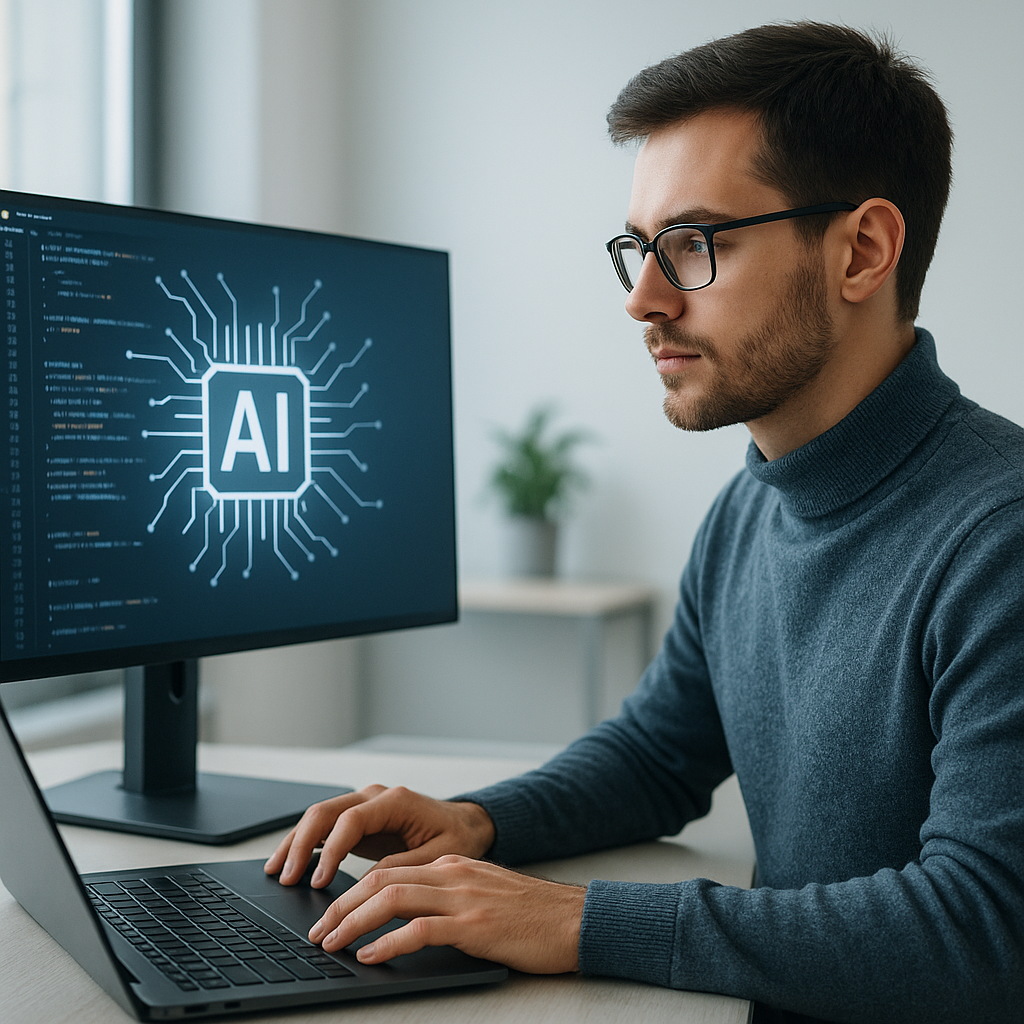
AI Job Market Impact: Growth Amid Automation Concerns
AI job market dynamics are shifting as “high-intensity AI adopters” are demonstrating growth in headcount, countering fears that automation will eliminate entry-level positions. A recent report highlights that these companies have seen a 10.2% headcount increase, with entry-level roles rising by 12%. This post will explore the implications of AI adoption on job markets, particularly for developers and tech firms.
What Is AI Job Market Impact?
The AI job market impact refers to how the adoption of artificial intelligence technologies influences employment trends and job availability in various sectors. A report from Ramp and Revelio Labs shows that companies heavily investing in AI have experienced growth rather than job losses, with notable increases in entry-level positions. This insight is crucial for understanding how AI can reshape employment landscapes.
Why This Matters Now
The conversation surrounding AI-driven job displacement has intensified, particularly as close to 90,000 job cuts were reported due to AI by mid-2026. Concerns about the future workforce, especially among Gen Z graduates, are prevalent. However, the recent findings suggest a more nuanced picture: high-spending AI firms are expanding their workforce, including junior roles. This emphasizes the need for developers and tech professionals to recognize the potential for AI to enhance rather than diminish job opportunities.
- Growing demand for tech talent in AI-adopting firms
- Need for upskilling and adapting to new technologies
- Importance of understanding AI’s role in modern business strategies
Technical Deep Dive
To grasp the implications of AI on the job market, it’s essential to analyze the mechanics behind AI adoption in organizations. High-intensity AI adopters, those investing about $30 per employee per month, have demonstrated a significant correlation between AI investment and workforce expansion. Understanding this relationship involves examining several technical aspects:
- AI Integration: Companies are leveraging AI for tasks such as coding, debugging, and automating processes. For instance, AI tools like
GitHub Copilotassist in code generation, which enhances productivity and allows companies to scale operations. - Cost Efficiency: By streamlining operations, AI reduces production costs, allowing firms to allocate resources for hiring more talent.
- Data-Driven Decisions: Organizations utilize AI analytics to make informed hiring and operational decisions, focusing on areas with the most growth potential.
Here’s a simple Python snippet that demonstrates how AI can help in automating code reviews:
def ai_code_review(code_snippet):
    # Placeholder for AI review logic
    if "bug" in code_snippet:
        return "Bug found! Suggest fixing."
    return "Code looks good!"
This function showcases a basic way AI can assist in code quality assurance, thus freeing up developers to focus on more complex tasks.
Real-World Applications
1. AI in Software Development
Tools like TensorFlow and PyTorch are now commonplace in software development, enabling developers to incorporate machine learning into applications, resulting in better product offerings.
2. Enhanced Customer Support
AI chatbots and virtual assistants help companies provide 24/7 customer support, reducing the need for large customer service teams while still maintaining service quality.
3. Efficient Marketing Strategies
AI-driven analytics platforms enable businesses to identify trends and optimize marketing campaigns, leading to more effective customer engagement.
4. Financial Services Automation
In finance, AI algorithms are used for fraud detection, risk assessment, and trading, allowing firms to operate more efficiently and with reduced labor costs.
What This Means for Developers
For developers, the rise of AI adoption signals several important implications:
- Investing in AI-related skills, such as machine learning and AI integration techniques, is essential for career growth.
- Developers should focus on understanding the business applications of AI, as this knowledge will be invaluable in creating solutions that align with organizational goals.
- Collaboration with data scientists can enhance project outcomes, especially in AI-driven environments.
💡 Pro Insight
💡 Pro Insight: As organizations increasingly adopt AI technologies, developers who embrace continuous learning and adapt to emerging tools will not only secure their roles but also contribute to shaping the future of work. The gap between those leveraging AI effectively and those who do not will likely widen, emphasizing the importance of proactive skill development.
Future of AI Jobs (2025–2030)
Looking ahead, the integration of AI into various sectors is likely to evolve significantly. By 2030, it is expected that AI will not only create new job categories but also redefine existing roles. Companies that successfully integrate AI will see enhanced productivity, leading to a demand for new skill sets centered around AI technologies.
A particular focus will be on AI ethics and governance, as organizations must navigate the complexities of AI deployment responsibly. The importance of human oversight in AI decision-making will become increasingly apparent, influencing hiring patterns and organizational structures.
Challenges & Limitations
1. Resource Disparities
Companies with more resources are likely to benefit more from AI adoption, leaving smaller firms at a disadvantage. This can create an uneven job market where opportunities are concentrated in larger organizations.
2. Skills Gap
As AI technologies advance, there is a growing need for skilled professionals who can work with these systems. The current skills gap may hinder small firms from effectively utilizing AI.
3. Ethical Concerns
The ethical implications of AI, particularly regarding job displacement and decision-making processes, remain a significant concern that organizations must address proactively.
Key Takeaways
- AI adoption is leading to job growth in high-intensity firms, particularly in entry-level positions.
- Understanding the relationship between AI investment and employment is crucial for developers.
- Upskilling in AI-related technologies is imperative for career advancement.
- AI can enhance productivity across various sectors, from software development to customer service.
- Ethical considerations in AI deployment will shape the future workforce landscape.
Frequently Asked Questions
How does AI impact job availability?
AI can both create new jobs and transform existing roles. While some positions may be automated, high-intensity AI adopters have shown job growth, especially in entry-level positions.
What skills should developers focus on for AI integration?
Developers should prioritize AI and machine learning skills, alongside understanding data analytics and business applications of AI.
Are there ethical concerns regarding AI in the workplace?
Yes, ethical concerns include job displacement, bias in AI decision-making, and the need for human oversight in AI processes.
For more insights on AI and developer news, follow KnowLatest.


