
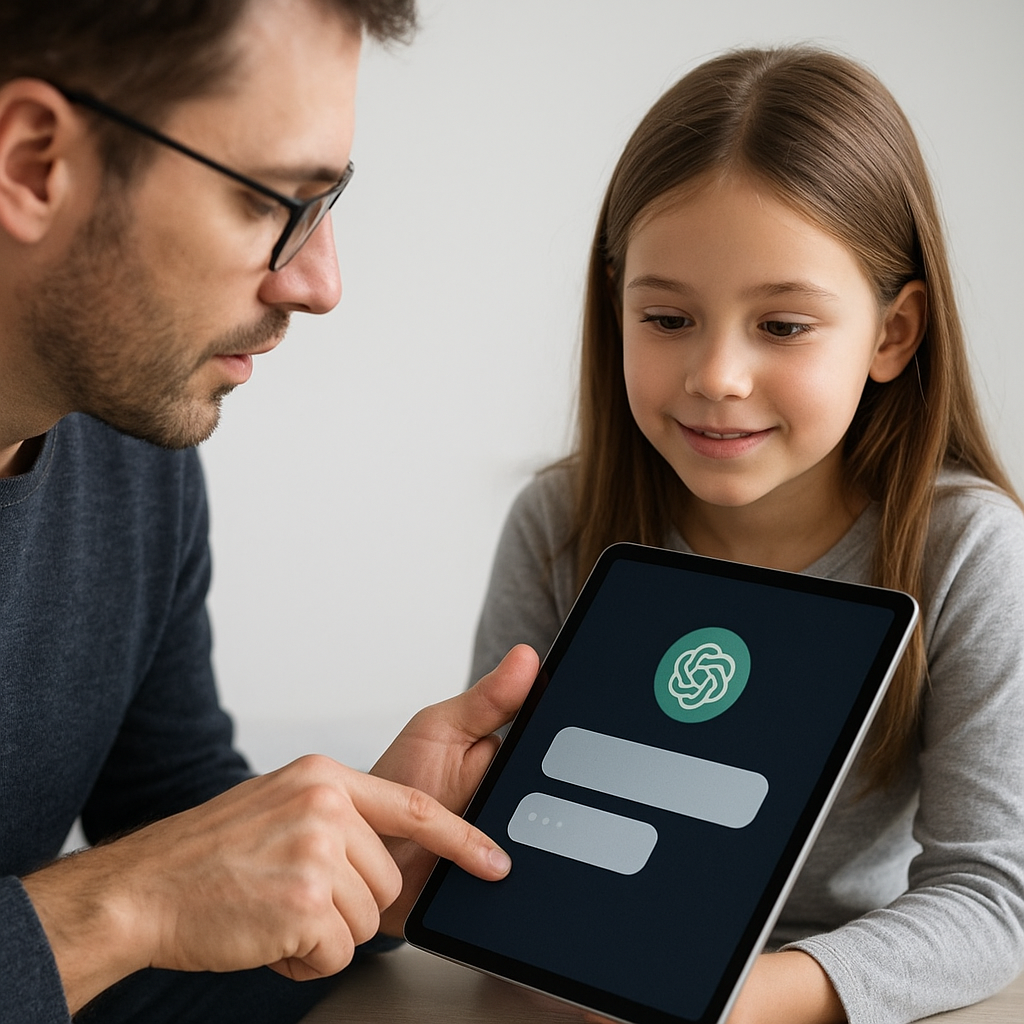
Parenting with AI: Transforming Family Life with ChatGPT
Parenting with AI refers to the use of artificial intelligence tools, such as ChatGPT, to assist parents in managing family activities and enhancing communication. Recently, OpenAI’s CEO, Sam Altman, highlighted a new feature that allows parents to integrate family calendars and personalize interactions with ChatGPT. In this article, we will explore how AI can transform parenting, the technical aspects behind these applications, and the implications for developers.
What Is Parenting with AI?
Parenting with AI involves leveraging artificial intelligence applications, like ChatGPT, to support parents in organizing family life and enhancing communication. This approach can help streamline tasks, foster engagement with children, and provide personalized advice. As demonstrated by Sam Altman’s recent statements, integrating AI into parenting is gaining traction, making it crucial for developers to understand these tools’ potential.
Why This Matters Now
The growing interest in AI-driven parental tools is fueled by the increasing complexity of family life and the demands placed on parents. AI applications can help manage schedules, provide tailored content, and even simulate conversations, as Altman suggested with the idea of generating personalized podcasts for kids during morning commutes. This aligns with broader trends in generative AI, where personalization and user engagement are key. For developers, understanding these trends is vital for building solutions that resonate with modern parenting challenges.
Technical Deep Dive
To create effective AI parenting tools, developers must understand how to integrate various systems to provide personalized experiences. Here’s a simplified overview of how to implement a basic ChatGPT API integration for generating personalized content based on family calendars.
import openai
from datetime import datetime

# Set your OpenAI API key
openai.api_key = 'YOUR_API_KEY'

def generate_podcast_content(family_events):
    prompt = f"Create a podcast script for the following family events: {family_events}"
    response = openai.ChatCompletion.create(
        model="gpt-3.5-turbo",
        messages=[
            {"role": "user", "content": prompt}
        ]
    )
    return response.choices[0].message['content']

# Example family events
family_events = {
    "soccer_game": "Sam's soccer game at 4 PM",
    "birthday": "Ella's birthday party next week",
    "news": "an upcoming science fair"
}

podcast_script = generate_podcast_content(family_events)
print(podcast_script)
In this code snippet, we utilize the OpenAI API to generate a podcast script based on family events. By feeding the model details about upcoming activities, the AI can produce engaging content tailored to the family’s interests. This not only enhances communication but also allows for a more interactive parenting experience.
Real-World Applications
1. Personalized Family Updates
AI can be used to create customized updates for families, summarizing events, achievements, and upcoming activities in an engaging format.
2. Educational Content Generation
Parents can leverage AI to create educational materials tailored to their children’s interests and learning styles, enhancing their learning experience.
3. Scheduling Assistance
Integrating AI with family calendars can help automate reminders and notifications, ensuring that no important event is overlooked.
4. Emotional Support
AI tools can provide general advice and support for parents facing challenges in child-rearing, offering resources and answers to common questions.
What This Means for Developers
For developers, the rise of AI in parenting presents opportunities to build innovative applications that cater to modern family needs. Skills in AI integration, user experience design, and data management will be crucial. Developers should focus on:
- Understanding AI models and their capabilities.
- Creating user-friendly interfaces for families.
- Ensuring data privacy and security, especially when handling sensitive family information.
- Exploring integrations with other platforms, such as calendar APIs and communication tools.
💡 Pro Insight: As AI continues to permeate family life, developers must prioritize creating solutions that not only enhance functionality but also build trust with users. Understanding family dynamics and privacy concerns will be key to developing successful products.
Future of Parenting with AI (2025–2030)
In the next five years, we can expect AI to play an increasingly integral role in parenting. Innovations may include:
- Advanced Personalization: Future AI tools will likely use deeper learning to understand individual family dynamics, providing even more tailored content and suggestions.
- Integration with Smart Home Devices: AI parenting solutions could become interconnected with smart home systems, allowing for holistic family management.
- Enhanced Emotional Intelligence: As AI models evolve, their ability to understand and respond to emotional cues will improve, providing better support for parents.
Overall, the landscape of parenting with AI is set to evolve, making it essential for developers to stay ahead of these trends.
Challenges & Limitations
Data Privacy Concerns
As AI tools become more integrated into family life, data privacy is a significant concern. Developers must ensure robust security measures are in place to protect sensitive information.
Dependency on Technology
As parents increasingly rely on AI for parenting tasks, there is a risk of reducing direct communication between parents and children. It’s essential to strike a balance between technology assistance and human interaction.
Quality of AI Responses
The effectiveness of AI in parenting depends heavily on the quality of its training data. Bias or inaccuracies in the training data can lead to misleading information, affecting parenting decisions.
Ethical Considerations
Developers must navigate ethical considerations when creating AI parenting tools, particularly regarding the impact of AI on child development and family dynamics.
Key Takeaways
- Parenting with AI offers innovative ways to enhance family communication and engagement.
- Developers have opportunities to create tailored applications for the evolving needs of families.
- Understanding data privacy and ethical considerations is crucial for building trust with users.
- Future AI tools will likely focus on personalization, emotional intelligence, and integration with smart devices.
- Balancing technology use with direct communication is essential to effective parenting.
Frequently Asked Questions
What is parenting with AI?
Parenting with AI refers to the use of artificial intelligence applications to assist parents in managing family activities and communication effectively.
How can AI enhance family communication?
AI can generate personalized content, schedule reminders, and facilitate discussions, improving engagement between parents and children.
What are the risks of using AI for parenting?
Potential risks include data privacy concerns, dependency on technology, and the quality of AI-generated responses which may affect parenting decisions.
For more insights on AI and technology trends, follow KnowLatest for the latest updates.


