
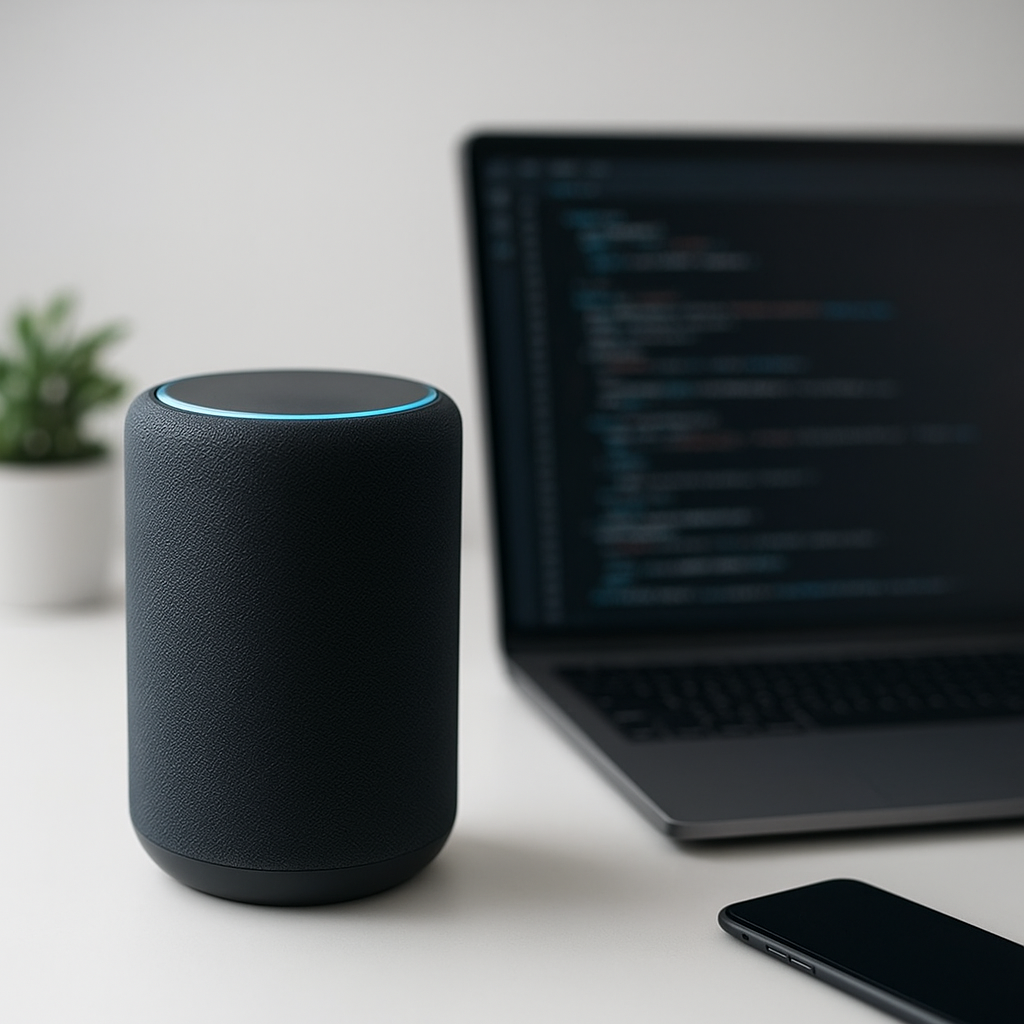
AI Smart Speakers: Integration, Challenges, and Future Trends
OpenAI’s new AI smart speaker refers to an upcoming hardware device designed to integrate AI capabilities into everyday home usage. Recent reports indicate that this device will likely have a price range between $300 and $400, making it a premium option in the smart speaker market. This article will explore the implications of AI integration into smart home devices, technical considerations, and what developers need to know about this emerging technology.
What Is an AI Smart Speaker?
An AI smart speaker is a voice-activated device that uses artificial intelligence to perform tasks, play music, provide information, and control smart home devices. OpenAI’s upcoming speaker is notable for its unique design and high price point, which is expected to range between $300 and $400. This development signals a growing trend towards integrating advanced AI functionalities into personal devices.
Why This Matters Now
The introduction of OpenAI’s smart speaker comes at a time when consumer demand for intelligent and interactive home devices is skyrocketing. As reported by TechCrunch, the device aims to be the “physical manifestation” of ChatGPT, thereby enhancing user interaction and experience. This trend is fueled by advancements in natural language processing (NLP) and machine learning, making AI interfaces more intuitive and user-friendly.
Developers should care about this shift because it opens new avenues for creating applications and services that leverage AI-powered smart devices. Increased competition in the market can lead to more innovation and better integration of AI in everyday life.
Technical Deep Dive
The architecture of an AI smart speaker typically includes the following components:
- Microphone Array: Captures voice commands from users.
- Speaker System: Outputs audio responses, music, or other audio content.
- Processing Unit: Handles voice recognition, natural language processing, and interaction logic.
- Connectivity: Supports Wi-Fi and Bluetooth for connecting to the internet and other devices.
Here’s a simplified example of how one might implement voice recognition using Python with the speech_recognition library:
import speech_recognition as sr

# Initialize recognizer
recognizer = sr.Recognizer()

# Use microphone as the source
with sr.Microphone() as source:
    print("Please say something:")
    audio = recognizer.listen(source)

try:
    # Recognize speech using Google Web Speech API
    text = recognizer.recognize_google(audio)
    print("You said: " + text)
except sr.UnknownValueError:
    print("Sorry, I could not understand the audio.")
except sr.RequestError as e:
    print("Could not request results from Google Web Speech API; {0}".format(e))
This code snippet shows how to capture voice input and convert it into text, which could then be used to trigger actions on the smart speaker.
Real-World Applications
1. Home Automation
Developers can create applications that integrate with smart home systems, enabling users to control lights, thermostats, and security systems through voice commands.
2. Personalized User Experiences
Using AI, smart speakers can learn user preferences, offering personalized recommendations for music, podcasts, and other content.
3. Interactive Learning Tools
AI speakers can serve as interactive educational tools, providing quizzes, language learning, and other interactive educational experiences.
4. Health Monitoring
With the addition of health-related features, smart speakers can monitor user health metrics and provide reminders for medications or appointments.
What This Means for Developers
Developers need to focus on creating skills that enhance the functionality of AI smart speakers. This includes:
- Understanding voice user interface (VUI) design principles.
- Utilizing APIs for integrating third-party services.
- Implementing robust security protocols to protect user data.
With a potential price point that may deter some consumers, developers should focus on demonstrating the value of their applications to justify this higher investment.
💡 Pro Insight: As AI technology advances, the future of smart speakers lies in their ability to serve not just as devices but as central hubs for managing digital lives. Developers who embrace this vision will likely lead the way in creating innovative solutions that leverage AI’s full potential.
Future of AI Smart Speakers (2025–2030)
The future of AI smart speakers appears promising, with significant advancements expected in natural language understanding and contextual awareness. By 2027, it is predicted that these devices will not only respond to commands but will also anticipate user needs based on previous interactions.
Moreover, integration with emerging technologies like augmented reality (AR) and the Internet of Things (IoT) could transform smart speakers from mere voice assistants into sophisticated home management systems. The competitive landscape will likely intensify, pushing developers to innovate continuously.
Challenges & Limitations
1. Market Viability
Smart speakers have historically struggled with profitability. High consumer expectations may not translate to sales, especially at premium price points.
2. Security Concerns
Data privacy and security remain critical issues, as smart speakers collect and process sensitive user information.
3. User Adoption
Convincing consumers to switch from lower-cost alternatives may prove challenging, requiring strong value propositions from developers.
4. Technical Limitations
Current voice recognition technologies can struggle with accents and background noise, which could hinder user experience.
Key Takeaways
- OpenAI’s AI smart speaker may range from $300 to $400, indicating a premium offering in the market.
- The device aims to be a physical manifestation of ChatGPT, enhancing user interaction.
- Developers should focus on creating applications that leverage AI capabilities effectively.
- Security and user adoption remain significant challenges for the smart speaker market.
- The future of AI smart speakers will likely involve deeper integration with IoT and AR technologies.
Frequently Asked Questions
What is an AI smart speaker?
An AI smart speaker is a device that uses artificial intelligence to perform tasks and respond to voice commands, often integrating with smart home systems.
How does voice recognition work in AI smart speakers?
Voice recognition in AI smart speakers involves capturing audio through microphones, processing it using AI algorithms, and then converting it to text to trigger actions.
What are the challenges facing AI smart speakers?
Key challenges include market viability, security concerns, user adoption, and technical limitations in voice recognition accuracy.
For more insights into AI tools and developments, follow KnowLatest for the latest news and updates.


