
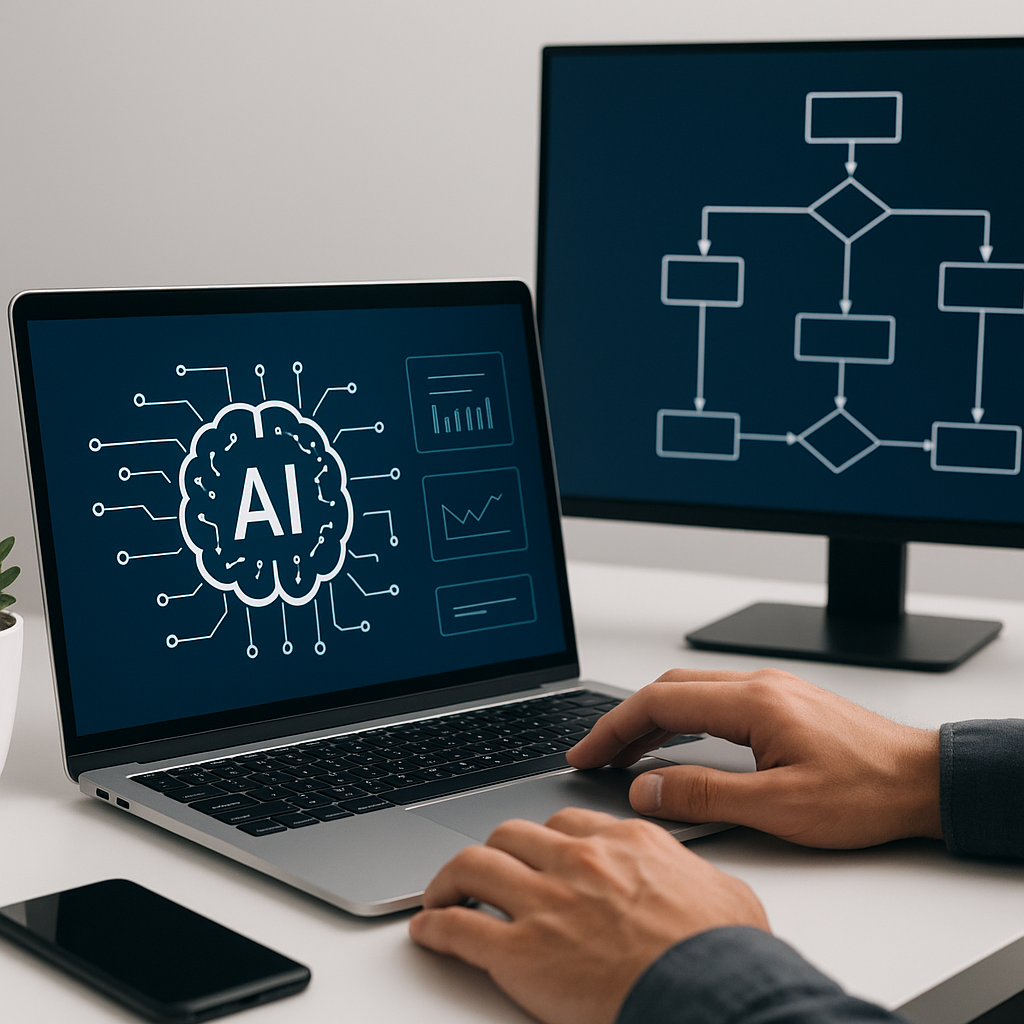
AI Workflow Automation: Insights from Relay’s Shutdown
AI workflow automation refers to the use of artificial intelligence to streamline and optimize repetitive tasks within business processes. Recently, the AI automation startup Relay announced its shutdown, with significant personnel moving to Google’s Chrome team. This article explores the implications of this shift, focusing on the evolving landscape of AI in productivity tools and what developers can expect moving forward.
What Is AI Workflow Automation?
AI workflow automation involves using artificial intelligence technologies to automate tasks that are typically tedious and repetitive, enhancing productivity and efficiency in various business processes. As illustrated by the recent shutdown of Relay, an AI automation startup aimed at competing with established tools like Zapier, the market is evolving rapidly, particularly as companies seek to integrate AI capabilities into existing frameworks.
Why This Matters Now
The recent announcement regarding Relay’s closure and the migration of its staff to Google highlights a significant trend in the AI landscape: the integration of AI into everyday tools. The rise of AI-powered solutions in productivity software is not only reshaping how tasks are performed but also setting new expectations for users. For developers, understanding these shifts is crucial as they navigate the future of AI in applications, particularly in how tools like Google Chrome will leverage AI for enhanced user experience.
Secondary keywords such as “AI integration in productivity tools” and “Google Chrome AI features” are becoming increasingly relevant as enterprises look for ways to streamline operations and enhance user interactions.
Technical Deep Dive
The technical foundation of AI workflow automation can be broken down into several key components:
- Machine Learning Models: Many platforms utilize machine learning algorithms to predict outcomes and automate decision-making processes. For instance, Relay’s features likely involved natural language processing (NLP) for drafting documents and automating responses.
- Integration APIs: Tools like Relay relied heavily on APIs to connect with various applications, enabling seamless data transfers and workflow automation. Developers must understand how to build and utilize these APIs to maintain interoperability between tools.
- User Interface (UI) Design: A user-friendly interface is essential for adoption. The ease of use often determines how effectively users can leverage AI capabilities without extensive training.
For those interested in building similar tools, here’s a simple example of a Python script that uses the transformers library to automate a task like document summarization:
from transformers import pipeline

# Create a summarization pipeline
summarizer = pipeline("summarization")

# Sample text to summarize
text = """AI automation startup Relay was designed to streamline workflow processes..."""

# Generate the summary
summary = summarizer(text, max_length=50, min_length=25, do_sample=False)
print(summary[0]['summary_text'])
This code snippet showcases how developers can integrate AI functionalities into applications through simple API calls, making it easier to automate complex tasks.
Real-World Applications
1. E-commerce
AI workflow automation can streamline inventory management, automate customer service responses, and enhance personalized marketing strategies.
2. Healthcare
In healthcare, AI tools can automate patient documentation, scheduling, and follow-up reminders, significantly improving operational efficiency.
3. Project Management
AI can assist project managers in automating task assignments, deadline reminders, and productivity tracking, allowing teams to focus on higher-value activities.
4. Marketing
AI tools are increasingly used in marketing to automate lead scoring, email marketing campaigns, and performance tracking, optimizing marketing efforts.
What This Means for Developers
Developers must adapt to the changing landscape by acquiring skills in AI integration, API development, and user experience design. They should focus on:
- Familiarizing themselves with AI frameworks and libraries.
- Understanding how to build and consume APIs effectively.
- Enhancing their UI/UX skills to create intuitive applications.
💡 Pro Insight: The future of productivity tools lies in their ability to seamlessly integrate AI capabilities. As companies like Google push for deeper AI integration in tools like Chrome, developers who can navigate this landscape will find themselves in high demand.
Future of AI Workflow Automation (2025–2030)
Looking ahead, we can expect significant advancements in AI workflow automation. By 2025, the incorporation of AI in tools will become ubiquitous, with intelligent assistants embedded in virtually every productivity application. Companies will increasingly rely on AI to analyze user behavior, predict needs, and automate complex processes.
Additionally, as privacy and data security concerns grow, developers will need to prioritize ethical AI practices, ensuring that user data is handled responsibly while enhancing functionality. By 2030, we may see a fully integrated digital workspace where AI not only supports but actively collaborates with users in real-time.
Challenges & Limitations
1. Data Privacy Concerns
With the rise of AI, data privacy remains a significant challenge. Developers must implement robust security measures to protect sensitive information.
2. Integration Complexity
Integrating AI capabilities into existing workflows can be complex and may require significant development resources.
3. Dependence on Accurate Data
AI systems rely heavily on data quality. Flawed data can lead to poor outcomes, underscoring the need for effective data governance.
4. User Adoption
Even the best AI tools can fail if users are resistant to change. Ensuring user buy-in is critical for successful implementation.
Key Takeaways
- AI workflow automation enhances efficiency by automating repetitive tasks.
- Recent shifts in the AI landscape, like Relay’s closure, highlight the need for continuous innovation.
- Developers should focus on integrating AI capabilities into their applications effectively.
- Future tools will increasingly leverage AI to enhance user experiences and outcomes.
- Challenges such as data privacy and integration complexity must be addressed for successful AI implementation.
Frequently Asked Questions
What is AI workflow automation? AI workflow automation refers to the use of AI technologies to automate repetitive tasks, enhancing productivity in business processes.
Why did Relay shut down? Relay shut down due to various market challenges and is transitioning its team to Google’s Chrome division to focus on AI integration.
How can developers implement AI in their applications? Developers can implement AI by leveraging frameworks like TensorFlow or PyTorch, and using APIs to integrate AI capabilities into existing applications.
For more insights on AI tools and developer news, follow KnowLatest.


