
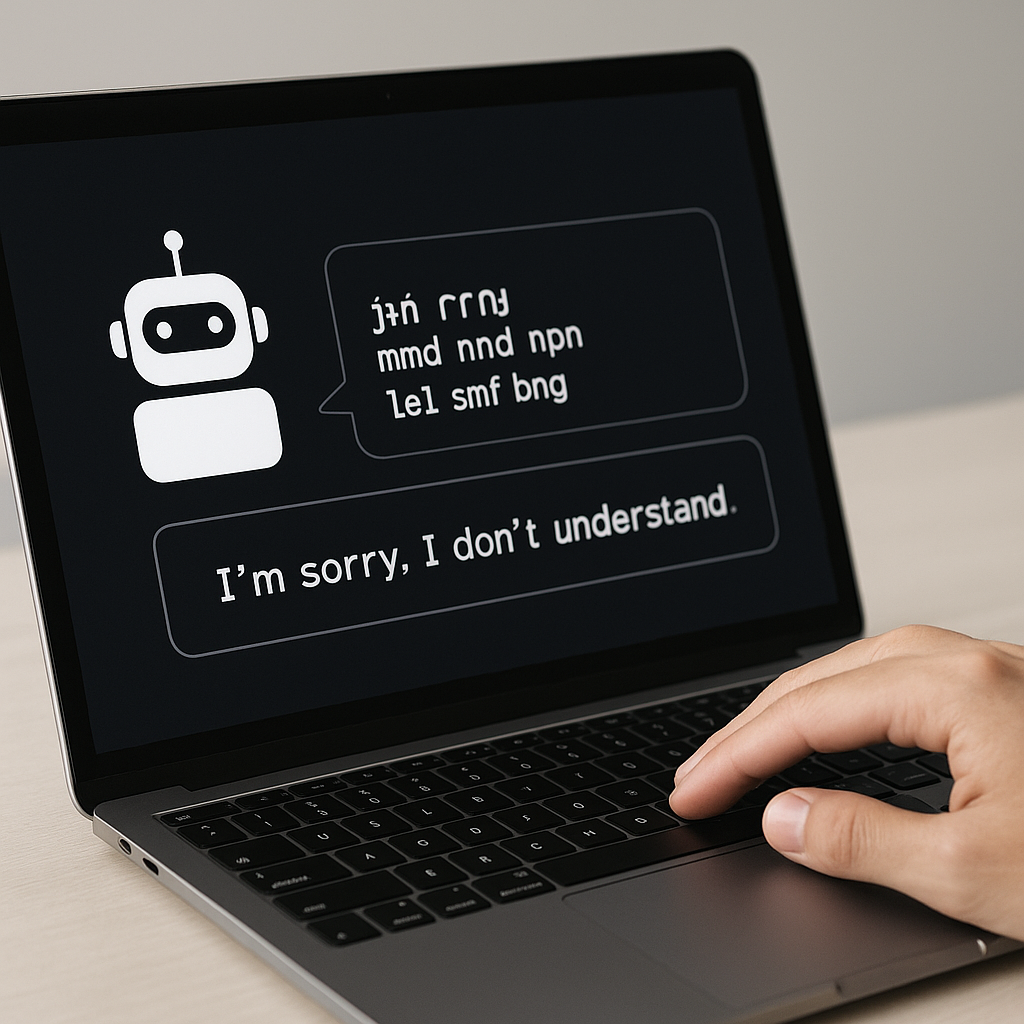
Understanding Grok’s Gibberish Responses: Causes & Solutions
Grok is a conversational AI tool developed by xAI, known for its advanced capabilities in generating natural language responses. Recently, users have reported that Grok has been generating nonsensical outputs, causing confusion and frustration. This article will explore the reasons behind these issues, the implications for developers, and best practices for troubleshooting and ensuring reliable AI interactions.
What Is Grok?
Grok refers to an AI-driven chatbot developed by xAI that utilizes advanced natural language processing (NLP) to engage users in conversation. It is designed to assist with a variety of tasks, from information retrieval to creative writing. Recently, reports have surfaced about Grok delivering gibberish responses to users, indicating potential underlying issues in its conversational algorithms.
Why This Matters Now
With the increasing reliance on AI chatbots for customer service and user engagement, ensuring their reliability is critical. As reported by TechCrunch, users have recently experienced Grok producing nonsensical outputs, highlighting the need for developers to understand the implications of such glitches. This incident underscores the importance of robust testing and monitoring in AI systems, particularly in real-time applications where user experience is paramount. Developers should care about these issues as they can affect user trust and the overall efficacy of AI tools.
Technical Deep Dive
Understanding the technical mechanisms behind Grok can help identify potential causes of its gibberish responses. The following are key components of its architecture:
- Transformer Architecture: Grok is built on transformer models, similar to those used in GPT and BERT. These models leverage attention mechanisms to understand the context of words in sentences.
- Reinforcement Learning: Grok employs reinforcement learning from human feedback (RLHF) to improve its responses over time. However, if the training data is flawed or the feedback loop isn’t well-calibrated, it can lead to errors in output.
- Tokenization Issues: The model’s tokenizer might misinterpret user input, leading to poorly constructed sentences. This can occur when the input is ambiguous or when it contains uncommon phrases.
- Session Management: As reported, refreshing the session often resolves the gibberish issue. This suggests that session states may be influencing output quality, possibly due to context carryover from previous interactions.
To illustrate how Grok operates, here is a simplified Python snippet that outlines how a transformer model might handle user input in a conversational AI context:
from transformers import pipeline

# Load pre-trained Grok model
grok = pipeline('text-generation', model='xAI/grok-model')

# Function to generate response
def generate_response(user_input):
    response = grok(user_input, max_length=150, num_return_sequences=1)
    return response[0]['generated_text']

# Example usage
user_query = "What's the weather like today?"
print(generate_response(user_query))
Real-World Applications
Customer Support
Many businesses utilize Grok for automating customer support queries. By integrating Grok into their helpdesk systems, companies can provide instant responses to frequently asked questions.
Content Generation
Marketing teams leverage Grok to generate content ideas or draft articles. Its ability to understand context allows for creative writing assistance, although care must be taken to verify the accuracy of the content it produces.
Personal Assistants
Grok can serve as a personal assistant, helping users manage their schedules or find information quickly. However, the gibberish issue can hinder its effectiveness, demanding immediate attention from developers.
What This Means for Developers
As developers, it is essential to understand the implications of AI reliability in applications. Here are some key takeaways:
- Robust Testing: Implement extensive testing protocols to catch issues like gibberish responses before deployment.
- User Feedback: Establish channels for users to report errors and feedback, which can help in fine-tuning the model.
- Session Management: Pay attention to how session states are managed in applications to prevent unintended carryover of context.
- Monitoring Tools: Utilize monitoring tools to oversee AI performance in real-time, allowing for quick responses to user issues.
💡 Pro Insight: The recent issues with Grok serve as a reminder that even the most advanced AI systems require vigilant oversight. Continuous improvement cycles that incorporate user feedback are crucial for maintaining trust in AI solutions.
Future of Grok (2025–2030)
The future of Grok and similar AI technologies will likely hinge on advancements in NLP and user experience design. By 2025, we can expect AI models to become more adaptive, with enhanced capabilities to understand context and user intent accurately. Innovations like multi-modal interfaces, where text, voice, and visual inputs are processed together, will further enrich user interactions.
Moreover, as AI ethics and governance become increasingly pertinent, developers will need to focus on transparency in AI decision-making processes. This will not only improve reliability but also foster greater user trust and adoption.
Challenges & Limitations
Data Quality
The quality of training data directly impacts the performance of AI models like Grok. If the dataset contains errors or biases, these will manifest in the model’s outputs.
Model Complexity
As models become more complex, they require more resources for training and maintenance. This can lead to increased operational costs and necessitate more sophisticated infrastructure.
User Expectations
Users often have high expectations of conversational AI. Any failure to meet these expectations, such as generating gibberish, can lead to dissatisfaction and decreased usage.
Ethical Considerations
Ensuring that AI systems operate within ethical boundaries is paramount. Developers must stay informed about regulations and develop systems that prioritize user privacy and data security.
Key Takeaways
- Grok’s recent gibberish response issue highlights the importance of reliability in AI chatbots.
- Understanding the underlying architecture can help developers troubleshoot issues effectively.
- Robust testing and monitoring are essential to ensure AI performance meets user expectations.
- User feedback channels are critical for continuous improvement of AI systems.
- Future developments will focus on enhancing user experience and addressing ethical considerations.
Frequently Asked Questions
What causes AI chatbots to generate gibberish?
AI chatbots may generate gibberish due to issues in their training data, tokenization errors, or problems with session management affecting the context of conversations.
How can developers improve AI reliability?
Developers can enhance AI reliability by implementing rigorous testing protocols, incorporating user feedback mechanisms, and utilizing monitoring tools to track performance in real-time.
What is Grok’s primary use case?
Grok is primarily used for customer support, content generation, and as a personal assistant, helping users with various tasks through natural language interactions.
For more insights on AI tools and technology trends, follow KnowLatest for the latest updates and expert analysis.


