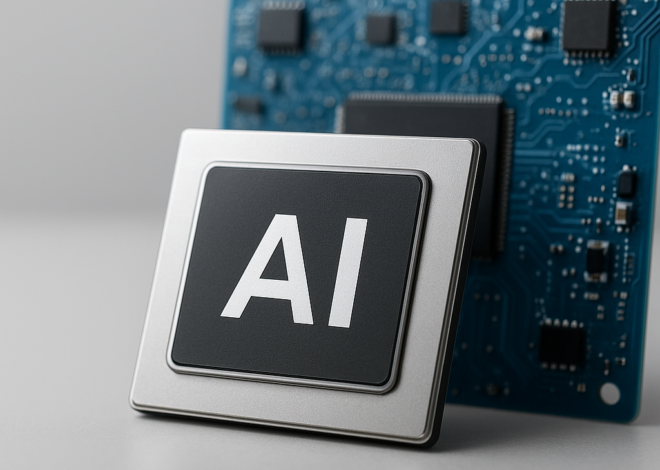
AI Chip Leasing: Navigating the Future of Cloud Computing
AI chip leasing refers to the practice of purchasing advanced computing chips, like those from Nvidia, and renting them out to businesses that require high-performance computing resources. Recently, Neocloud Lambda secured $1 billion in debt, highlighting the burgeoning need for AI infrastructure and the financial strategies companies are adopting to meet those demands. In this post, we’ll explore the implications of this trend for developers and the cloud computing landscape.
What Is AI Chip Leasing?
AI chip leasing is the process of acquiring high-performance AI computing chips, such as Nvidia GPUs, and leasing them to businesses for their computational needs. This model allows companies to utilize advanced hardware without the upfront costs associated with purchasing the equipment outright. The recent $1 billion debt raised by Neocloud Lambda to acquire these chips illustrates the escalating demand for AI resources and the financial mechanisms at play.
Why This Matters Now
The AI landscape is changing rapidly, with significant investments pouring into infrastructure that supports AI capabilities. Neocloud Lambda’s recent fundraising underscores a larger trend where companies are leveraging debt to finance the AI boom, a trend that has seen over $400 billion raised in AI-related debt globally in 2026 alone. This is crucial for developers as it indicates a shift in how AI resources are deployed, making advanced technology more accessible.
- Increased Accessibility: Businesses can access high-performance chips without significant capital investment.
- Scalability: Companies can scale their AI operations quickly by leasing rather than buying hardware.
- Financial Flexibility: Leasing allows companies to manage cash flow better while investing in AI initiatives.
Technical Deep Dive
To understand the technical aspects of AI chip leasing, it’s essential to analyze how the infrastructure works, including the deployment and management of GPU resources. Here’s a breakdown of the system architecture involved in AI chip leasing:
import numpy as np
import tensorflow as tf

# Simulating a simple AI model using a leased Nvidia GPU
def train_model(data):
    model = tf.keras.models.Sequential([
        tf.keras.layers.Dense(64, activation='relu', input_shape=(data.shape[1],)),
        tf.keras.layers.Dense(1, activation='sigmoid')
    ])
    model.compile(optimizer='adam', loss='binary_crossentropy', metrics=['accuracy'])

    # Training the model with leased GPU resources
    model.fit(data, labels, epochs=10)

# Sample data
data = np.random.rand(1000, 10)
labels = np.random.randint(2, size=(1000, 1))

train_model(data)
This code snippet demonstrates how a developer might leverage leased Nvidia GPUs to train a TensorFlow model. By utilizing cloud resources, developers can experiment with complex models without needing to maintain expensive hardware. The leasing model facilitates rapid iteration and scaling of AI projects.
Real-World Applications
1. Cloud Computing Providers
Companies like Neocloud Lambda cater to cloud computing providers, enabling them to offer AI capabilities to their clients. This is particularly useful for businesses that require heavy computational tasks but lack the infrastructure.
2. Startups and Small Businesses
Startups can benefit from leasing arrangements as they allow them to access cutting-edge technology without significant upfront costs. This is vital for innovation and competitive positioning in the market.
3. Research Institutions
Research organizations can lease AI chips to run complex simulations and analyses, enhancing their research capabilities without the burden of maintaining the hardware.
4. Enterprise AI Solutions
Enterprises looking to implement AI solutions can lease chips tailored to their specific use cases, such as natural language processing or computer vision, thereby optimizing performance and cost.
What This Means for Developers
As the market for AI chip leasing grows, developers must adapt by honing skills in cloud computing and understanding the nuances of leasing agreements. Key areas to focus on include:
- Cloud Infrastructure Management: Familiarize yourself with cloud providers and their services.
- Cost Management: Learn to calculate the cost-effectiveness of leasing versus purchasing hardware.
- AI Model Optimization: Develop skills to optimize models for performance based on the resources available.
💡 Pro Insight: The growing trend of AI chip leasing indicates a shift toward more flexible, scalable AI solutions, which will likely democratize access to advanced computing resources. Developers who can leverage these changing dynamics will find themselves well-positioned in the evolving tech landscape.
Future of AI Chip Leasing (2025–2030)
Looking ahead, the AI chip leasing market is set to evolve significantly. Companies will increasingly rely on AI to drive innovation across various sectors. By 2030, we can expect:
- Increased Leasing Options: More providers will enter the market, offering diverse leasing models tailored to different business needs.
- Enhanced AI Capabilities: Advances in hardware will allow for faster processing and more complex AI models, leading to new applications in fields like healthcare and autonomous vehicles.
- Integration with Edge Computing: The convergence of AI chip leasing and edge computing will enable real-time data processing and analytics at scale, further expanding the use cases for leased AI resources.
Challenges & Limitations
1. Financial Risk
Leasing high-cost AI chips involves financial risk, especially if the expected return on investment does not materialize quickly. Companies must carefully evaluate their leasing agreements.
2. Dependency on Providers
Leasing can lead to a dependency on specific providers, which may limit flexibility and innovation if a company becomes locked into a single vendor.
3. Performance Variability
The performance of leased chips may vary based on utilization, which can impact project timelines and outcomes. Developers must account for potential performance issues when designing applications.
4. Rapid Technological Changes
The fast pace of technological advancements in AI and chip manufacturing means that leased resources may quickly become obsolete, necessitating continuous evaluation of leasing strategies.
Key Takeaways
- AI chip leasing allows businesses to access high-performance computing resources without significant capital investment.
- The trend is supported by substantial financial backing, indicating a robust market demand for AI infrastructure.
- Developers must adapt to new cloud paradigms and optimize their skills for leasing arrangements.
- Future growth in the leasing market will likely lead to more diverse and accessible AI capabilities.
- Understanding the challenges and limitations of leasing is essential for making informed decisions.
Frequently Asked Questions
What are the benefits of AI chip leasing?
AI chip leasing allows businesses to access advanced technology without upfront investment, offering flexibility and scalability to meet fluctuating demands.
How does AI chip leasing work?
Companies purchase AI chips and lease them to clients, generating revenue while allowing clients to utilize high-performance hardware without the cost of ownership.
What challenges are associated with AI chip leasing?
Challenges include financial risks, dependency on providers, performance variability, and the rapid pace of technological changes that may render leased resources obsolete.
For more insights into the evolving landscape of AI and cloud computing, follow KnowLatest for the latest updates.