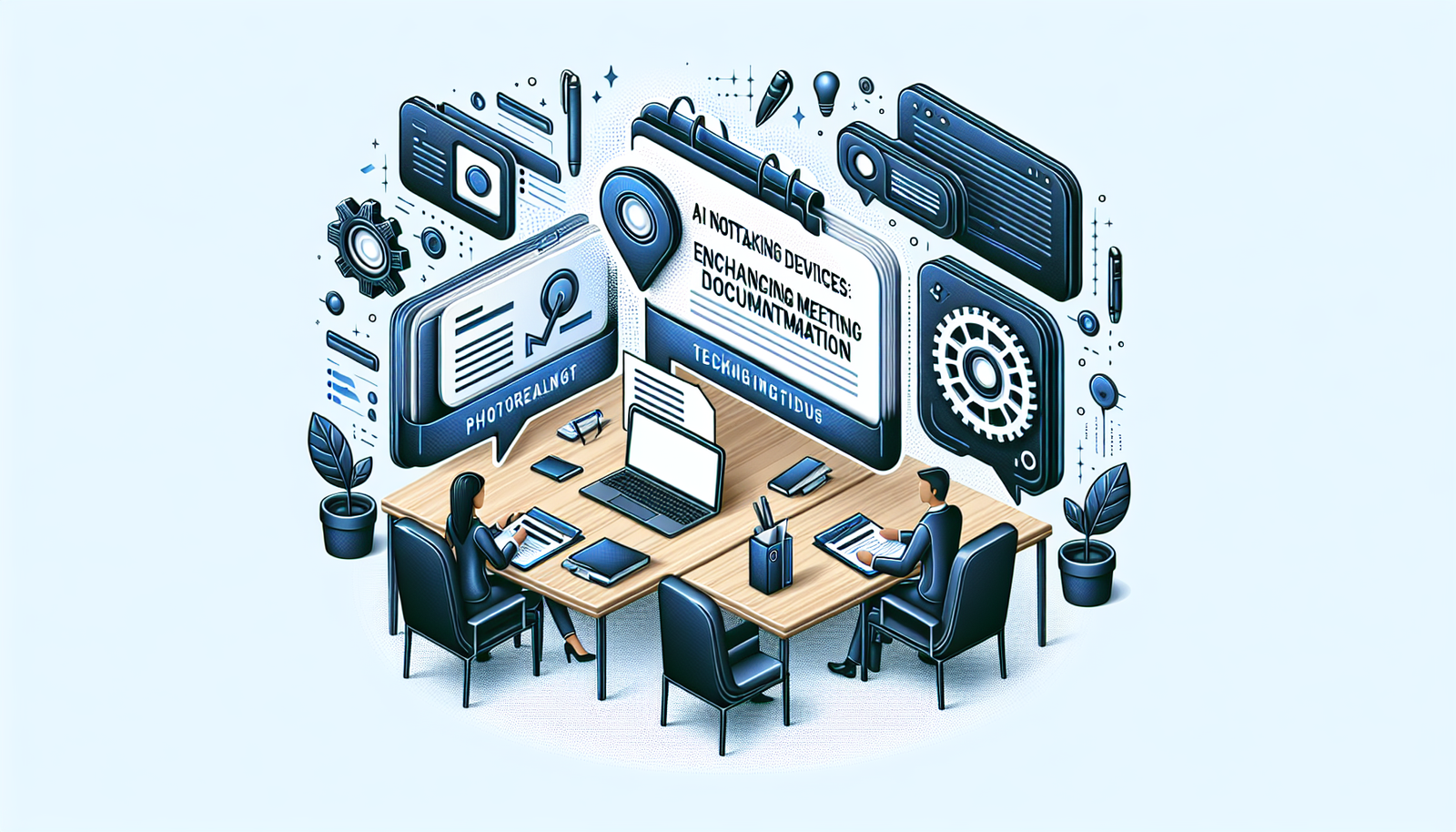
AI Notetaking Devices: Enhancing Meeting Documentation
“`html
AI notetaking devices are specialized tools designed to record and transcribe audio from meetings, providing users with summaries and actionable items. Following recent advancements in AI notetaking technology, various hardware options are emerging as viable solutions for effective meeting documentation. In this article, we’ll explore how these devices function, their technical specifications, and their practical applications for developers and AI practitioners.
What Is AI Notetaking Devices?
AI notetaking devices refer to hardware tools that leverage artificial intelligence to record, transcribe, and summarize audio from meetings. These devices have become increasingly relevant as organizations seek efficient methods to capture meeting content and derive actionable insights. With advancements in AI technologies, the capabilities of these devices are becoming more sophisticated, offering features such as live translation and automatic highlight extraction.
Why This Matters Now
The rise of remote and hybrid work environments has necessitated innovative solutions for effective communication and collaboration. AI notetaking devices address the challenges of traditional note-taking methods, which can be prone to human error and inefficiency. As highlighted in a recent TechCrunch article, these devices not only save time but also enhance productivity by providing accurate transcriptions and summaries. Developers and teams can focus more on discussions rather than the logistics of documentation, thereby improving engagement and outcomes.
Technical Deep Dive
AI notetaking devices utilize a combination of hardware and software technologies to deliver their functionalities. Here, we will explore some notable examples and their technical specifications:
| Device | Price | Recording Time | Transcription Minutes | Features |
|---|---|---|---|---|
| Plaud Note Pro | $179 | 30 hours | 300 minutes/month | Switch between in-person and call recording |
| Mobvoi TicNote | $159 | 25 hours | 600 minutes/month | Real-time transcription, translation in 120+ languages |
| Comulytic Note Pro | $159 | 45 hours | Unlimited (no subscription needed) | AI summaries, unlimited templates, action items |
| Plaud NotePin S | $179 | 20 hours | 300 minutes/month | Wearable, magnetic attachment, physical record button |
| Omi Pendant | $89 | Depends on connected device | Variable | Budget-friendly, requires connection to smartphone |
The core technology behind these devices often includes:
- Microphone Array: Most devices utilize multiple microphones to capture sound from various directions, enhancing audio clarity.
- AI Transcription: Leveraging Natural Language Processing (NLP), these devices convert spoken language into text, allowing for accurate and efficient documentation.
- Summary Algorithms: AI systems analyze the transcribed content to extract key points, decisions, and action items, streamlining the review process.
- Live Translation: Some devices offer real-time translation features, making them invaluable for multilingual teams.
Real-World Applications
1. Business Meetings
AI notetaking devices can significantly enhance business meetings by providing accurate transcripts and summaries. Teams can focus on discussions without worrying about manual note-taking.
2. Educational Settings
In educational environments, these devices can assist students in capturing lectures and discussions, facilitating better study practices and knowledge retention.
3. Healthcare Documentation
Healthcare professionals can utilize AI notetaking devices to document patient interactions, ensuring accurate records without detracting from patient care.
4. Conference and Workshop Settings
During conferences, these devices can record sessions, allowing attendees to revisit key moments without the pressure of taking notes in real-time.
What This Means for Developers
For developers, the emergence of AI notetaking devices presents new opportunities in terms of integration and application development. Here are some actionable implications:
- **Explore APIs**: Many AI notetaking devices offer APIs for integration with existing software solutions, allowing developers to enhance their applications with transcription and summarization capabilities.
- **Build Custom Solutions**: Developers can create tailored solutions that leverage the transcription data for analytics, project management, or team collaboration tools.
- **Focus on NLP Skills**: Understanding Natural Language Processing will be essential for developers looking to work with these AI technologies, enabling them to create more sophisticated applications.
- **Participate in Device Ecosystems**: Engage with the ecosystems of these devices to understand their capabilities and limitations, allowing for better application design and user experience.
💡 Pro Insight: As AI notetaking devices continue to evolve, we anticipate a future where seamless integration with productivity tools will redefine how meetings are documented and reviewed. The focus will increasingly shift toward intelligent insights rather than just raw transcriptions.
Future of AI Notetaking Devices (2025–2030)
Looking ahead, the AI notetaking landscape is set to undergo significant transformations. By 2025-2030, we can expect:
- Improved AI Algorithms: Continued advancements in machine learning will yield even more accurate transcription and summarization capabilities, reducing errors and enhancing user satisfaction.
- Greater Integration: The devices will likely integrate with a wider range of software applications, creating a more unified workflow for users across various industries.
- Adaptive Learning: Future AI notetakers may incorporate adaptive learning, allowing them to customize their output based on user preferences and past interactions.
Challenges & Limitations
Accuracy Concerns
Despite advancements, AI transcription is not infallible and may struggle with accents, background noise, or overlapping speech, which can lead to inaccuracies.
Privacy Issues
Recording conversations raises significant privacy concerns, especially in sensitive environments. Compliance with privacy regulations is crucial for developers and manufacturers.
Dependence on Technology
Over-reliance on AI notetakers can lead to complacency in manual note-taking skills, impacting critical thinking and retention.
Cost vs. Value
The initial investment in AI notetaking devices may not be justified for all users, particularly in smaller organizations or those with less frequent meeting requirements.
Key Takeaways
- AI notetaking devices serve as essential tools for effective meeting documentation.
- These devices offer features such as real-time transcription, summarization, and even live translation.
- Developers can leverage APIs and NLP technologies to create custom applications that integrate with these devices.
- Challenges include accuracy, privacy, and the potential for over-dependence on technology.
- The future of AI notetaking devices looks promising with advancements in AI algorithms and integration capabilities.
Frequently Asked Questions
What are AI notetaking devices? AI notetaking devices are hardware tools that record and transcribe audio from meetings, providing summaries and actionable insights.
How do AI notetaking devices work? These devices utilize a combination of microphones and AI algorithms to capture audio, convert it into text, and analyze the content for key points.
What industries benefit from AI notetaking devices? Industries such as business, education, healthcare, and conferences can greatly benefit from the capabilities of AI notetaking devices.
Stay updated with the latest advancements in AI tools and technologies by following KnowLatest for more insightful articles!
“`