
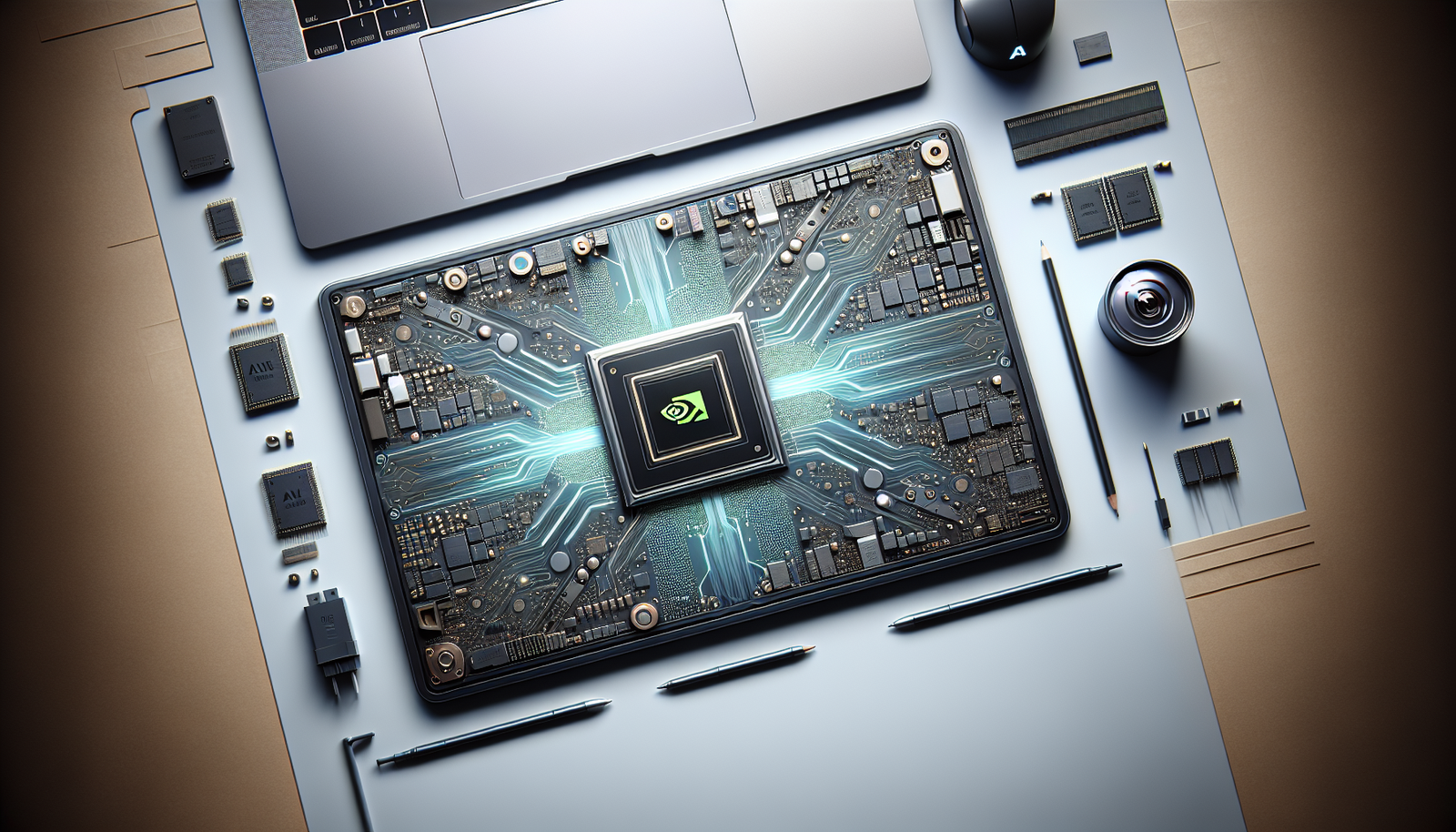
AI Chip Sales: Nvidia’s $1 Trillion Bet and Developer Insights
“`html
AI chip sales are projected to reach $1 trillion by 2027, positioning AI as a cornerstone for numerous industries. This projection was highlighted during Jensen Huang’s keynote at Nvidia’s GTC conference, where he emphasized the need for an “OpenClaw strategy.” In this post, we will explore the implications of Nvidia’s vision, the technical underpinnings of their AI tools, and what this means for developers looking to leverage AI in their projects.
What Is AI Chip Sales?
AI chip sales refer to the market revenues generated from the production and sale of specialized hardware designed for artificial intelligence applications. This includes GPUs, TPUs, and other accelerators specifically built to handle complex computations required in AI workloads. With Nvidia’s recent announcement projecting $1 trillion in sales by 2027, the significance of AI hardware in driving innovation and performance across various sectors is underscored.
Why This Matters Now
The recent Nvidia GTC conference highlighted the urgency for companies to adopt an “OpenClaw strategy” to remain competitive in the rapidly evolving AI landscape. This strategy emphasizes openness and collaboration among AI frameworks and tools. With industries like autonomous vehicles, healthcare, and entertainment increasingly relying on AI technologies, understanding the landscape of AI chip sales is critical for developers. This shift is not merely a trend; it reflects a fundamental change in how businesses operate, making it essential for developers to adapt and innovate.
Technical Deep Dive
To understand the implications of Nvidia’s projections and their OpenClaw strategy, let’s dive into the technical aspects of AI chip architecture and design. AI chips are optimized for parallel processing, enabling them to perform multiple calculations simultaneously. The architecture typically includes:
- Multi-core Processing Units: These are designed to handle various tasks concurrently.
- Memory Bandwidth: High bandwidth is crucial for data-intensive tasks common in AI applications.
- Tensor Cores: Specialized cores for matrix operations, which are fundamental in deep learning.
Here’s a simple example of how to set up a basic AI model using TensorFlow, which utilizes GPU acceleration:
import tensorflow as tf

# Load dataset
(x_train, y_train), (x_test, y_test) = tf.keras.datasets.mnist.load_data()

# Normalize data
x_train, x_test = x_train / 255.0, x_test / 255.0

# Create model
model = tf.keras.models.Sequential([
    tf.keras.layers.Flatten(input_shape=(28, 28)),
    tf.keras.layers.Dense(128, activation='relu'),
    tf.keras.layers.Dropout(0.2),
    tf.keras.layers.Dense(10, activation='softmax')
])

# Compile model
model.compile(optimizer='adam',
              loss='sparse_categorical_crossentropy',
              metrics=['accuracy'])

# Train model
model.fit(x_train, y_train, epochs=5)

# Evaluate model
model.evaluate(x_test, y_test)
This simple example illustrates how developers can leverage AI chips to enhance model training efficiency significantly. With the growth in AI chip sales, tools and libraries optimized for these environments will become more prevalent.
Real-World Applications
1. Autonomous Vehicles
AI chips are pivotal in enabling real-time data processing for autonomous vehicles. Companies like Tesla and Waymo utilize specialized chips to process sensor data and make instantaneous driving decisions.
2. Healthcare Diagnostics
In healthcare, AI chips facilitate rapid analysis of medical images, aiding in diagnostics and treatment planning. Tools like NVIDIA Clara are designed specifically for these applications.
3. Smart Cities
AI technology is transforming urban environments. Smart cameras and IoT devices in cities utilize AI chips for traffic management and public safety, optimizing resource allocation in real-time.
4. Gaming and Animation
In the gaming industry, AI enhances graphics rendering and player interaction. Nvidia’s RTX technology showcases how AI can improve visual fidelity and performance in real-time gaming.
What This Means for Developers
For developers, the rise of AI chips and the OpenClaw strategy signifies a shift in how applications will be designed and deployed. Skills in AI model optimization, understanding hardware capabilities, and leveraging frameworks that exploit parallel processing will be invaluable. Furthermore, developers should focus on:
- Learning about GPU programming and frameworks like TensorFlow and PyTorch.
- Familiarizing themselves with the architecture of AI chips to optimize their applications.
- Exploring partnerships with cloud providers that offer AI chip resources.
💡 Pro Insight: As AI technology becomes increasingly foundational in various sectors, developers who can integrate AI efficiently into their applications will find themselves at the forefront of this technological revolution.
Future of AI Chips (2025–2030)
Looking ahead, the market for AI chips is expected to expand significantly. By 2030, we may see a shift towards more specialized chips tailored for specific applications, such as edge AI and IoT devices. This evolution will likely be driven by the increasing demand for real-time processing and the growing complexity of AI algorithms. Furthermore, the integration of quantum computing with traditional AI chip architectures could redefine performance benchmarks, leading to even faster computation times and more efficient energy usage.
Challenges & Limitations
1. Scalability Issues
As businesses adopt AI technologies, scaling the infrastructure to handle increased workloads can be a significant challenge.
2. Security Concerns
AI systems are not immune to vulnerabilities. Ensuring the integrity and security of AI models is critical, particularly in industries like finance and healthcare.
3. High Development Costs
Developing and deploying AI solutions can be costly, particularly for startups lacking resources compared to established players.
4. Talent Shortage
The rapid growth of AI technologies has outpaced the availability of skilled professionals, making it difficult for companies to find the right talent.
Key Takeaways
- AI chip sales are projected to reach $1 trillion by 2027, indicating a booming market.
- Nvidia’s “OpenClaw strategy” emphasizes collaboration in AI development.
- Developers should focus on optimizing applications for AI chip architectures.
- Real-world applications of AI chips span various industries, from healthcare to autonomous vehicles.
- Future advancements may include specialized chips for specific applications and potential integration with quantum computing.
Frequently Asked Questions
What are AI chips used for?
AI chips are specialized hardware designed to accelerate AI workloads, improving the performance of applications in areas such as machine learning, data analytics, and computer vision.
What is the OpenClaw strategy?
The OpenClaw strategy, as proposed by Nvidia, advocates for open collaboration among AI frameworks and tools to foster innovation and enhance interoperability.
How can developers optimize applications for AI chips?
Developers can optimize applications by understanding the architecture of AI chips, using frameworks that leverage parallel processing, and adapting algorithms for enhanced performance.
For more insights on AI and developer news, follow KnowLatest.
“`


