
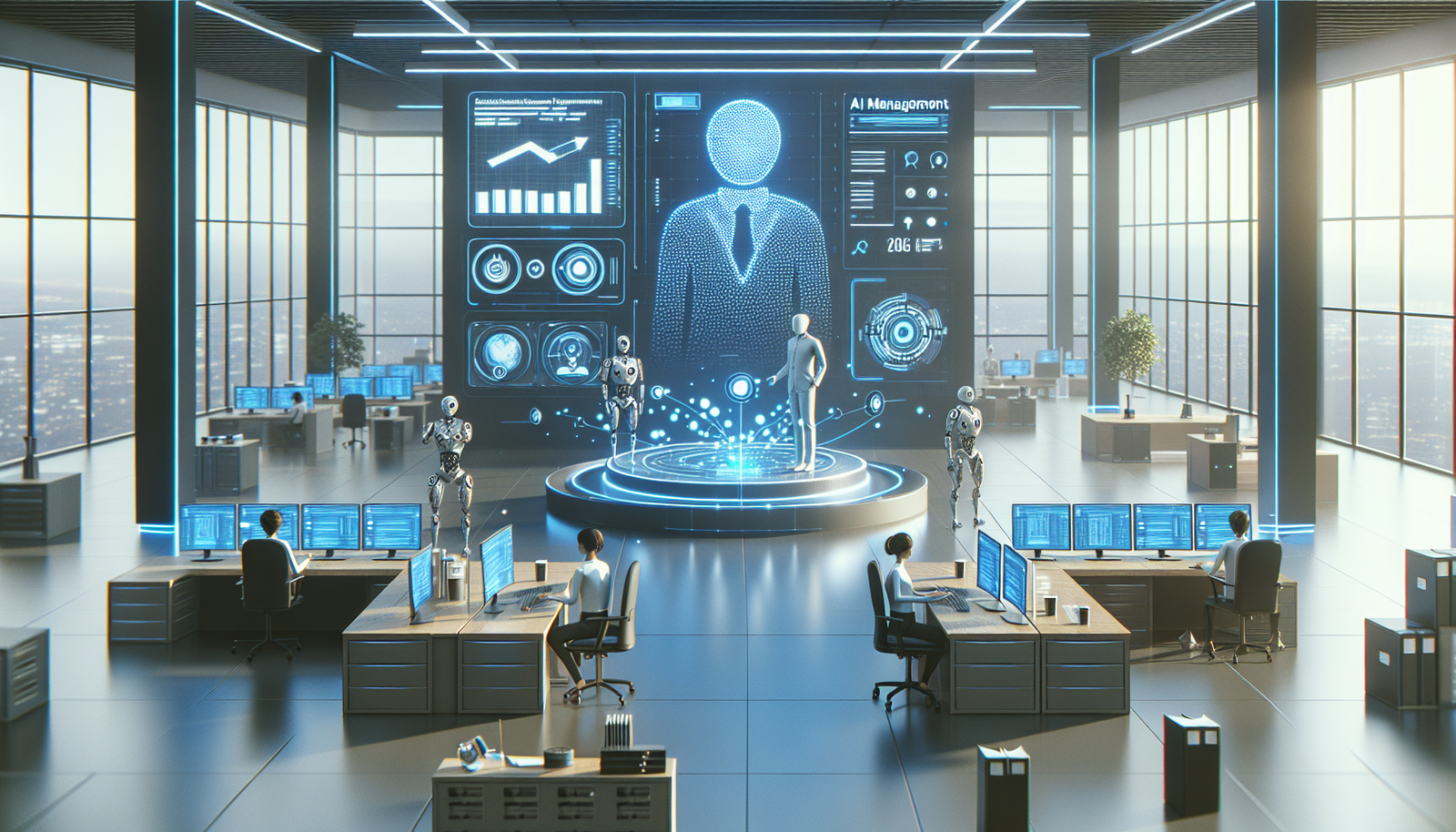
AI Supervisors: The Future of Management in 2026
“`html
AI supervisors refer to artificial intelligence systems that take on managerial roles, such as assigning tasks and setting schedules. Recent findings from a Quinnipiac University poll indicate that 15% of Americans would consider working under an AI boss. This article will explore the implications, technical foundations, and future trends regarding AI management systems.
What Is an AI Supervisor?
An AI supervisor is an artificial intelligence program designed to perform managerial tasks traditionally handled by human managers, such as task assignments and performance evaluations. This concept is gaining traction as organizations look to streamline operations and reduce costs. As highlighted in a recent TechCrunch article, the trend points toward a significant shift in workplace dynamics.
Why This Matters Now
The increasing acceptance of AI supervisors reflects a pivotal change in workplace culture. The Quinnipiac University poll reveals that while only 15% of respondents are eager to work under AI management, the majority acknowledges the potential efficiency gains. This shift toward AI in management roles is driven by several factors:
- Cost Reduction: Companies can reduce overhead by minimizing management layers.
- Efficiency: AI can process data and make decisions faster than a human, enabling quicker task assignments and management.
- Scalability: Organizations can scale operations without a corresponding increase in management staff.
Furthermore, companies like Amazon and Workday are already implementing AI systems to take over specific managerial functions, leading to significant workforce changes.
Technical Deep Dive
The architecture of AI supervisors varies across applications, but several core technologies drive their functioning:
- Natural Language Processing (NLP): Enables AI to understand and generate human language, facilitating communication between AI and employees.
- Machine Learning (ML): Algorithms analyze performance data to optimize task assignments and enhance decision-making.
- Automation Tools: Automate repetitive managerial tasks, such as scheduling and performance tracking.
To illustrate, here’s a simple Python code snippet demonstrating how a basic AI supervisor might assign tasks based on employee performance:
import random

# Sample employee data
employees = {
    'Alice': {'performance_score': 90},
    'Bob': {'performance_score': 70},
    'Charlie': {'performance_score': 85}
}

# Function to assign tasks based on performance
def assign_tasks(employees):
    tasks = ['Complete Report', 'Attend Meeting', 'Update Database']
    assignments = {}
    for employee, data in employees.items():
        if data['performance_score'] > 80:
            assignments[employee] = random.choice(tasks)
    return assignments

# Assign tasks
task_assignments = assign_tasks(employees)
print(task_assignments)
This code evaluates employee performance and assigns tasks accordingly. While simplistic, it captures the essence of how AI can take on management responsibilities.
Real-World Applications
1. Automated Expense Management
Companies like Workday utilize AI agents to streamline expense reporting processes, enabling real-time approvals and reducing administrative burdens.
2. AI-Driven Scheduling
Organizations are using AI to manage employee schedules dynamically, responding to changes in workload and optimizing resource allocation.
3. Performance Analytics
AI supervisors analyze employee performance metrics to provide insights and recommendations for improvement, replacing traditional performance reviews.
What This Means for Developers
As AI supervisors become more prevalent, developers will need to adapt by acquiring skills in:
- Machine Learning: Understanding ML algorithms will be crucial for developing effective AI management systems.
- Data Privacy: With the handling of sensitive employee data, developers must ensure compliance with data protection regulations.
- Natural Language Processing: Proficiency in NLP will be essential for creating user-friendly AI interfaces.
💡 Pro Insight: As AI supervisors continue to evolve, we may see a future where entire organizations operate with minimal human oversight, raising new ethical considerations regarding employment and management.
Future of AI Supervisors (2025–2030)
Looking ahead, the role of AI supervisors is expected to expand significantly. By 2030, we may witness:
- Enhanced Integration: AI systems will be increasingly integrated with existing HR and management software, creating seamless workflows.
- Improved Decision-Making: Advanced ML algorithms will allow AI to make more nuanced decisions, taking into account a wider range of factors.
- Ethical Frameworks: As AI supervisors become more common, organizations will likely develop ethical guidelines governing their use to address employee concerns.
This evolution will not only redefine workplace structures but also reshape employee roles and expectations in the workplace.
Challenges & Limitations
1. Trust Issues
Many employees may find it challenging to trust AI systems, impacting their acceptance and cooperation.
2. Job Displacement
The introduction of AI supervisors may lead to significant job losses, raising ethical questions about workforce management.
3. Data Security Concerns
With AI managing sensitive information, there are substantial risks related to data breaches and unauthorized access.
4. Lack of Emotional Intelligence
AI lacks the emotional intelligence that human managers possess, potentially leading to poor employee relations.
Key Takeaways
- AI supervisors are becoming a reality, with 15% of Americans open to the idea.
- The shift towards AI management is driven by the need for efficiency and cost reduction.
- Developers should enhance their skills in ML, NLP, and data privacy to adapt to this trend.
- Ethical considerations will play a crucial role in the future deployment of AI supervisors.
- Challenges such as trust issues and job displacement need to be addressed as AI becomes more prevalent in management.
Frequently Asked Questions
What are AI supervisors?
AI supervisors are artificial intelligence systems designed to perform managerial tasks such as assigning tasks and evaluating performance.
How will AI impact job opportunities?
While AI can enhance efficiency, it also raises concerns about job displacement, as traditional managerial roles may be automated.
What skills should developers focus on for AI management systems?
Developers should focus on machine learning, natural language processing, and data privacy to build effective AI management systems.
For more insights on AI tools and trends, follow KnowLatest.
“`


