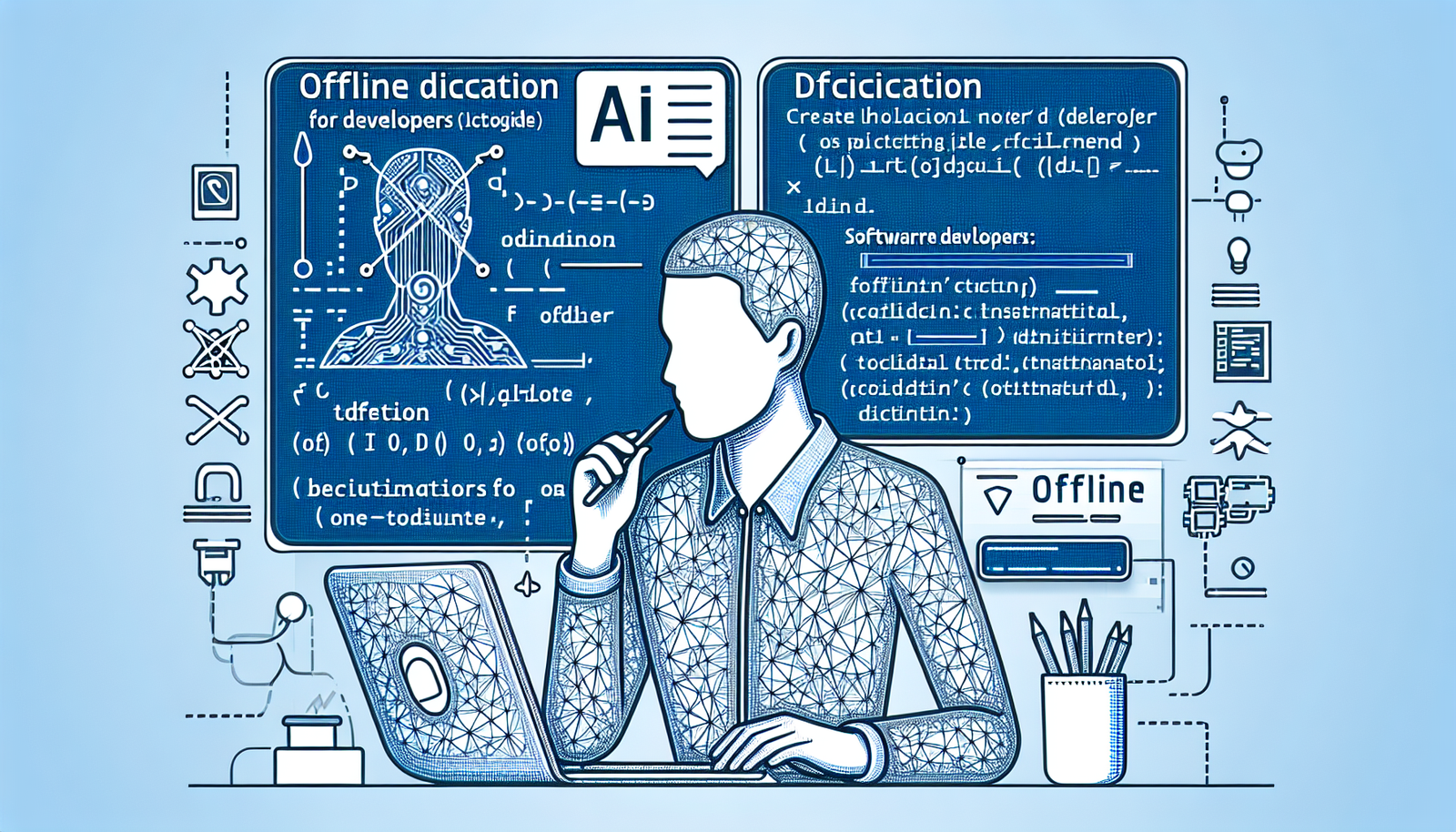
Google AI Edge Eloquent: Offline Dictation for Developers
“`html
AI dictation apps are revolutionizing the way we capture spoken words into text. Google’s new offline-first AI dictation app, named Google AI Edge Eloquent, is designed to offer seamless transcription capabilities without requiring an internet connection. This development is significant as it enhances accessibility and usability in various scenarios. In this post, we’ll explore what makes this app a game-changer for developers and users alike.
What Is Google AI Edge Eloquent?
Google AI Edge Eloquent is an advanced offline dictation app that employs AI models for automatic speech recognition (ASR). This app allows users to dictate text in real-time, even without an internet connection. The significance of this app lies in its ability to process speech locally, providing users with a reliable option for transcription without relying on external servers.
Why This Matters Now
The demand for efficient, offline-capable dictation tools is rapidly increasing, especially in mobile and remote work contexts. As AI models improve, applications like Google AI Edge Eloquent can enhance productivity by minimizing the need for internet access. With competitors like Wispr Flow and SuperWhisper, Google’s entry into the market signifies a shift towards more practical and user-friendly dictation solutions. Developers should care about this trend as it opens new doors for integrating AI-driven features into existing applications.
Technical Deep Dive
The architecture of Google AI Edge Eloquent is built on the Gemma AI models, which allow for local processing of speech inputs. Here’s how the app functions:
- Local Processing: Once downloaded, the app can transcribe speech without needing a live internet connection.
- Real-time Transcription: Users can see live transcriptions on their device, enabling immediate feedback.
- Text Polishing: The app automatically filters out filler words like “um” and “ah”, yielding a cleaner final text.
- Custom Vocabulary: Users can import specific jargon and keywords from their Gmail accounts, adding a layer of personalization.
Here is a sample Python code snippet that demonstrates how to implement a simple voice-to-text functionality using the SpeechRecognition library, which can be a foundational concept for building similar applications:
import speech_recognition as sr

# Initialize recognizer
recognizer = sr.Recognizer()

# Capture audio from the microphone
with sr.Microphone() as source:
    print("Listening...")
    audio = recognizer.listen(source)

# Recognize speech using Google Web Speech API
try:
    text = recognizer.recognize_google(audio)
    print(f"You said: {text}")
except sr.UnknownValueError:
    print("Sorry, I could not understand the audio.")
except sr.RequestError:
    print("Could not request results from Google Speech Recognition service.")
This code captures audio input, processes it, and outputs the recognized text, showcasing a basic implementation of speech recognition.
Real-World Applications
1. Note-taking in Meetings
Professionals can use Google AI Edge Eloquent to dictate notes during meetings, ensuring that no key points are missed.
2. Accessibility for Individuals with Disabilities
This app can assist individuals with disabilities by providing them with an efficient method to communicate through text.
3. Content Creation for Writers
Writers can quickly transcribe their thoughts into written form, enhancing productivity and creativity.
4. Language Learning
Language learners can practice pronunciation and receive immediate feedback through the app’s transcription capabilities.
What This Means for Developers
Developers should consider integrating offline dictation features into their applications. Knowledge of AI models and local processing can enhance existing products and open up new functionalities, particularly in mobile applications. Learning about speech recognition APIs and local model deployment can also provide a competitive edge in the market.
💡 Pro Insight: The rise of offline AI dictation apps represents a significant shift in how we interact with technology, making it essential for developers to adapt quickly. As more users seek privacy and reliability, mastering local processing will be key for future innovations in this space.
Future of AI Dictation Apps (2025–2030)
As we look to the future, AI dictation apps will likely become more sophisticated, integrating features such as advanced natural language processing and personalization. By 2030, we can expect these applications to leverage user behavior data to enhance accuracy and context awareness, creating a more seamless user experience. Moreover, with the ongoing improvements in AI models, we may see broader applications across industries such as healthcare, legal, and education.
Challenges & Limitations
1. Accuracy of Transcription
While Google AI Edge Eloquent aims to provide accurate transcriptions, challenges remain in recognizing diverse accents and dialects, which can affect usability.
2. Device Limitations
Offline processing may be constrained by the device’s hardware capabilities, potentially impacting performance.
3. Limited Features Compared to Cloud
Some advanced features available in cloud-based services may not be accessible when using offline models, limiting functionality.
4. User Adaptation
Users may require time to adapt to new dictation technologies, affecting initial adoption rates.
Key Takeaways
- Google AI Edge Eloquent offers an offline-first dictation solution that enhances user experience.
- The app utilizes advanced Gemma AI models for accurate speech recognition.
- Customization options allow users to personalize their dictation experience.
- Real-time transcription improves efficiency for professionals and content creators.
- Developers have opportunities to integrate similar offline capabilities into their applications.
Frequently Asked Questions
What is Google AI Edge Eloquent?
Google AI Edge Eloquent is an offline-first dictation app that uses AI to transcribe speech into text, allowing users to dictate without an internet connection.
How does the app handle filler words?
The app automatically filters out filler words like “um” and “ah,” providing a clean and polished transcription.
Can I use custom vocabulary in the app?
Yes, users can import specific jargon from their Gmail accounts and add their own custom words for better accuracy.
For more insights on AI tools and updates, follow KnowLatest.
“`


