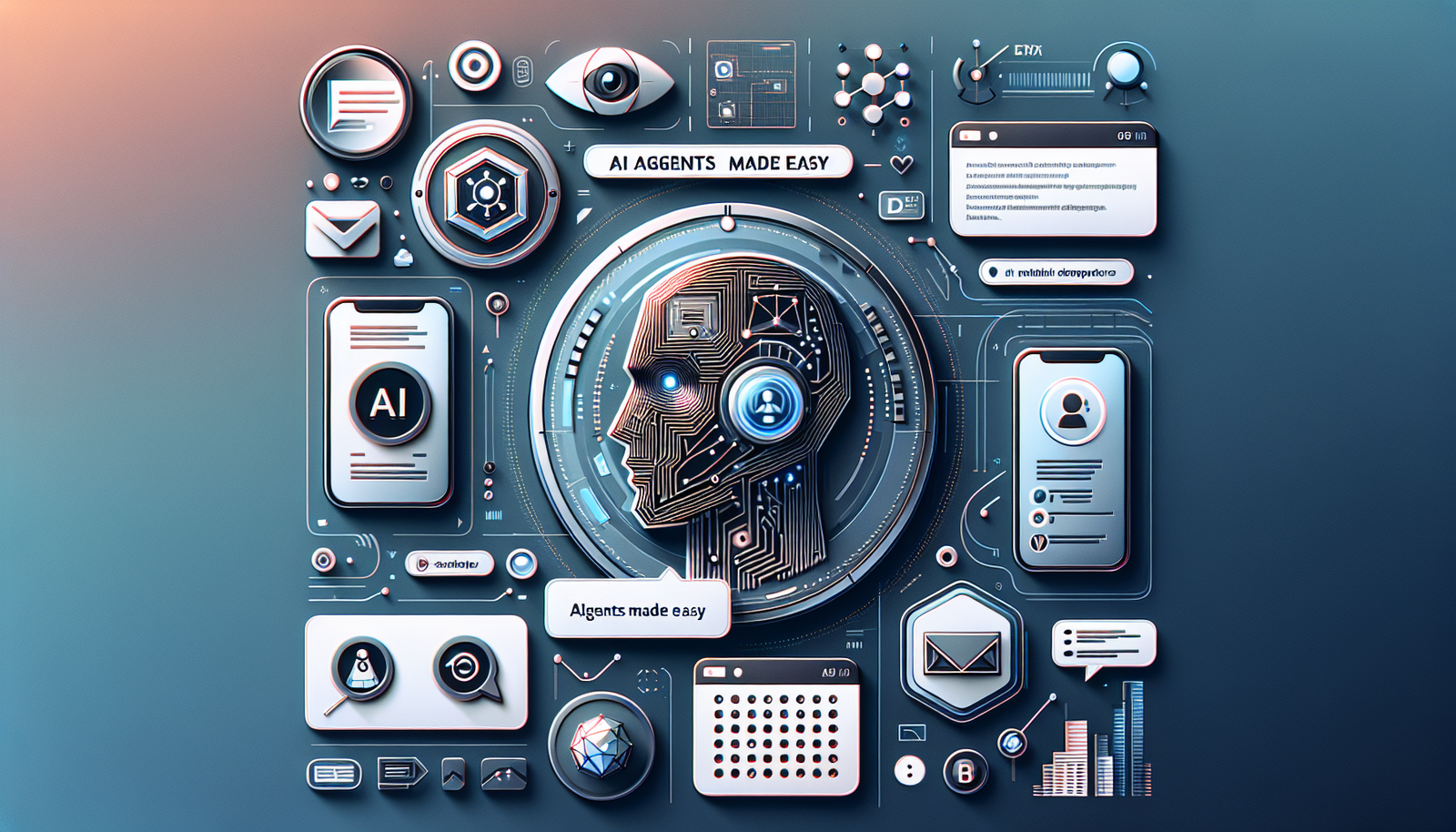
AI Agents Made Easy: Poke’s Text Messaging Revolution
“`html
AI agents are intelligent software systems capable of performing tasks autonomously or semi-autonomously. Poke, a new startup, has made these agents accessible through text messaging platforms, simplifying their use for everyday tasks. In this article, we’ll explore how Poke is revolutionizing the way users interact with AI agents, what this means for developers, and the future of AI in daily life.
What Is an AI Agent?
An AI agent is a software entity that can autonomously perform tasks, make decisions, and interact with users based on predefined parameters or learned experiences. Poke leverages this capability to allow users to interact with AI agents through text messaging platforms like SMS and iMessage. This accessibility is crucial as it democratizes AI technology, making it usable for individuals without technical expertise.
Why This Matters Now
The rise of AI agents coincides with increasing demand for automation in daily life. As technology evolves, users seek intuitive AI solutions that do not require extensive setup or technical know-how. Poke addresses this need by providing a user-friendly interface for interacting with AI agents. Recent advancements, including significant investments and interest from major players like Nvidia, highlight the urgency and relevance of this trend in the tech landscape.
Technical Deep Dive
Poke operates as a conversational interface for AI agents, managing complex tasks through simple text commands. Here’s how it works:
- Integration with Messaging Platforms: Poke connects to popular messaging services, enabling users to send commands directly via SMS, Telegram, and more.
- AI Model Selection: Under the hood, Poke dynamically chooses the most suitable AI model for the task at hand, whether from established providers or open-source options.
- User-Friendly Command Structure: Users can issue commands in plain text, making it easy to automate tasks without technical jargon.
Here’s an example of how to set up a daily reminder using Poke:
Send a text to Poke: "Remind me to take my medication at 8 AM daily."This command is processed, and Poke will handle the scheduling and notifications. This ease of use contrasts sharply with more complex systems requiring terminal commands and manual configurations.
Real-World Applications
1. Health Management
Poke can send reminders for medication or daily health check-ins. Users can automate these tasks, significantly improving adherence to health regimens.
2. Smart Home Control
Integrating with smart home devices, Poke can control lighting, temperature, and security systems through simple text commands, making home automation accessible to non-technical users.
3. Personal Assistant Tasks
From managing calendars to tracking fitness goals, Poke serves as a versatile personal assistant, allowing users to focus on their priorities while automating mundane tasks.
What This Means for Developers
For developers, Poke represents a shift towards more accessible AI technologies. Here are key takeaways:
- Focus on user experience: Simplifying interactions with AI agents can drive adoption.
- Emphasize integration capabilities: Developers should consider how their applications can interface with popular messaging platforms.
- Explore automation opportunities: Automating repetitive tasks can significantly enhance user productivity.
💡 Pro Insight: As AI continues to permeate daily life, solutions like Poke will redefine user-agent interactions, making AI a seamless part of everyday activities. The challenge for developers will be creating intuitive interfaces that keep pace with user expectations.
Future of AI Agents (2025–2030)
Looking ahead, AI agents like Poke are poised to become integral to personal and professional workflows. By 2030, we can expect:
- Increased Personalization: AI agents will become more adept at understanding user preferences, allowing for highly personalized automation.
- Broader Integration: The integration of AI agents with various platforms and services will expand, providing users with a more cohesive experience across their digital lives.
- Enhanced Security Measures: As AI agents handle more sensitive tasks, developers will need to prioritize security to build user trust in these systems.
Challenges & Limitations
1. Security Risks
As Poke and similar platforms require access to personal data, there are inherent security risks that must be mitigated to protect user information.
2. Dependency on Internet Connectivity
Reliance on messaging platforms means that a stable internet connection is essential for the functionality of AI agents like Poke.
3. User Privacy Concerns
Users may hesitate to share personal information with AI agents, necessitating transparent privacy policies and robust data protection measures.
4. Limited Understanding of Context
While Poke simplifies interactions, its ability to understand complex commands or context can still be limited compared to more advanced AI systems.
Key Takeaways
- Poke simplifies AI agent interaction through text messaging, making it accessible for all users.
- User-friendly design reduces the barrier to entry for non-technical users.
- AI agents can significantly enhance productivity in personal and professional settings.
- Future developments will need to address security and privacy concerns to gain user trust.
- Developers should focus on seamless integrations and personalized experiences to enhance user engagement.
Frequently Asked Questions
What is an AI agent?
An AI agent is a software program capable of autonomously handling tasks based on user input or learned behavior, often interacting through conversational interfaces.
How does Poke improve user interaction with AI agents?
Poke allows users to issue commands via text messaging, eliminating the need for complex setups or technical expertise, making AI automation accessible to everyone.
What are the security concerns related to AI agents?
Security concerns include potential data breaches, user privacy issues, and the need for robust security protocols to protect sensitive information handled by AI agents.
For more insights into AI tools and technology, follow KnowLatest for the latest updates and resources.
“`