AI Agents: The End of Clicking Buttons in Software
“`html
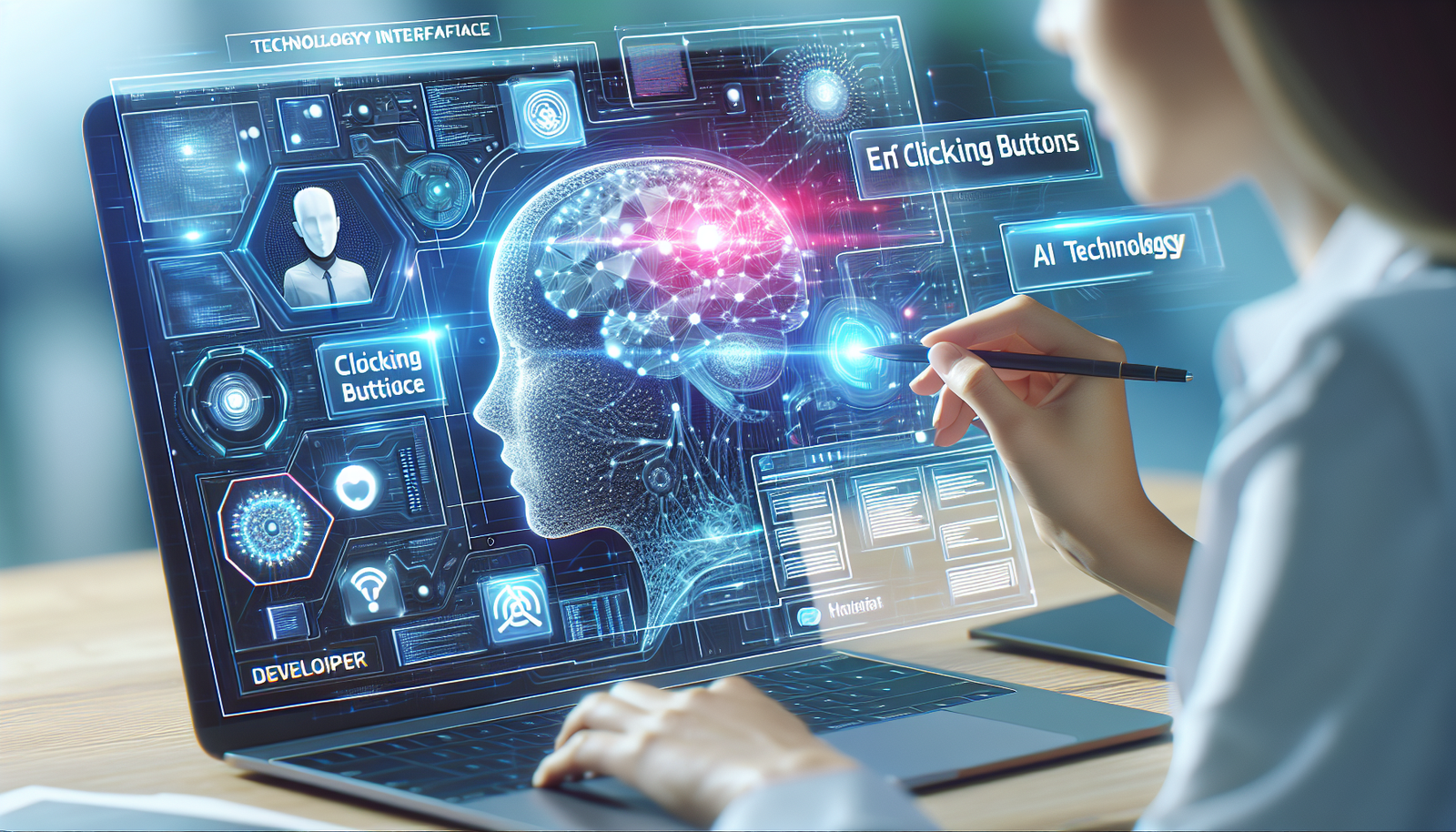
AI agents refer to software programs that autonomously perform tasks based on user prompts, significantly transforming how we interact with technology. Recently, Bret Taylor, co-founder of Sierra, asserted that the era of clicking buttons is over, highlighting a shift towards language-driven interfaces. In this article, you will learn how AI agents are revolutionizing software development and user interaction, the technical frameworks behind them, and their implications for developers.
What Is AI Agents?
AI agents are intelligent systems designed to autonomously execute tasks based on user-defined natural language prompts. This paradigm shift moves away from traditional user interfaces that rely on clicking buttons, offering a more intuitive interaction model. With the rise of tools like Sierra’s Ghostwriter, organizations can leverage AI agents to automate processes, thereby increasing efficiency and reducing the learning curve associated with complex software systems.
Why This Matters Now
The emergence of AI agents is particularly relevant as enterprises seek to enhance productivity while minimizing the cognitive load on employees. As Bret Taylor, co-founder of Sierra, pointed out, many enterprise applications are underutilized because they are complicated to navigate. The recent launch of Ghostwriter, which enables users to create specialized agents through simple prompts, marks a significant advancement in this field. This innovation addresses pressing challenges in user engagement and operational efficiency, making it crucial for developers to understand the implications of AI agents in the software landscape.
Technical Deep Dive
The architecture behind AI agents typically involves a combination of natural language processing (NLP), machine learning models, and user interface design. Below, we delve into the technical aspects of implementing AI agents:
import openai

# Function to create an AI agent that responds to user prompts
def create_ai_agent(prompt):
    response = openai.ChatCompletion.create(
        model="gpt-4",
        messages=[{"role": "user", "content": prompt}],
    )
    return response['choices'][0]['message']['content']

# Example usage
if __name__ == "__main__":
    user_prompt = "Create a task management agent for our team."
    agent_response = create_ai_agent(user_prompt)
    print(agent_response)
This code snippet utilizes OpenAI’s API to create an AI agent that can respond to user prompts. The key components include:
- Natural Language Processing: The agent interprets user input to generate appropriate responses.
- Model Selection: Using models like GPT-4 ensures high-quality output and adaptability.
- Deployment: Agents can be integrated into existing workflows through APIs, enabling seamless user experience.
In addition to the code implementation, organizations often adopt a microservices architecture to facilitate the deployment and scaling of AI agents. This allows for individual agents to be updated or replaced without affecting the entire system.
Real-World Applications
Customer Support Automation
AI agents can be deployed to handle customer inquiries autonomously, reducing the workload on human agents. Companies like Nordstrom have successfully implemented such solutions to enhance customer experience.
Task Management Systems
Organizations can utilize AI agents to create personalized task management systems. By allowing users to dictate tasks, these agents streamline workflow management and improve productivity.
Data Analysis and Reporting
AI agents can automate data analysis processes by generating reports based on user queries. This capability is particularly beneficial in industries like finance and healthcare, where timely data insights are critical.
Integration with Existing Tools
Many AI agents can be integrated with tools like Slack, Microsoft Teams, or CRM systems, allowing users to interact with them in familiar environments. This integration enhances user adoption and satisfaction.
What This Means for Developers
Developers are now tasked with building systems that support AI-driven interactions. This shift necessitates skills in:
- Natural Language Processing: Understanding how to implement and optimize NLP models.
- API Development: Creating APIs that allow seamless integration of AI agents into existing applications.
- Microservices Architecture: Designing systems that are modular and can easily incorporate AI functionalities.
Moreover, developers must focus on user experience design, ensuring that interactions with AI agents are intuitive and productive.
💡 Pro Insight: The next evolution in software development will hinge on the ability to create AI agents that not only understand complex queries but also anticipate user needs, leading to a more proactive approach to technology.
Future of AI Agents (2025–2030)
Looking ahead, the future of AI agents appears promising. By 2030, we can expect significant advancements in their autonomy and capabilities. As machine learning models become increasingly sophisticated, AI agents will likely handle more complex tasks without human intervention.
Additionally, the integration of AI agents into everyday applications will become standard practice. This will not only enhance user experience but also transform how businesses operate, moving from manual inputs to conversational interfaces.
Challenges & Limitations
Dependence on Data Quality
The effectiveness of AI agents is heavily reliant on the quality of the data they are trained on. Poor data can lead to inaccurate responses and a frustrating user experience.
Integration Complexity
Integrating AI agents into existing systems can be complex and time-consuming, requiring careful planning and execution to avoid disruptions.
User Acceptance
While AI agents offer many benefits, user acceptance is crucial. Training users to trust and effectively interact with AI agents is a significant hurdle that must be addressed.
Ethical Considerations
As AI agents become more prevalent, ethical considerations surrounding data privacy and user consent will become increasingly important. Developers must ensure compliance with regulations and ethical standards.
Key Takeaways
- AI agents are changing the way users interact with software by using natural language prompts.
- Tools like Sierra’s Ghostwriter enable rapid deployment of specialized agents.
- Understanding NLP and API development is critical for developers in this evolving landscape.
- Real-world applications span multiple industries, enhancing efficiency and user satisfaction.
- Future advancements will likely increase the autonomy of AI agents, making them more capable of handling complex tasks.
Frequently Asked Questions
What are AI agents used for? AI agents are used for automating tasks, such as customer support, data analysis, and workflow management, by interpreting user prompts and executing commands autonomously.
How do AI agents improve productivity? By reducing the need for manual inputs and allowing users to interact through natural language, AI agents streamline processes and make software more accessible.
What skills are necessary for developing AI agents? Developing AI agents requires skills in natural language processing, API development, and an understanding of microservices architecture.
Stay updated with the latest developments in AI and technology by following KnowLatest.
“`