AI Dictation: Google AI Edge Eloquent Overview
“`html
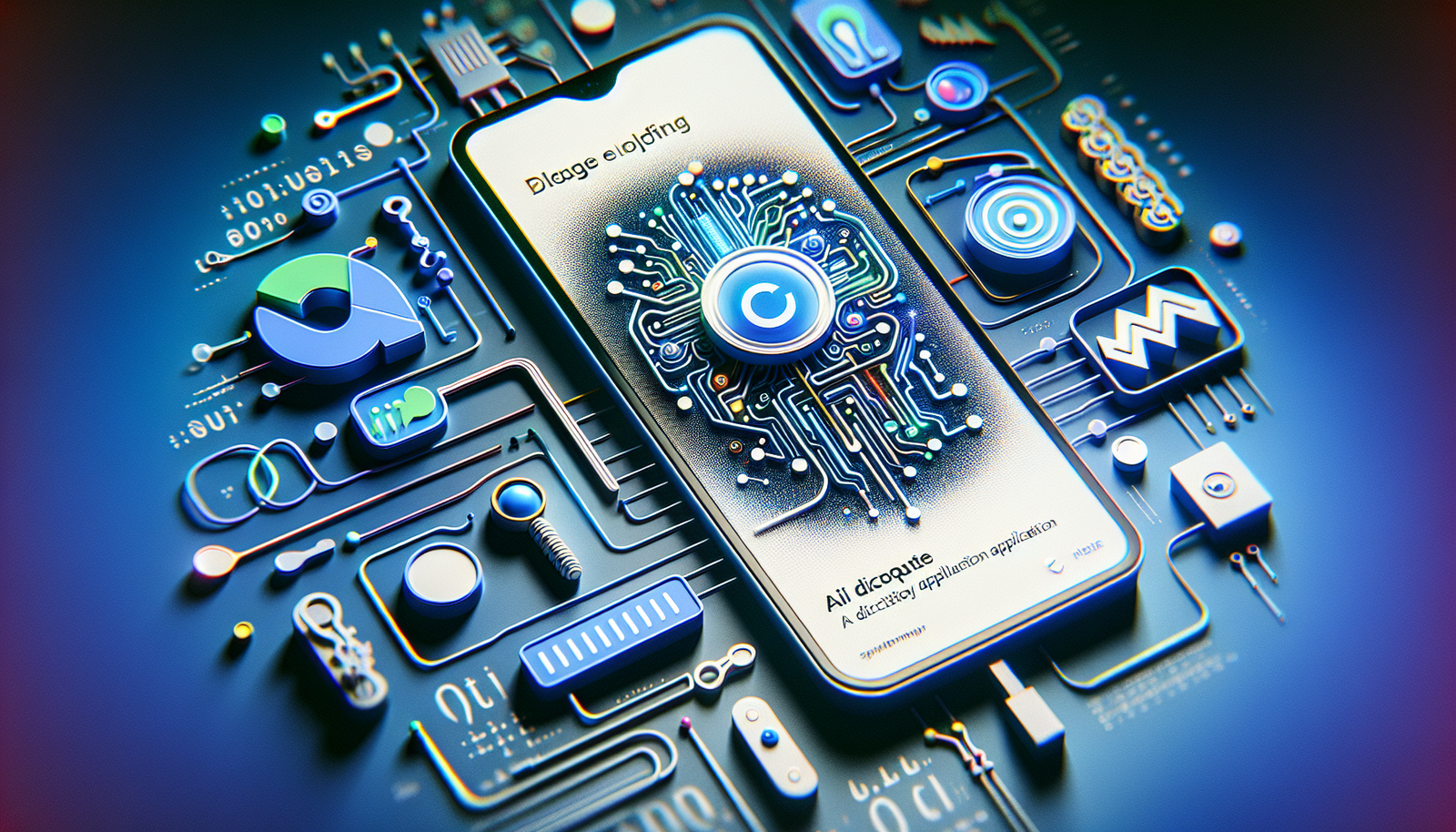
AI dictation apps are tools that convert spoken language into written text, enhancing productivity and communication. Recently, Google launched an offline-first AI dictation app, named Google AI Edge Eloquent, which aims to compete with existing solutions like Wispr Flow. This post will explore the app’s technical features, real-world applications, and implications for developers.
What Is AI Dictation?
AI dictation refers to software that employs artificial intelligence to convert spoken words into text, often enhancing accuracy and efficiency through natural language processing (NLP). With the introduction of Google’s AI Edge Eloquent, the landscape of dictation apps is evolving, especially with its offline capabilities, which is crucial for users who require functionality without internet connectivity.
Why This Matters Now
The release of Google AI Edge Eloquent comes at a time when the demand for efficient and reliable transcription tools is surging. The rise of remote work and the need for seamless communication tools have made dictation apps essential for professionals across various sectors. Google’s entry into this space signifies a growing trend toward AI-powered solutions that prioritize user experience and data privacy, especially as concerns about data security in cloud-based services intensify.
Moreover, the app’s offline functionality addresses a critical gap in the market, allowing users to dictate without relying on constant internet access. This feature can significantly enhance productivity in environments with limited connectivity and can be particularly beneficial for industries such as healthcare, legal, and education, where transcription accuracy is paramount.
Technical Deep Dive
Google AI Edge Eloquent utilizes advanced Gemma AI models for automatic speech recognition (ASR), enabling it to transcribe and process speech with remarkable accuracy. The app’s architecture is designed to function offline, which involves several key components:
- Gemma Models: These models are pre-trained to recognize various speech patterns and nuances, allowing for real-time transcription.
- Local Processing: Users can enable local-only processing to ensure data security and privacy, reducing reliance on cloud infrastructure.
- Text Polishing: The app automatically filters out filler words such as “um” and “ah,” presenting users with polished text.
The following Python code snippet demonstrates a simplified version of how one might implement a basic offline speech-to-text model using popular libraries:
import speech_recognition as sr

# Initialize recognizer
recognizer = sr.Recognizer()

# Use the microphone as source for input
with sr.Microphone() as source:
    print("Please speak:")
    audio_data = recognizer.listen(source)

# Recognize speech using Google Web Speech API (offline models can be implemented similarly)
try:
    text = recognizer.recognize_google(audio_data, show_all=False)
    print("You said: ", text)
except sr.UnknownValueError:
    print("Could not understand the audio.")
except sr.RequestError as e:
    print(f"Could not request results; {e}")
This code showcases the fundamental components of speech recognition, but Google AI Edge Eloquent enhances these processes significantly with its proprietary technology.
Real-World Applications
Healthcare Documentation
In the healthcare industry, accurate and timely documentation is essential. Google AI Edge Eloquent can assist healthcare professionals by transcribing patient notes during consultations, allowing them to focus more on patient interaction rather than manual note-taking.
Legal Transcription Services
Legal professionals often need to document meetings, depositions, and client interactions. The app’s offline capabilities ensure that lawyers can dictate notes in courtrooms or other settings without internet access, while the text polishing features enhance the clarity of the documents produced.
Content Creation for Writers
Writers can utilize Google AI Edge Eloquent to streamline the creative process. By dictating thoughts and ideas, they can quickly generate drafts while minimizing distractions from typing, thus improving their workflow.
Education and Student Note-Taking
Students can benefit from using the app during lectures. The ability to transcribe spoken words into text allows for better retention of information and can help students review concepts later.
What This Means for Developers
For developers looking to integrate dictation capabilities into their applications, understanding the architecture and functionality of tools like Google AI Edge Eloquent is crucial. Key takeaways include:
- Exploring offline capabilities will enhance user experience, especially in mobile applications.
- Utilizing AI models for speech recognition can significantly improve transcription accuracy.
- Implementing features such as text polishing and custom vocabulary can differentiate applications in a competitive market.
💡 Pro Insight
💡 Pro Insight: As AI-driven transcription technologies like Google AI Edge Eloquent gain traction, developers should anticipate an increasing demand for enhanced privacy features. The future will likely see more applications adopting offline capabilities to cater to user concerns about data security.
Future of AI Dictation (2025–2030)
Looking ahead, the field of AI dictation is poised for significant advancements. By 2025, we will likely see improved accuracy and efficiency in speech recognition technologies, driven by advancements in machine learning and natural language processing. Furthermore, as users become more privacy-conscious, offline-first applications will become the norm rather than the exception.
Another expected trend is the integration of dictation technologies with other AI tools, such as sentiment analysis and context-aware applications. This could lead to more personalized user experiences, where applications adapt to the speaker’s style and preferences.
Challenges & Limitations
Model Accuracy in Diverse Environments
While AI models have made significant strides, they still face challenges in accurately transcribing speech from diverse accents and environments with background noise. This can limit the effectiveness of offline dictation apps in real-world scenarios.
Resource Intensity
Running advanced AI models locally can be resource-intensive, requiring substantial processing power and storage. This can be a limitation for users with lower-end devices.
User Adaptation
Users may need time to adapt to the app’s features and functionalities, especially if they are accustomed to traditional dictation methods. Ensuring a smooth onboarding experience will be crucial for user retention.
Key Takeaways
- Google AI Edge Eloquent is a game-changer for offline dictation with its Gemma AI models.
- The app enhances transcription accuracy by filtering out filler words and providing polished text.
- Real-world applications span across healthcare, legal, content creation, and education.
- Developers can leverage the app’s architecture to improve their own applications’ dictation capabilities.
- Future trends will likely emphasize privacy and integration with other AI technologies.
Frequently Asked Questions
What is the advantage of offline dictation apps?
Offline dictation apps allow users to transcribe spoken words without relying on internet connectivity, ensuring functionality in environments with limited or no access to the internet.
How does Google AI Edge Eloquent improve transcription accuracy?
The app uses advanced AI models to recognize and process speech, filtering out filler words and providing polished text that aligns with the speaker’s intended message.
What industries benefit from AI dictation technology?
Industries such as healthcare, legal, education, and content creation can significantly benefit from AI dictation technology by improving efficiency and accuracy in documentation.
Stay updated with the latest in AI and developer tools by following KnowLatest for more insights and news.