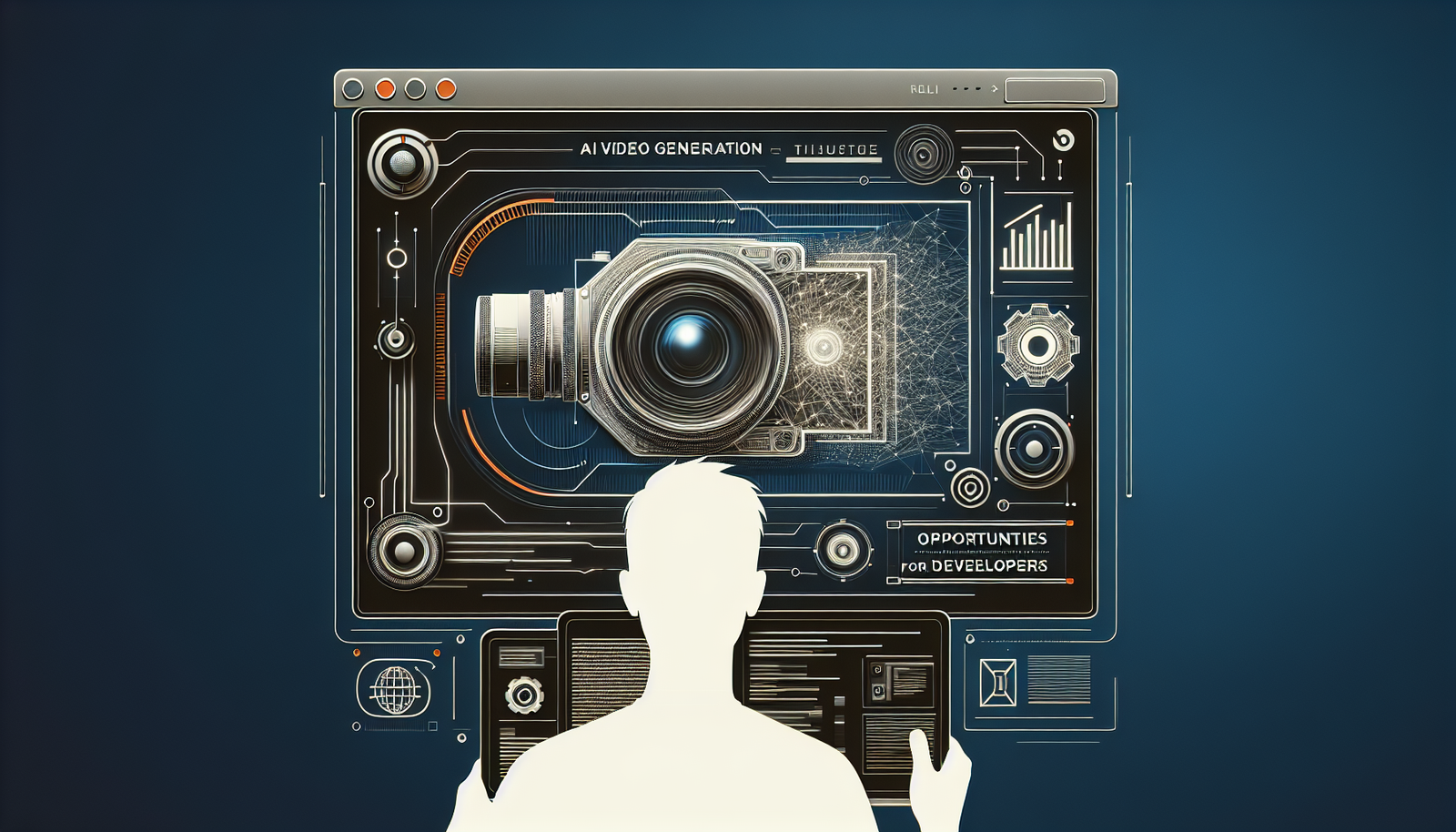
AI Video Generation: Opportunities for Developers
“`html
AI video generation refers to the use of artificial intelligence to create or manipulate video content automatically. As highlighted by the recent announcement from Runway, which is launching a $10 million fund and Builders program to support early-stage AI startups, the focus is shifting towards creating an ecosystem around AI video models. In this post, we will explore what AI video generation entails, its growing importance, and how developers can leverage emerging opportunities in this space.
What Is AI Video Generation?
AI video generation is the process of using machine learning algorithms to create video content, either from scratch or by manipulating existing footage. This technology is significant as it allows for rapid content creation and personalization, enabling a new dimension of storytelling that is highly interactive and scalable. With Runway’s initiative to invest in startups that build on these AI models, the demand for innovative applications in this field is increasing.
Why This Matters Now
The need for AI video generation technology is becoming critical due to the rising demand for personalized content in various industries, including film, advertising, and marketing. Runway’s recent launch of a $10 million fund aims to support startups exploring these applications, as stated by Alejandro Matamala Ortiz, co-founder and chief design officer of Runway. The industry is witnessing a shift towards interactive media and real-time video intelligence, where AI can enhance user engagement through tailored experiences.
This growing trend is not only about creating videos but also involves building infrastructure and application layers that can support new interactive use cases. The convergence of AI with media creation is poised to redefine how content is produced and consumed, making this a pivotal moment for developers in the AI space.
Technical Deep Dive
To understand AI video generation, it’s essential to delve into the underlying technologies and methodologies that drive this innovation. Key components include:
- Generative Adversarial Networks (GANs): These models consist of two neural networks — a generator and a discriminator — that work together to produce realistic video content.
- Natural Language Processing (NLP): This allows for the generation of scripts or voiceovers based on textual input, enhancing the storytelling aspect of video creation.
- Multimodal Learning: Combining various data types (video, audio, text) to create rich, interactive experiences. This is where companies like LanceDB come into play, as they build databases that facilitate this integration.
Below is a simplified example of how you might generate a video using Python and a GAN model:
import tensorflow as tf
from tensorflow.keras import layers

# Define the GAN model
def create_gan_model():
    generator = tf.keras.Sequential([
        layers.Dense(256, input_shape=(100,)),
        layers.LeakyReLU(),
        layers.Dense(512),
        layers.LeakyReLU(),
        layers.Dense(1024),
        layers.LeakyReLU(),
        layers.Dense(28 * 28 * 1, activation='tanh'),
        layers.Reshape((28, 28, 1))
    ])

    discriminator = tf.keras.Sequential([
        layers.Flatten(input_shape=(28, 28, 1)),
        layers.Dense(512),
        layers.LeakyReLU(),
        layers.Dense(256),
        layers.LeakyReLU(),
        layers.Dense(1, activation='sigmoid')
    ])

    return generator, discriminator

# Instantiate the GAN model
generator, discriminator = create_gan_model()
This code demonstrates the basic structure of a GAN model that could be extended to generate video frames. However, for real applications, more complex architectures and training processes are required.
Real-World Applications
Film and Entertainment
AI video generation can automate aspects of film production, from scriptwriting to visual effects, enabling filmmakers to focus on creative aspects. Companies like Runway are leading the way in offering tools that enhance creative workflows.
Advertising
Brands can leverage AI-generated videos to create personalized marketing campaigns. By analyzing user data, these tools can produce tailored video content that resonates with target audiences, increasing engagement and conversion rates.
Education
Interactive video content can enhance learning experiences. AI can generate instructional videos based on curriculum requirements, offering a customizable approach to education that adapts to different learning styles.
Gaming
In the gaming industry, AI can create dynamic narratives and environments. Developers can use AI video generation to produce real-time content that responds to player actions, significantly enriching the gaming experience.
What This Means for Developers
For developers, the rise of AI video generation presents new opportunities and challenges. Skills in machine learning frameworks, particularly in TensorFlow and PyTorch, will become increasingly valuable. Understanding how to integrate various AI models, including GANs and NLP, into applications will be crucial. Developers should also focus on building APIs that facilitate seamless interactions between different media types.
💡 Pro Insight
💡 Pro Insight: The future of AI video generation will likely see a significant shift towards collaborative tools that enable real-time co-creation between AI and human creators. As the technology evolves, we may witness an explosion of user-generated content that leverages AI to enhance creativity and engagement.
Future of AI Video Generation (2025–2030)
Over the next 5 years, AI video generation is expected to evolve significantly. With advancements in multimodal learning, we will see the creation of more sophisticated models that can seamlessly integrate video, audio, and text data. This will lead to richer, more engaging content that is highly personalized and contextually relevant.
Moreover, as computational power increases and costs decrease, we can anticipate a democratization of this technology, allowing smaller developers and startups to create high-quality video content without extensive resources. The combination of AI and creative tools will redefine industries, particularly in media and entertainment, setting new standards for audience engagement.
Challenges & Limitations
Quality Control
Despite advancements, ensuring the quality of AI-generated videos remains a challenge. Developers must implement robust validation mechanisms to avoid producing misleading or low-quality content.
Ethical Concerns
The use of AI in video generation raises ethical issues, including copyright concerns and the potential for misinformation. Developers need to be aware of these risks and design systems that mitigate them.
Integration Complexity
Building applications that effectively integrate AI video generation with existing workflows can be complex. Developers must consider architecture decisions that support scalability and ease of use.
Resource Requirements
AI models require significant computational resources, which may be a barrier for smaller companies. Optimizations and efficient resource management will be essential for broader adoption.
Key Takeaways
- AI video generation utilizes machine learning to create or manipulate video content automatically.
- The demand for personalized content in various industries is driving the growth of AI video technology.
- Key technologies include GANs, NLP, and multimodal learning, which are essential for developing innovative applications.
- Real-world applications span across film, advertising, education, and gaming, highlighting the versatility of AI video generation.
- Developers should focus on mastering machine learning frameworks and API integrations to leverage this technology effectively.
Frequently Asked Questions
What is AI video generation?
AI video generation refers to the use of artificial intelligence technologies to automatically create or manipulate video content, enhancing the speed and personalization of video production.
How does AI video generation impact the film industry?
AI video generation can streamline various production processes, from scriptwriting to post-production, allowing filmmakers to focus more on creative storytelling and less on technical constraints.
What skills are needed to work in AI video generation?
Developers should be proficient in machine learning frameworks like TensorFlow or PyTorch, understand generative models like GANs, and be capable of integrating multiple data types into cohesive applications.
To stay informed about the latest developments in AI and technology, follow KnowLatest for more insights.