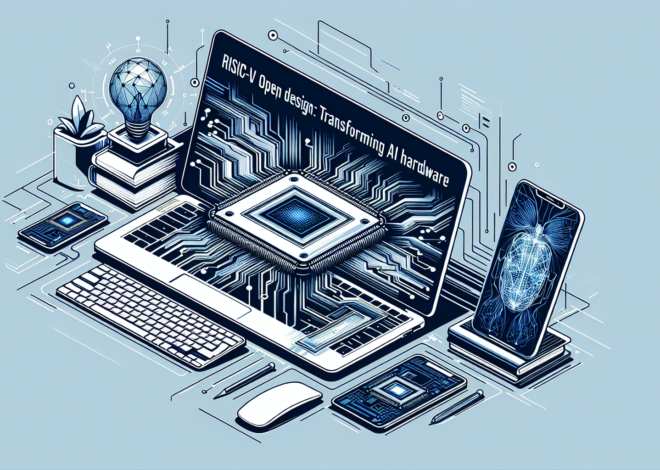
RISC-V Chip Design: The Future of AI Hardware
“`html
RISC-V chip design refers to open-source architecture for microprocessors that allows developers to customize hardware according to specific needs. Recently, SiFive, a key player in this space, achieved a valuation of $3.65 billion, largely thanks to support from Nvidia, which underscores the growing interest in RISC-V for AI applications. In this post, we’ll explore the implications of this development for developers and the future of open AI chips.
What Is RISC-V Chip Design?
RISC-V chip design refers to an open standard instruction set architecture (ISA) that allows developers to create custom processor designs without the licensing fees associated with proprietary architectures like ARM or x86. This flexibility makes it particularly advantageous for specialized applications such as AI and embedded systems. As SiFive’s recent valuation highlights, the potential for RISC-V in the AI domain is rapidly expanding.
Why This Matters Now
The valuation milestone of SiFive comes at a time when the AI industry is witnessing unprecedented growth. With major players like Nvidia investing in RISC-V, the architecture is gaining traction as a viable alternative to existing CPU technologies. Developers should care about this shift because RISC-V’s open nature offers opportunities for innovation and customization in AI systems, which are crucial for meeting specific performance and efficiency demands.
Technical Deep Dive
Understanding the technical underpinnings of RISC-V is essential for developers looking to leverage its capabilities in AI. The architecture is built on a modular design, which allows numerous extensions and customizations. Here’s a breakdown of how it works:
// RISC-V Assembly Example
.section .text
.globl main
main:
    li a0, 10          // Load immediate value 10 into register a0
    li a1, 20          // Load immediate value 20 into register a1
    add a2, a0, a1     // Add a0 and a1, result in a2
    ret                 // Return from main
This assembly illustrates a simple addition operation using the RISC-V architecture. With SiFive’s designs, you can implement more complex operations specifically tailored for AI workloads.
Moreover, SiFive’s chips are designed to integrate seamlessly with Nvidia’s CUDA software and NVLink Fusion system. This integration allows for efficient data processing and communication between CPUs and GPUs, which is essential for AI applications. Below is a comparison table highlighting the differences between RISC-V, ARM, and x86 architectures:
| Feature | RISC-V | ARM | x86 |
|---|---|---|---|
| Licensing | Open Source | Proprietary | Proprietary |
| Customization | High | Moderate | Low |
| Performance | Optimized for specific tasks | General purpose | General purpose |
| Industry Adoption | Growing | Established | Established |
Real-World Applications
AI Data Centers
SiFive’s RISC-V chips are particularly well-suited for AI data centers, where performance and efficiency are paramount. By customizing the architecture, businesses can optimize their systems for specific AI workloads.
Embedded Systems
RISC-V’s lightweight design makes it ideal for embedded systems in IoT devices. Developers can create specialized chips tailored for smart sensors or edge computing applications.
Automotive Technologies
With the automotive industry increasingly relying on AI for autonomous vehicles, RISC-V can be integrated into vehicle systems for real-time data processing and decision-making.
What This Means for Developers
For developers, the rise of RISC-V presents a wealth of opportunities. Learning about RISC-V architecture can open new avenues for creating customized hardware solutions. Additionally, understanding how to integrate these chips with existing AI frameworks like TensorFlow or PyTorch will be invaluable. Developers should start considering RISC-V for their next projects, especially in AI and embedded systems.
💡 Pro Insight: As the demand for specialized AI applications continues to rise, RISC-V’s open architecture positions it as a game-changer in the industry. Companies that adopt RISC-V may find themselves at the forefront of innovation, particularly in sectors where customization is critical.
Future of RISC-V Chip Design (2025–2030)
Looking ahead, the RISC-V architecture is set to gain further traction in various industries. By 2030, we can expect to see a broader adoption of RISC-V chips in AI applications, especially as more organizations recognize the benefits of an open-source approach. The increased collaboration between companies like Nvidia and SiFive may drive innovations that make these chips more accessible and efficient for developers.
Moreover, the evolution of AI technologies will likely create new requirements for hardware capabilities, which RISC-V is well-positioned to meet. This adaptability could lead to a significant shift in how companies approach chip design and deployment in the AI landscape.
Challenges & Limitations
Industry Adoption
Despite the advantages, RISC-V faces challenges in gaining widespread industry adoption. Established players like ARM and x86 have significant market share and customer loyalty.
Software Ecosystem
The software ecosystem for RISC-V is still developing. While there are growing resources, it may not yet match the support available for more established architectures.
Performance Optimization
Customizing RISC-V chips for specific applications requires significant expertise, which may limit its accessibility for smaller developers or startups.
Key Takeaways
- RISC-V chip design is an open-source architecture gaining traction in AI applications.
- SiFive’s recent valuation highlights the increasing interest in RISC-V technology.
- Customization capabilities make RISC-V ideal for specialized AI workloads.
- Integration with Nvidia’s technologies enhances RISC-V’s viability in data centers.
- Developers should consider RISC-V for future projects in AI and embedded systems.
Frequently Asked Questions
What are the benefits of using RISC-V chip design?
RISC-V chip design offers benefits like customization, lower licensing costs, and the ability to adapt to specific workloads, particularly in AI and embedded systems.
How does RISC-V compare to ARM and x86?
Unlike ARM and x86, which are proprietary, RISC-V is open-source, allowing for higher customization and flexibility, which can lead to optimized performance for specific applications.
What industries are adopting RISC-V technology?
RISC-V technology is being adopted in various industries, including AI data centers, automotive technologies, and embedded systems, where tailored hardware solutions are essential.
For more insights on the latest in AI and developer news, follow KnowLatest.