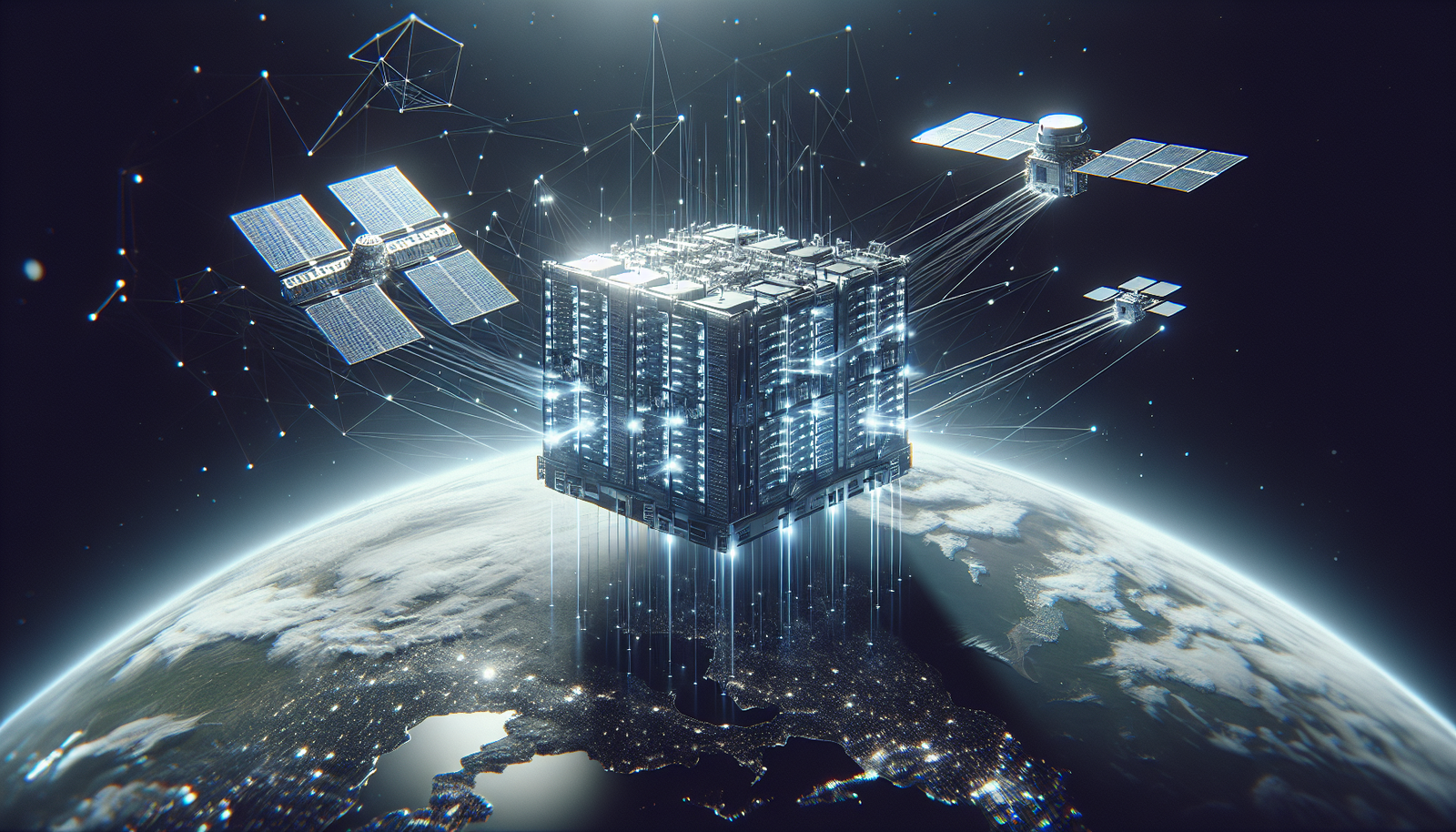
Orbital Data Centers: The Future of AI Compute in Space
“`html
Orbital data centers refer to computing facilities located in space, leveraging the unique advantages offered by low Earth orbit. Recent discussions between Google and SpaceX highlight the potential for these data centers to become the future home for AI compute. In this post, we will explore the implications of this development for developers and the cloud computing landscape.
What Is Orbital Data Centers?
Orbital data centers are facilities designed to operate in space, specifically low Earth orbit, aiming to provide computational resources for various applications, including artificial intelligence (AI). This concept has gained traction due to advancements in space technology and the decreasing costs of launching payloads into orbit. As Google and SpaceX explore this frontier, the potential for enhanced AI capabilities and reduced operational costs is driving interest in this innovative approach.
Why This Matters Now
The recent talks between Google and SpaceX to build data centers in orbit underscore a pivotal shift in cloud computing. As traditional terrestrial data centers face challenges such as rising energy costs and local regulatory hurdles, the idea of relocating computing resources to space offers a unique solution. With AI’s demand for processing power skyrocketing, orbital data centers could provide developers with scalable resources that are less susceptible to ground-based limitations. This trend is particularly relevant as companies seek to leverage AI technologies for enhanced operational efficiencies.
Technical Deep Dive
To understand the feasibility of orbital data centers, let’s delve into the key technical considerations and challenges:
- Infrastructure Requirements: Building a data center in space requires a robust infrastructure capable of withstanding extreme conditions. This includes temperature fluctuations, radiation exposure, and microgravity effects.
- Launch Costs: While the operational costs of running data centers in orbit may be lower in the long term, the initial launch costs remain a significant barrier. Companies must weigh these factors against the benefits.
- Satellite Connectivity: Efficient communication between orbital data centers and ground-based systems is crucial. Developers must consider latency issues and bandwidth limitations when designing applications that rely on these resources.
- Energy Sources: Utilizing solar energy is a primary consideration for powering orbital data centers. The design of efficient solar panels and energy storage systems will be essential for sustainability.
# Example of deploying a cloud service in a simulated orbital environment
import cloud_service

def deploy_service_to_orbit(service_name):
    cloud_service.launch_into_orbit(service_name)
    print(f"{service_name} deployed successfully in orbit.")

# Deploying a hypothetical AI compute service
deploy_service_to_orbit("AI Compute Service")
Real-World Applications
1. Telecommunications
Orbital data centers can enhance telecommunications by reducing latency for satellite communications. This is particularly beneficial for remote areas where terrestrial infrastructure is lacking.
2. AI Research and Development
AI researchers can leverage orbital data centers for large-scale computations, enabling faster training of models and reduced time-to-market for AI applications.
3. Environmental Monitoring
Data centers in orbit can support environmental monitoring systems, providing real-time data processing for climate change models and disaster response efforts.
4. Global Internet Access
By integrating orbital data centers with satellite networks, companies can offer global internet access, bridging the digital divide in underserved regions.
What This Means for Developers
As the prospect of orbital data centers materializes, developers should prepare for several implications:
- Familiarity with space-based architectures will become increasingly valuable.
- Developers may need to adapt existing applications for lower latency and higher reliability when integrating with orbital resources.
- Skills in satellite communication protocols and energy-efficient coding practices will gain importance.
- Understanding the regulatory landscape surrounding space operations will be critical.
💡 Pro Insight: The evolution of orbital data centers signifies a transformation in how we approach cloud computing. As costs decrease and technology advances, developers must prepare for a paradigm shift that could redefine resource allocation and application design.
Future of Orbital Data Centers (2025–2030)
In the next 3-5 years, we can expect significant advancements in the development of orbital data centers. The integration of AI capabilities with space-based resources will likely foster innovative applications across industries. Furthermore, as launch costs decrease due to advancements in reusable rocket technology, the feasibility of expanding orbital data centers will grow, potentially leading to a network of interconnected space-based resources.
By 2030, we might see the emergence of hybrid architectures where developers can seamlessly switch between terrestrial and orbital data centers, optimizing performance and cost efficiency based on application requirements.
Challenges & Limitations
1. High Initial Costs
The upfront investment required for launching and establishing orbital data centers remains a substantial challenge, potentially hindering widespread adoption.
2. Technical Complexity
Designing systems that can operate effectively in the harsh conditions of space requires advanced engineering and innovative solutions, which can complicate development efforts.
3. Regulatory Hurdles
The regulatory landscape for space operations is still evolving, and developers may face challenges in navigating these complex legal frameworks.
4. Latency Issues
While orbital data centers can reduce latency for certain applications, the distance from Earth introduces its own latency challenges that developers need to account for.
Key Takeaways
- Orbital data centers represent a revolutionary approach to cloud computing, leveraging the advantages of space.
- Developers should prepare for new architectural requirements and skill sets as this technology matures.
- Real-world applications span various industries, from telecommunications to environmental monitoring.
- Understanding the challenges, including cost and regulatory hurdles, is crucial for successful implementation.
- The next decade may see hybrid architectures blending terrestrial and orbital resources for optimal performance.
Frequently Asked Questions
What are orbital data centers?
Orbital data centers are computing facilities located in space, designed to leverage low Earth orbit for enhanced processing capabilities.
Why are companies considering orbital data centers?
The push for orbital data centers arises from the need for scalable, efficient computing resources that are less affected by ground-based limitations.
What challenges do orbital data centers face?
Key challenges include high initial costs, technical complexity, and regulatory hurdles that could delay implementation.
For more insights on AI and cloud computing innovations, follow KnowLatest.