
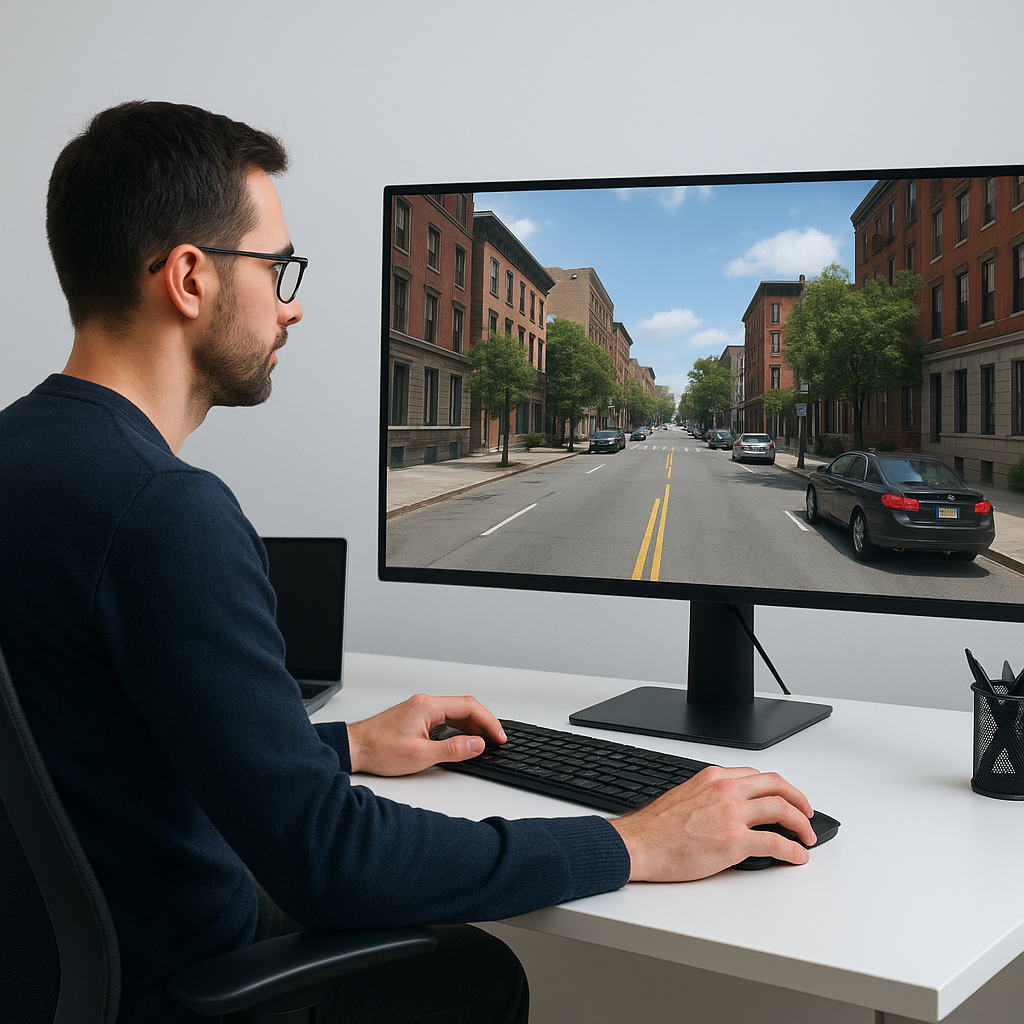
Genie World Model: Simulating Real Streets with Street View
Google’s Genie world model is a cutting-edge technology that enables the simulation of real-world environments based on Street View data. Recently, Google DeepMind has integrated Street View with Project Genie, allowing for immersive and interactive experiences across various applications. This post will explore the implications of this integration for developers, including its technical architecture, real-world applications, and future prospects.
What Is Genie World Model?
The Genie world model refers to a generative AI framework developed by Google DeepMind that simulates diverse environments using real-world data, particularly from Street View. This model leverages vast amounts of imagery to create interactive simulations that can mimic various scenarios, such as weather changes or different times of day. Its integration with Street View enhances the realism and applicability of the simulations, making it highly relevant for industries like robotics, gaming, and education.
Why This Matters Now
The integration of Street View into the Genie world model is a significant advancement in generative AI, largely due to the increasing demand for realistic simulations in various domains. As industries evolve, the ability to simulate real-world scenarios becomes crucial for training AI systems, improving user experiences, and facilitating interactions in gaming and robotics. The recent launch at the Google I/O developer conference highlights a pivotal moment in AI development, showcasing how real-world data can enhance virtual experiences. Developers should care about this integration since it opens new avenues for creating immersive applications that were previously limited by technology.
Technical Deep Dive
At its core, the Genie world model utilizes a combination of machine learning techniques and extensive datasets to generate realistic simulations. The architecture of Genie incorporates several key components:
- Data Collection: Over 280 billion images from Street View are utilized, covering diverse geographical areas.
- Simulation Engine: The model generates real-time simulations based on user-defined parameters like weather and time of day.
- Interactive Elements: Users can manipulate the environment to explore various scenarios, enhancing user engagement.
Here’s a simple example of how a developer might implement a basic simulation using Genie:
import genie

# Initialize Genie
genie = genie.initialize()

# Set up a simulation environment
environment = genie.create_environment(location="New York City", weather="snowy")

# Run the simulation
genie.run_simulation(environment)
This code snippet demonstrates how a developer can programmatically create a simulated environment using the Genie model. It highlights the ease of integrating this technology into existing applications.
Real-World Applications
Robotics Training
One of the most practical applications of the Genie world model is in robotics training. By simulating rare scenarios like extreme weather or unusual obstacles, developers can prepare AI systems for real-world challenges without the risks associated with physical testing.
Gaming
For game developers, integrating Genie allows for the creation of dynamic environments that can change based on player interactions. This makes for a more immersive gaming experience, as players can explore familiar real-world locations with added variability.
Travel and Tourism
Travel applications can leverage Genie to provide users with virtual tours of destinations, allowing them to experience places before visiting. This can significantly enhance user engagement and decision-making processes when planning trips.
Educational Tools
In education, Genie can create simulations for training purposes, such as virtual classrooms that simulate different learning environments. This can help in developing more effective teaching methods and materials.
What This Means for Developers
Developers looking to leverage the Genie world model should focus on building skills in AI frameworks and machine learning. Understanding how to integrate and manipulate generative models will be crucial. Additionally, the ability to work with APIs that provide access to simulation data will become increasingly important. Exploring tools like TensorFlow or PyTorch for machine learning implementations can further enhance proficiency in this area.
💡 Pro Insight: As AI continues to evolve, the integration of real-world data into generative models like Genie will redefine how we interact with technology, making simulations more realistic and applicable across various industries.
Future of Genie World Model (2025–2030)
Looking ahead, the Genie world model is poised for significant advancements. By 2030, we can expect the following developments:
- Increased Realism: Future iterations will likely incorporate more advanced physics engines, enabling simulations that account for real-world interactions more accurately.
- Broader Applications: As more industries recognize the value of realistic simulations, we will see Genie being adopted in sectors like healthcare, where training for medical procedures can be simulated safely.
- Enhanced User Interaction: Future models will likely allow for more personalized simulations based on user data, creating tailored experiences.
Challenges & Limitations
Data Privacy Concerns
The extensive use of real-world imagery raises significant data privacy issues. Developers must navigate the ethical implications of using such data, ensuring compliance with regulations like GDPR.
Simulation Quality
Currently, the simulations produced by Genie are not photorealistic and are described as video game quality. Improving the quality of these simulations will be essential for widespread adoption.
Physics Awareness
As of now, Genie lacks a comprehensive understanding of cause and effect, which limits its applicability in more complex scenarios. Future developments will need to address this gap to enhance functionality.
Key Takeaways
- The Genie world model enables developers to create immersive simulations using real-world data from Street View.
- Applications range from robotics training to gaming and travel, highlighting its versatility.
- Developers should focus on mastering AI frameworks to effectively integrate generative models.
- Future improvements will likely enhance realism and broaden the model’s applications.
- Ethical considerations surrounding data privacy must be prioritized in development efforts.
Frequently Asked Questions
What is the Genie world model?
The Genie world model is a generative AI framework by Google DeepMind that creates interactive simulations of real-world environments using data from Street View.
How can developers use the Genie world model?
Developers can integrate the Genie model into applications for robotics training, gaming, and educational tools by utilizing its API to create realistic simulations.
What are the limitations of the Genie world model?
Current limitations include data privacy concerns, simulation quality that lacks photorealism, and a lack of physics awareness for more complex interactions.
For more insights and updates on AI technologies, follow KnowLatest.


