Drug Discovery AI: Simplifying Access with SandboxAQ and Claude
Drug discovery is an intricate process that refers to the identification and development of new therapeutic drugs. Recently, SandboxAQ has integrated its advanced drug discovery models with Claude, a conversational AI platform, making these tools more accessible than ever. In this article, you will learn how this integration democratizes the drug discovery process, allowing developers to leverage powerful AI models without needing extensive computational expertise.
What Is Drug Discovery AI?
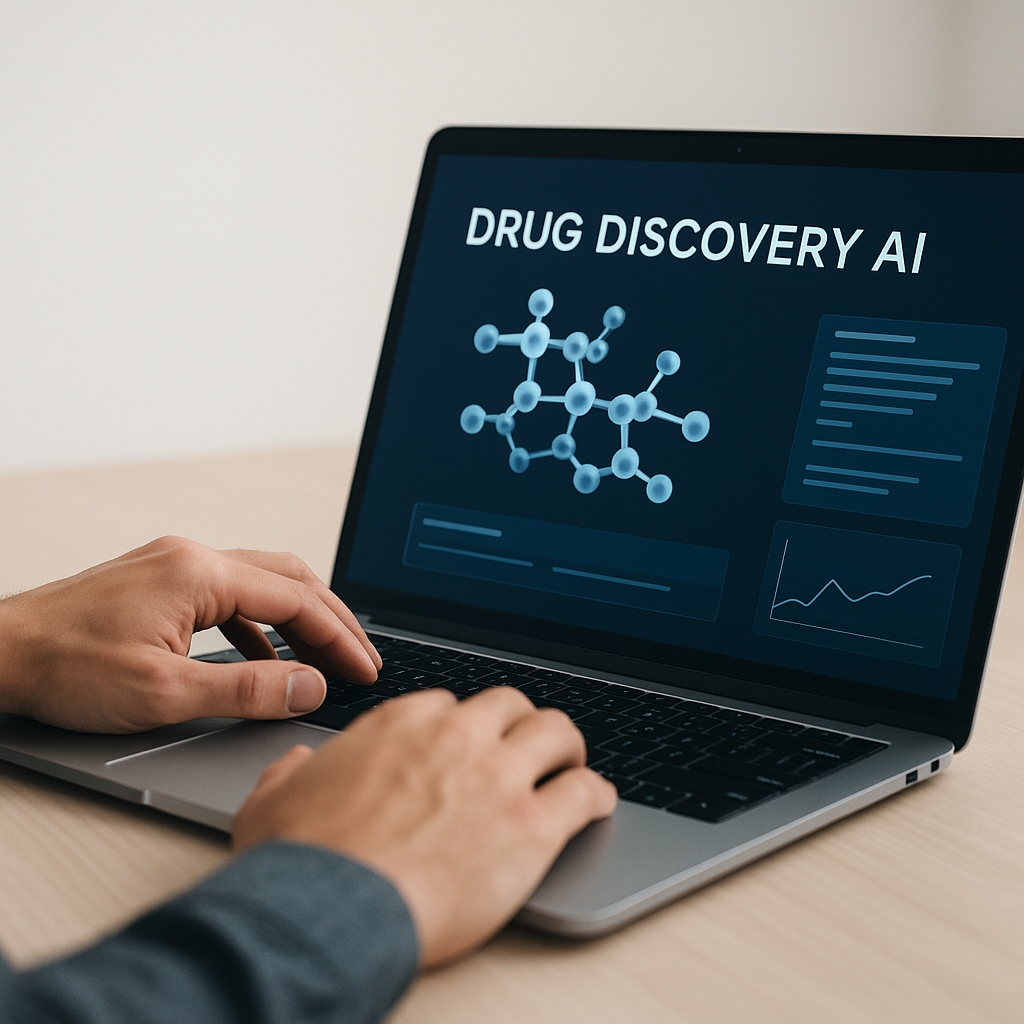
Drug Discovery AI refers to the application of artificial intelligence techniques to accelerate the discovery of new pharmaceuticals. This involves utilizing large quantitative models (LQMs) to predict how candidate molecules will behave chemically, which can significantly reduce the time and cost associated with traditional drug development methods. The recent collaboration between SandboxAQ and Claude aims to simplify access to these powerful models, making them usable via natural language interfaces.
Why This Matters Now
The urgency in drug discovery has surged due to rising healthcare demands and the complexities of developing effective therapies. Traditional methodologies can take over a decade and cost billions for a single viable compound. The race among AI startups, including SandboxAQ, Chai Discovery, and Isomorphic Labs, highlights the need for better models and accessibility. SandboxAQ’s focus on user-friendly interfaces allows researchers and developers, even those without extensive computational backgrounds, to harness sophisticated AI tools effectively.
Technical Deep Dive
The integration of SandboxAQ’s drug discovery models into Claude offers a streamlined workflow for researchers. Below are key components of this integration:
- Large Quantitative Models (LQMs): These are physics-grounded models that simulate molecular dynamics and microkinetics, providing insights into how candidate molecules behave based on real-world lab data.
- Conversational Interface: Users can interact with the AI models using natural language, removing the need for extensive programming skills. This democratizes access to advanced computational tools.
- Cloud-Based Infrastructure: Previously, users required their own computational resources. With this integration, SandboxAQ hosts the models in the cloud, allowing seamless access.
To illustrate how a developer might interact with these models, consider the following Python snippet that queries the Claude API:
import requests

# Define the Claude API endpoint
url = "https://api.claude.ai/v1/drug-discovery"

# Sample molecule data
data = {
    "molecule": "C6H12O6",  # Glucose
    "method": "predict_behavior"
}

# Make the API request
response = requests.post(url, json=data)

# Output the results
if response.status_code == 200:
    print("Predicted Behavior:", response.json())
else:
    print("Error:", response.status_code, response.text)
This code snippet demonstrates how developers can query the integrated AI models to predict the behavior of specific molecules. By using simple HTTP requests, developers can obtain valuable insights without needing deep expertise in computational chemistry.
Real-World Applications
Pharmaceutical Industry
In large pharmaceutical companies, researchers can utilize SandboxAQ’s models to rapidly screen potential drug candidates, drastically reducing the lead time from concept to clinical trials.
Material Science
Material scientists can apply these models to discover new materials with desirable properties for various applications, including electronics and renewable energy technologies.
Biotechnology Startups
Startups focusing on biotech can leverage these tools to prototype drug candidates without the need for substantial infrastructure investments, lowering entry barriers in the industry.
What This Means for Developers
Developers in the healthcare and biotech sectors should consider enhancing their knowledge of AI and machine learning, particularly in drug discovery contexts. Familiarity with platforms like Claude and understanding how to effectively query AI models will be invaluable. Skills in API integration and data analysis will become crucial as these tools gain traction in research workflows.
💡 Pro Insight: The integration of drug discovery models with accessible AI platforms like Claude represents a paradigm shift in pharmaceutical research. As more developers and researchers gain access to these tools, we can expect a surge in innovation and potentially faster delivery of life-saving therapies.
Future of Drug Discovery AI (2025–2030)
Over the next five years, we can anticipate significant advancements in AI-driven drug discovery methodologies. As computational power increases and algorithms improve, expect more precise predictions for molecular behavior and faster identification of viable drug candidates. Moreover, the integration of quantum computing with AI models could revolutionize the field, enabling simulations that were previously unimaginable.
Furthermore, as regulatory bodies adapt to these technologies, streamlined pathways for AI-assisted drug approvals may emerge, allowing for faster transitions from laboratory to market. The collaboration between AI firms and traditional pharmaceutical companies will likely deepen, fostering innovation that prioritizes patient outcomes.
Challenges & Limitations
Data Quality
The efficacy of AI models hinges on the quality of the data used for training. Inaccurate or biased datasets can lead to misleading predictions, and ensuring robust data governance will be critical.
Regulatory Hurdles
Regulatory frameworks around AI in healthcare are still evolving. Navigating these can be complex and may slow down the adoption of AI-driven methodologies in drug discovery.
Integration Difficulties
While the integration of AI tools is becoming simpler, existing systems in pharmaceutical companies may still pose challenges. Ensuring compatibility between new AI solutions and legacy systems remains a concern.
Ethical Concerns
As AI plays an increasingly significant role in drug discovery, ethical considerations surrounding data privacy and the transparency of AI decision-making processes will need to be addressed.
Key Takeaways
- Drug Discovery AI simplifies the process of identifying new therapeutic drugs through advanced modeling techniques.
- The integration of SandboxAQ’s models with Claude enables access to powerful tools via a natural language interface.
- Real-world applications span pharmaceuticals, material science, and biotechnology startups.
- Developers should enhance their skills in AI, API integration, and data analysis to leverage these advancements.
- Future advancements will likely include improved accuracy and faster drug candidate identification.
Frequently Asked Questions
What are Large Quantitative Models (LQMs)?
Large Quantitative Models (LQMs) are physics-grounded AI models designed to simulate molecular dynamics and predict chemical behavior based on scientific equations and real-world lab data.
How does Claude enable drug discovery?
Claude provides a conversational interface for users to interact with AI models, allowing researchers to access complex tools without needing specialized computational skills.
What industries benefit from drug discovery AI?
Industries such as pharmaceuticals, biotechnology, and material science benefit significantly from drug discovery AI by accelerating the identification of viable drug candidates and new materials.
For more insights and updates about AI tools and developer news, follow KnowLatest.