
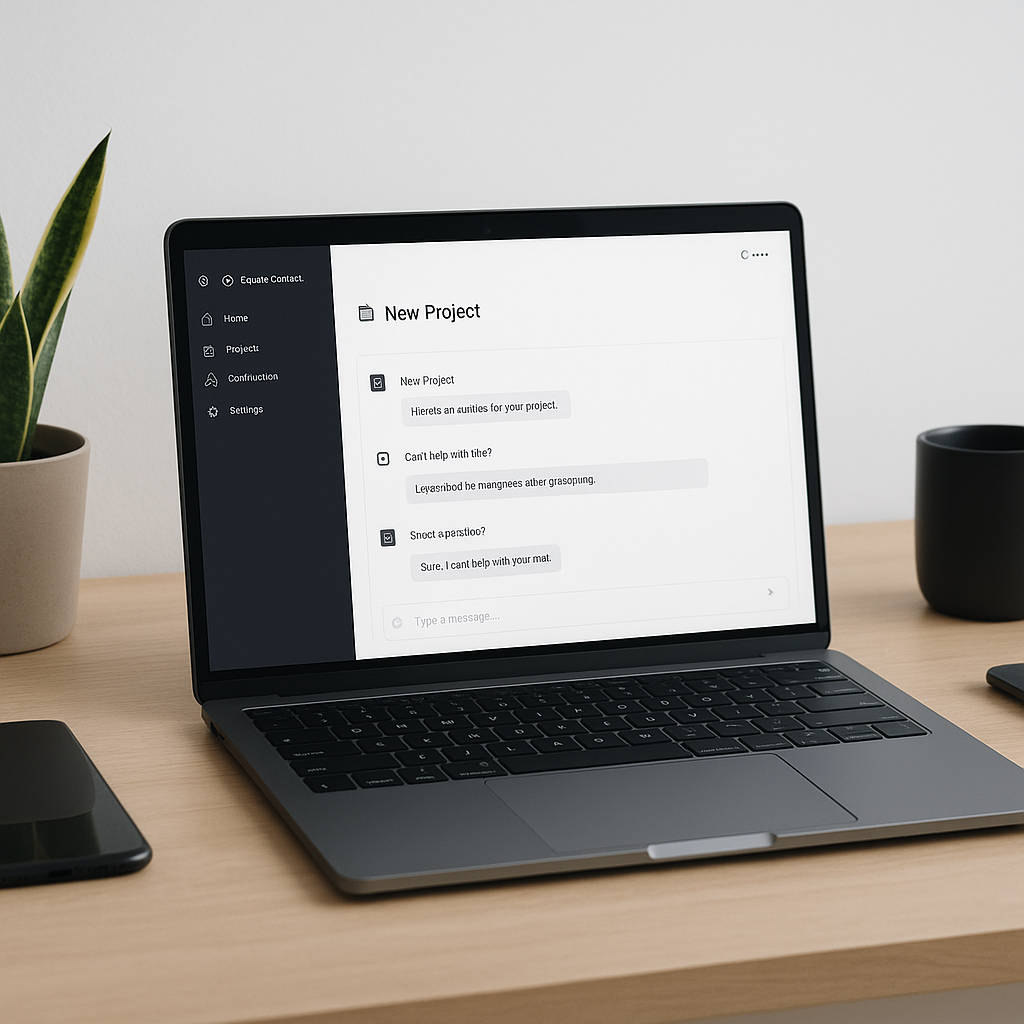
Claude Cowork: Transforming Productivity with AI Tools
AI productivity assistants are enhancing workplace efficiency by streamlining tasks across devices. Recently, Claude Cowork by Anthropic expanded its functionality to mobile and web platforms, allowing users to start tasks on their desktop and seamlessly transition to their phones for updates. This article will delve into the significance of this development and explore how Claude Cowork can revolutionize daily workflows for developers and businesses alike.
What Is Claude Cowork?
Claude Cowork is an AI-powered productivity tool designed to assist users in managing tasks efficiently across various platforms. Originally launched as a desktop application, its recent extension to mobile and web allows users to initiate tasks from their computers and receive updates on their mobile devices. This multi-platform integration enhances task continuity and accessibility, making it easier for users to manage their workload effectively.
Why This Matters Now
As organizations increasingly adopt AI tools, the need for seamless integration across various platforms has become critical. The recent expansion of Claude Cowork to mobile and web signifies a trend where AI applications evolve beyond mere coding assistance to become integral components of everyday business operations. This evolution is crucial for enhancing productivity in sectors like finance, HR, and content creation, where managing multiple tasks efficiently is paramount.
Furthermore, as highlighted in a recent report on Claude Cowork’s usage, a significant portion of tasks performed involves business process operations, content creation, and administrative duties, which are often overlooked in AI discussions. With this multi-platform app, developers and businesses can now leverage AI to automate routine tasks, ultimately freeing up human resources for more strategic initiatives.
Technical Deep Dive
Claude Cowork operates using a sophisticated architecture that allows it to function across different devices while maintaining task continuity. The underlying technology relies on advanced machine learning algorithms and natural language processing to understand and execute tasks efficiently. Below is a breakdown of the technical components that make Claude Cowork effective:
- Multi-Platform Architecture: Claude Cowork employs a cloud-based architecture that enables real-time synchronization across devices. This means when a user initiates a task on their desktop, they can access updates on their mobile device without losing context.
- Task Automation: The app features automation capabilities that allow users to set up recurring tasks or one-time jobs—like drafting emails, compiling reports, or managing schedules—through simple commands.
- Natural Language Interface: Users can interact with Claude Cowork using natural language, making it accessible even to non-technical staff. This is achieved through NLP algorithms that parse user input and convert it into actionable tasks.
def prepare_client_briefing(client_name, meeting_time):
    # Load relevant documents and prepare a briefing
    documents = load_latest_documents(client_name)
    briefing = generate_briefing(documents)
    schedule_meeting(meeting_time, client_name)
    return briefing
This Python snippet illustrates how a simple function can be created to automate client briefing preparation using Claude Cowork’s API. The function loads documents related to a specific client and generates a briefing ready for review.
Real-World Applications
Content Creation
In marketing and communications, teams can use Claude Cowork to automate the generation of content like blog posts, social media updates, and presentation decks. By providing a few key inputs, users can receive draft content tailored to their specifications, significantly speeding up the creation process.
Human Resources Management
HR departments can leverage Claude Cowork for onboarding new employees. The tool can automate the gathering of necessary documents, track onboarding progress, and generate reports on the onboarding status, thus enhancing efficiency in the hiring process.
Project Management
Project managers can utilize the tool to compile status reports from various team members. Claude Cowork can pull updates from multiple channels, summarize them, and prepare a cohesive report for stakeholders, minimizing the manual effort involved.
What This Means for Developers
For developers, the rise of AI productivity tools like Claude Cowork presents new opportunities and challenges. Learning to integrate such tools into existing workflows will become essential. Understanding APIs and automation scripting will give developers a competitive edge in leveraging these technologies effectively.
Moreover, developers should focus on enhancing their skills in natural language processing and machine learning to tailor AI tools to specific business needs. This adaptability will be crucial as the landscape of AI continues to evolve.
💡 Pro Insight: As AI tools like Claude Cowork gain traction in non-technical environments, the future will likely see a surge in demand for developers who can create custom integrations and optimize AI functionalities across platforms. This is an opportunity to redefine productivity standards in the workplace.
Future of Claude Cowork (2025–2030)
Looking ahead, Claude Cowork is poised to become an essential tool in the AI landscape. By 2025, we can expect further enhancements in its capabilities, such as deeper integration with other software applications and improved machine learning models for more personalized task management.
Additionally, as remote work continues to dominate, the demand for seamless collaboration tools will grow. Claude Cowork’s ability to operate across devices will make it a critical player in this space, potentially leading to partnerships with other leading productivity platforms to enhance its usability.
Challenges & Limitations
Data Privacy Concerns
As with any AI tool that handles sensitive information, data privacy remains a significant concern. Organizations must ensure that Claude Cowork complies with relevant data protection regulations to safeguard user information.
Dependence on Internet Connectivity
While Claude Cowork can operate in the background, it still relies on internet connectivity for real-time updates. This dependence can pose challenges in environments with unstable internet access.
Customization Limitations
Although Claude Cowork is designed to be user-friendly, its automation features may not cater to all business needs. Organizations may find the need for additional customization, requiring development resources.
Key Takeaways
- Claude Cowork enhances productivity by enabling task management across devices.
- AI tools are evolving to serve broader business functions beyond coding.
- Developers should focus on learning APIs and automation to leverage AI tools effectively.
- Data privacy is a critical consideration for organizations using AI productivity assistants.
- The future of AI in workplace productivity is promising, with ongoing developments expected.
Frequently Asked Questions
What is Claude Cowork used for?
Claude Cowork is used for automating and managing various business tasks, including content creation, project management, and HR processes, across multiple platforms.
How does Claude Cowork improve productivity?
By enabling users to manage tasks seamlessly across devices and automating routine processes, Claude Cowork helps reduce manual effort and increases overall productivity.
What industries can benefit from Claude Cowork?
Industries like finance, HR, marketing, and project management can benefit significantly from using Claude Cowork to streamline operations and enhance task management.
For more insights on AI tools and developer-focused news, follow KnowLatest.


