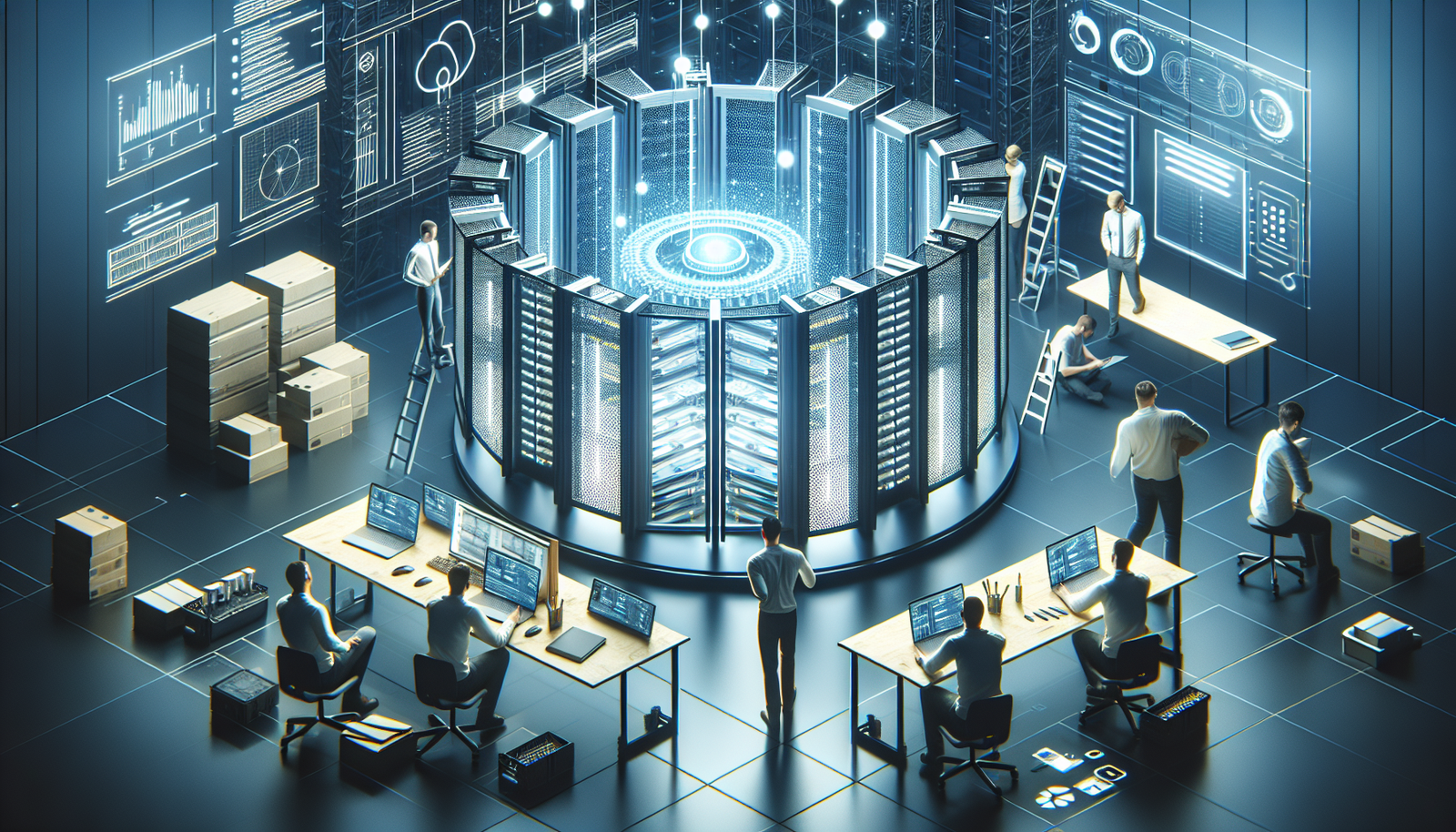
Data Center Construction Regulations: Implications for Developers
“`html
Data center construction refers to the process of building facilities that house computer systems, servers, and associated components. Recently, Senator Bernie Sanders and Rep. Alexandria Ocasio-Cortez introduced legislation to halt new data center projects until comprehensive AI regulations are established. This article will explore the implications of this legislative proposal for developers, focusing on the future of data centers and AI governance.
What Is Data Center Construction?
Data center construction involves the design and establishment of facilities that support data processing, storage, and communication. This infrastructure is critical for the functioning of cloud services, AI applications, and large-scale data analytics. With the growing reliance on AI technologies, the construction of data centers has escalated, raising environmental and regulatory concerns.
Why This Matters Now
The recent proposal by Sanders and Ocasio-Cortez to ban new data center construction highlights the urgent need for regulation in the AI sector. As AI technologies proliferate, concerns regarding energy consumption, environmental impact, and job displacement have become more prominent. The legislation aims to pause construction on data centers with peak power loads over 20 megawatts until the government can provide a comprehensive regulatory framework. Developers should be aware of how these regulations might affect the scalability and sustainability of their projects in industries that depend on data-intensive applications.
Technical Deep Dive
Understanding the implications of this legislative proposal requires a technical look at data center operations and their environmental impact. Here are key aspects developers should consider:
- Energy Consumption: Data centers require substantial power, often running 24/7. The proposed regulation aims to mitigate the environmental impact by enforcing energy-efficient practices.
- Infrastructure Standards: The legislation calls for stricter building codes, including the use of union labor and environmentally sustainable materials.
- AI Model Certification: There is a push for the government to review and certify AI models prior to their deployment, which could lead to delays in project timelines.
Here’s a simplified overview of a typical data center architecture:
| Component | Description | Energy Consumption (MW) |
|---|---|---|
| Server Racks | Housing servers for data processing | 5-10 |
| Cooling Systems | Maintaining optimal temperature | 2-5 |
| Power Supply Units | Providing power to the entire facility | 1-3 |
| Networking Equipment | Facilitating data transfer | 1-2 |
Real-World Applications
1. Cloud Computing Services
Major cloud providers like AWS and Azure rely on extensive data centers to deliver reliable services. Developers deploying applications on these platforms must be prepared for potential delays or changes in infrastructure policy.
2. AI Model Training
Training AI models often requires powerful GPU clusters housed in data centers. Any disruption in data center construction could impact the timeline for deploying AI capabilities across industries.
3. Edge Computing
With the rise of IoT, edge computing is becoming more critical. Developers working on applications that require real-time processing must consider the implications of data center regulations on their deployment strategies.
What This Means for Developers
Developers should take proactive steps to adapt to the changing landscape of data center regulations:
- Stay informed about legislation affecting data infrastructure.
- Invest in energy-efficient technologies to comply with potential regulations.
- Consider hybrid cloud solutions to mitigate risks associated with data center construction bans.
- Engage in discussions with policymakers to advocate for balanced regulations that support innovation without compromising sustainability.
💡 Pro Insight: As AI technologies evolve, the intersection of regulatory frameworks and infrastructure will be vital. Developers must adapt not only to technological advancements but also to the legislative landscape that governs them.
Future of Data Center Construction (2025–2030)
The future of data center construction will likely be shaped by a combination of technological innovation and regulatory pressures. As AI continues to advance, we can expect increased calls for transparency and accountability in data processing. Key predictions include:
- Greater emphasis on energy-efficient data centers, driven by both consumer demand and regulatory requirements.
- Integration of sustainable technologies, such as renewable energy sources and advanced cooling systems.
- A shift towards decentralized data architectures, reducing the reliance on large, centralized data centers.
Challenges & Limitations
1. Regulatory Compliance
Adapting to new regulations can be costly and time-consuming for developers. Compliance may require significant changes to existing infrastructure.
2. Environmental Concerns
While the push for sustainable practices is commendable, the transition may pose challenges in terms of cost and technology adoption.
3. Potential Delays in AI Development
The proposed ban on new data centers could delay AI deployment across various sectors, impacting competitiveness and innovation.
4. Workforce Implications
The requirement for union labor could create additional hurdles in staffing and project timelines, particularly in regions with labor shortages.
Key Takeaways
- Data center construction is critical for AI and cloud services but faces new regulatory challenges.
- The proposed legislation aims to pause new data center projects until comprehensive regulations are established.
- Developers should prepare for potential shifts in infrastructure policy and energy requirements.
- Energy-efficient technologies will play a crucial role in future data center designs.
- Engagement with policymakers is essential for shaping balanced regulations that foster innovation.
Frequently Asked Questions
What are the implications of the proposed data center construction ban?
The proposed ban could delay new projects and require developers to adapt to stricter regulations regarding energy usage and AI model certification.
How can developers prepare for changing regulations?
Developers should stay informed about legislative developments, invest in sustainable technologies, and engage with industry discussions on regulatory matters.
Why is energy efficiency important for data centers?
Energy efficiency reduces operational costs and environmental impact, making it a critical factor in the sustainability of data center operations.
For more insights on AI and developer news, follow KnowLatest.
“`