AI Agents: Automating Workflows with Prentis Insights
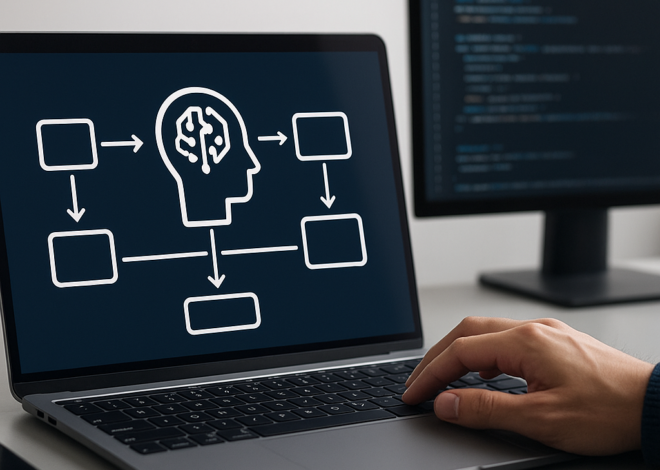
AI agents are specialized systems designed to automate routine tasks in computing environments. With the recent launch of Prentis, co-founded by Reid Hoffman and Marc Pincus, there is renewed interest in how these agents can transform workflows. This article delves into the implications of AI agents in automating everyday tasks for developers and organizations, discussing their technical foundations, applications, and future trends.
What Is AI Agents?
AI agents refer to intelligent systems designed to perform tasks autonomously, enhancing productivity by automating routine workflows. With advancements in machine learning and natural language processing, AI agents are increasingly capable of understanding and executing complex tasks. The recent establishment of Prentis, which aims to revolutionize office automation, underscores the growing importance of AI agents in various sectors.
Why This Matters Now
The landscape of AI is rapidly evolving, with automation becoming a primary focus. Prentis, which recently announced plans to raise $100 million, exemplifies this shift by developing AI agents that can automate office tasks such as insurance claims processing and customs duty refund handling. As companies seek to streamline operations and cut costs, investing in AI agents has never been more critical. The competition is fierce, with established players like OpenAI and Anthropic also exploring similar avenues, making it essential for developers to understand the implications of this technology.
Technical Deep Dive
Prentis has introduced its Hive-32B model, which reportedly outperforms existing models like OpenAI’s GPT-5.4 and Anthropic’s Claude Opus 4.6 on benchmarks tailored for computer tasks. The architecture of these AI agents typically employs a combination of machine learning techniques, including reinforcement learning and supervised learning, to optimize task execution.
Here’s a breakdown of the key components:
- Model Training: The model is trained on vast datasets that simulate user interactions with various applications.
- Performance Metrics: Benchmarks like
WindowsAgentArenaandScreenSpot-v2measure task completion and user interface navigation, respectively. - Cost Efficiency: Prentis claims a cost per task that is approximately ten times lower than that of competing APIs, making it a viable option for businesses looking to automate workflows.
Here’s a comparison table of performance metrics:
| Model | Task Completion Rate | Cost per Task |
|---|---|---|
| Prentis Hive-32B | 95% | $0.10 |
| OpenAI GPT-5.4 | 90% | $1.00 |
| Anthropic Claude Opus 4.6 | 88% | $0.80 |
Real-World Applications
Healthcare Automation
In the healthcare sector, AI agents can manage patient records, schedule appointments, and even assist in billing processes, thereby reducing administrative overhead.
Manufacturing Process Optimization
Manufacturers can utilize AI agents to streamline supply chain management, automate quality control checks, and optimize inventory levels.
Customer Support Automation
In customer service, AI agents can handle routine inquiries, process refunds, and escalate issues to human agents only when necessary.
Financial Services Efficiency
Financial institutions can deploy AI agents for automating compliance checks, fraud detection, and transaction monitoring, significantly enhancing operational efficiency.
What This Means for Developers
For developers, the rise of AI agents suggests a shift in skill requirements. Familiarity with machine learning frameworks, such as TensorFlow and PyTorch, will be essential. Understanding API integrations for workflow automation will become increasingly important, as well as knowledge of data handling and model training techniques. Developers should focus on building applications that leverage AI capabilities to enhance user experiences.
Future of AI Agents (2025–2030)
As we look ahead, AI agents are expected to evolve significantly. By 2030, we anticipate a greater emphasis on personalization, where agents will adapt to individual user preferences and workflows. The integration of AI agents into everyday applications will not only streamline operations but also enhance decision-making processes through real-time data analysis.
Moreover, we predict that AI agents will increasingly incorporate advanced natural language processing capabilities, allowing them to engage with users in more human-like interactions. This evolution would further increase their adoption across diverse industries, from education to logistics.
Challenges & Limitations
Data Privacy Concerns
The automation of tasks often involves handling sensitive data, which raises significant data privacy and compliance challenges that must be addressed.
Dependence on Quality Data
AI agents require high-quality data for effective training. Poor quality or biased data can lead to suboptimal performance and unintended consequences.
Market Competition
The AI landscape is crowded, and standing out requires unique value propositions and continuous innovation. Companies must be agile in adapting to rapidly changing market demands.
Technical Complexity
Building and deploying AI agents involves complex technical challenges, including model training, API integration, and system compatibility, which can overwhelm teams lacking expertise.
Key Takeaways
- AI agents are poised to automate routine tasks, enhancing productivity across sectors.
- The Hive-32B model by Prentis claims superior performance and cost-effectiveness compared to competitors.
- Real-world applications include healthcare, manufacturing, customer support, and financial services.
- Developers should focus on machine learning frameworks and API integrations for effective implementation.
- Data privacy and quality are critical challenges that need to be managed for AI agent success.
Frequently Asked Questions
What are AI agents used for?
AI agents are utilized for automating routine tasks across various sectors, including customer service, healthcare, and manufacturing, improving efficiency and reducing costs.
How do AI agents work?
AI agents operate by using machine learning models to understand tasks and execute them autonomously, often interacting with users through natural language interfaces.
What skills do developers need for AI automation?
Developers should be proficient in machine learning frameworks, API integrations, and data handling techniques to effectively build and implement AI agents.
For more insights into AI and developer-focused news, follow KnowLatest.