AI-Driven Cloud Computing: Insights from Google’s Growth
AI-driven cloud computing is reshaping enterprise operations. Google’s recent financial success underscores how its AI investments are enhancing its cloud services. In this post, we will explore the implications of Google’s booming cloud business for developers and the broader AI landscape.
What Is AI-Driven Cloud Computing?
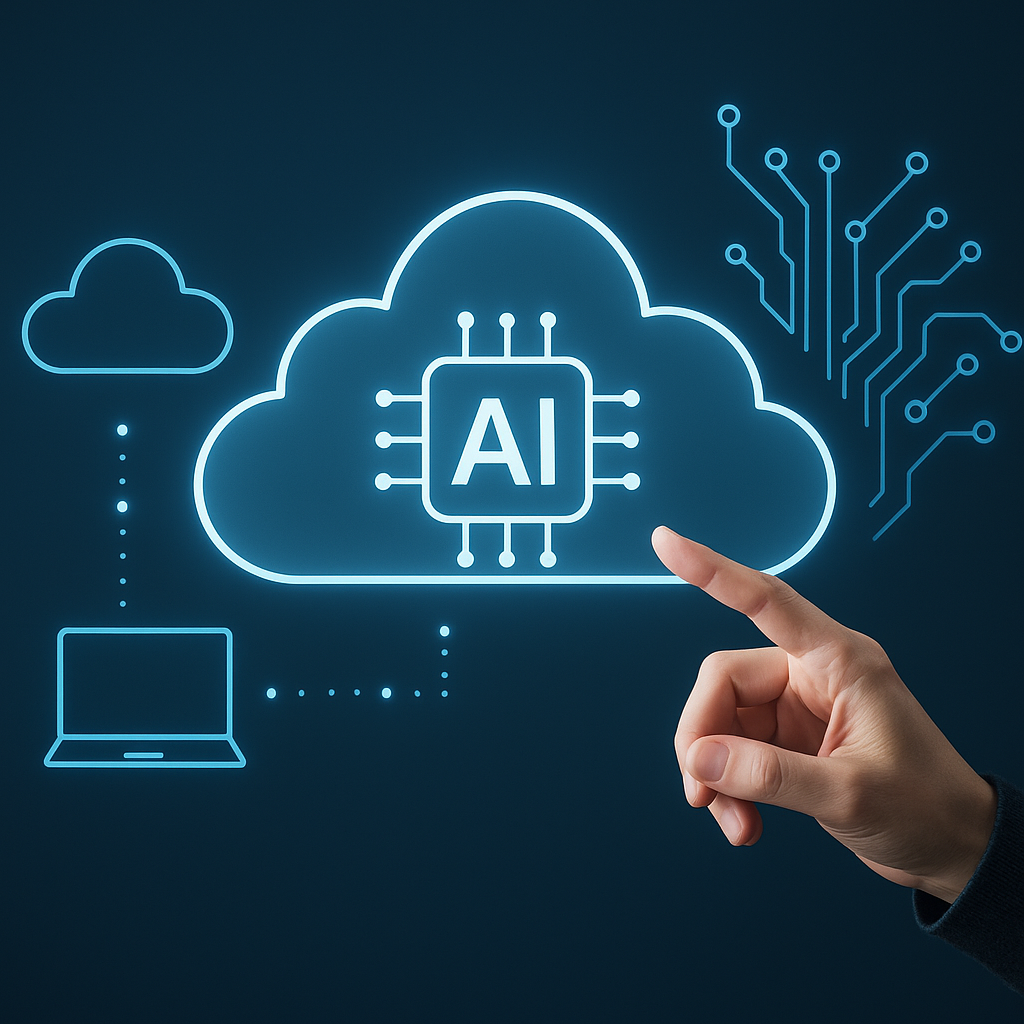
AI-driven cloud computing refers to the integration of artificial intelligence technologies within cloud services to enhance data processing, analytics, and operational efficiency. This concept is pivotal today as organizations leverage AI to optimize workloads and improve service delivery. Google’s recent financial report reflects how AI investments have bolstered its cloud business, with revenue increasing significantly due to enterprise adoption of AI solutions.
Why This Matters Now
The rapid growth of AI-driven cloud computing is significant for developers and organizations. Recent figures show Google’s cloud revenue surged by 82% year-over-year, driven by enterprise AI solutions, making it critical for developers to understand this shift. As businesses increasingly adopt AI and cloud solutions, technologies like Google Cloud are becoming essential for operational success. This urgency is compounded by the rising demand for scalable cloud infrastructure to support AI workloads.
Technical Deep Dive
Understanding the technical foundations of AI-driven cloud computing can provide developers with a competitive edge. Here are key components and technologies involved:
- Machine Learning as a Service (MLaaS): Platforms like Google Cloud offer MLaaS, allowing developers to integrate machine learning models without needing extensive infrastructure.
- Data Processing Frameworks: Tools such as Apache Beam and Dataflow enable real-time data processing, crucial for AI-driven applications.
- APIs and SDKs: Google provides various APIs for AI services, including
Cloud AutoML, which allows developers to build custom ML models tailored to specific needs.
To illustrate how Google Cloud can be leveraged, consider the following Python snippet using Google Cloud’s bigquery library for data analysis:
from google.cloud import bigquery

# Initialize a BigQuery client
client = bigquery.Client()

# Define a SQL query
query = """
    SELECT
        name,
        COUNT(*) as total_orders
    FROM
        `my_dataset.orders`
    GROUP BY
        name
    ORDER BY
        total_orders DESC
"""

# Run the query and save results to a DataFrame
df = client.query(query).to_dataframe()
print(df)
This snippet showcases how easily developers can interact with Google Cloud services for data analytics, which is vital for AI applications.
Real-World Applications
1. Financial Services
Financial institutions are utilizing AI-driven cloud solutions to enhance fraud detection and risk management. By analyzing large datasets in real-time, banks can predict fraudulent activities and mitigate potential losses.
2. Healthcare
Healthcare providers leverage AI for predictive analytics, improving patient outcomes by analyzing health records and predicting disease outbreaks. Tools like Google Health API are instrumental in these applications.
3. Retail
Retailers are adopting AI to personalize customer experiences. Using AI algorithms, businesses can analyze shopping patterns and tailor marketing strategies, thus driving sales.
4. Manufacturing
In manufacturing, AI-driven cloud solutions optimize supply chain management and predictive maintenance, reducing downtime and improving efficiency.
What This Means for Developers
For developers, the rise of AI-driven cloud computing necessitates a shift in skills and tools. Here are some actionable implications:
- Learn AI Frameworks: Familiarize yourself with frameworks like TensorFlow and PyTorch, as they are integral for building AI models.
- Get Comfortable with Cloud Services: Understanding platforms like Google Cloud and AWS can enhance your ability to deploy scalable AI applications.
- Focus on Data Engineering: Skills in data processing and management are increasingly important as data is the backbone of AI solutions.
- Explore API Integration: Proficiency in using AI APIs will enable you to incorporate advanced functionalities into applications quickly.
💡 Pro Insight: As enterprises increasingly adopt AI technologies, developers who can effectively integrate cloud services with AI frameworks will be at a distinct advantage in the job market. The future will prioritize hybrid skills that merge software development with data science.
Future of AI-Driven Cloud Computing (2025–2030)
As we look toward 2025-2030, AI-driven cloud computing is set to evolve significantly. We anticipate:
- More Sophisticated AI Models: Expect to see advancements in AI model complexity and capabilities, allowing for more nuanced decision-making.
- Increased Automation: Automation in cloud management will likely rise, streamlining operations and reducing the need for manual intervention.
- Greater Data Security Measures: With the increase in AI data usage, enhanced security protocols will be critical to protect sensitive information.
This evolution will require developers to continuously adapt and upskill to maintain relevance in a rapidly changing landscape.
Challenges & Limitations
Data Privacy Concerns
As companies leverage AI-driven cloud solutions, data privacy remains a significant concern. Developers must navigate regulations like GDPR when handling sensitive data.
Integration Complexity
Integrating new AI technologies with existing systems can be complex and may require significant re-engineering efforts.
Resource Constraints
AI applications often require substantial computational resources, which can be a barrier for smaller organizations lacking infrastructure.
Skill Gaps
There’s a growing demand for developers skilled in AI and cloud technologies, but a shortage of qualified professionals remains a challenge.
Key Takeaways
- AI-driven cloud computing is revolutionizing enterprise operations, with Google Cloud at the forefront.
- Developers need to acquire skills in AI frameworks and cloud services to remain competitive.
- Real-world applications of AI span various industries, demonstrating its versatility and impact.
- Future trends indicate greater automation and enhanced data security in cloud services.
- Challenges such as data privacy and integration complexity must be addressed for successful implementation.
Frequently Asked Questions
What are the benefits of AI-driven cloud computing?
AI-driven cloud computing offers enhanced data processing capabilities, scalability, and cost efficiency, allowing businesses to optimize their operations and decision-making.
How can developers leverage Google Cloud for AI applications?
Developers can utilize Google Cloud’s AI services, such as AutoML and BigQuery, to build and deploy machine learning models without extensive infrastructure.
What skills should developers focus on for AI and cloud computing?
Developers should prioritize learning AI frameworks, cloud platforms, data engineering practices, and API integrations to effectively build AI-driven applications.
For more insights and updates on AI and cloud computing, follow KnowLatest.