
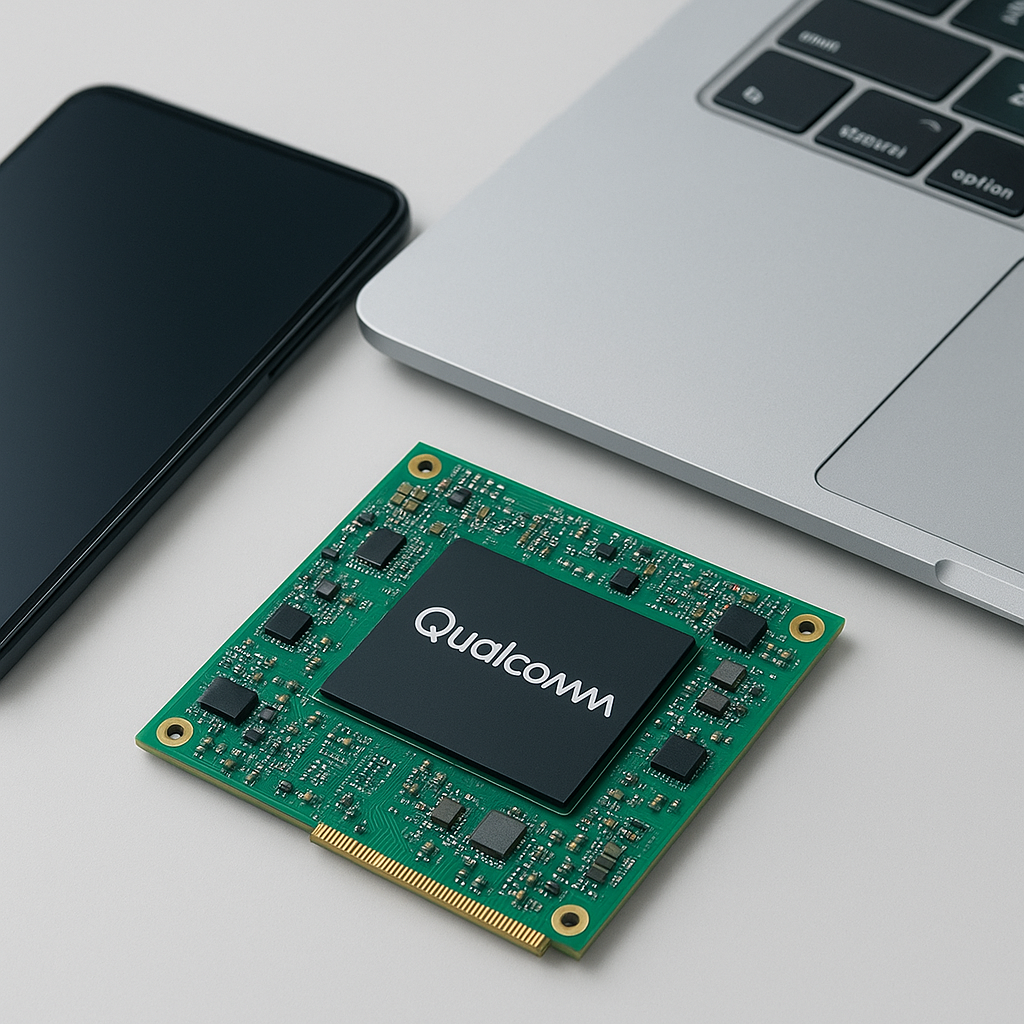
AI-Ready Hardware: Qualcomm’s Vision for the Future
AI-ready hardware is redefining the landscape of personal devices. Qualcomm recently announced its ambitions to become the foundational silicon for emerging technologies that may replace smartphones, highlighting its commitment to over 40 new AI hardware designs. This post will explore Qualcomm’s strategic direction, the new products unveiled, and what this means for developers and AI practitioners.
What Is AI-Ready Hardware?
AI-ready hardware refers to specialized components designed to efficiently run AI algorithms and models, enabling advanced capabilities in devices like smart glasses, wearables, and other emerging technologies. Qualcomm’s recent announcements regarding its Snapdragon Reality Elite platform and the Scalable Turnkey AI-Ready Toolkit (START) signify a shift towards hardware that supports real-time AI processing, enhancing user experiences beyond traditional smartphones.
Why This Matters Now
The push for AI-ready hardware is becoming increasingly relevant as the demand for real-time data processing grows across various sectors. Qualcomm’s CEO, Cristiano Amon, emphasized that the next major computing platform may not involve smartphones, but rather a variety of wearable devices designed to interact seamlessly with the environment. This shift is supported by the increasing need for devices that can gather and process contextual data to enable AI agents to assist users effectively. Developers must consider how to integrate such technologies into their applications, especially as competition heats up among established players like Apple and Samsung.
Technical Deep Dive
Qualcomm’s Snapdragon Reality Elite platform is engineered for mixed reality glasses and promises significant performance improvements over previous generations. The platform boasts:
- 60% improvement in GPU performance
- 30% improvement in CPU performance
- 160% improvement in NPU performance
These advancements allow for the execution of complex AI models, such as a 3-billion-parameter language model running at 45 tokens per second, facilitating responsive AI interactions.
Here’s a basic example of how developers can leverage Qualcomm’s SDK with Python for real-time processing:
import qualcomm_sdk as qsdk

# Initialize the AI model
model = qsdk.load_model('3B_param_model')

# Process input data
result = model.predict(input_data)
print("AI Output:", result)
The START platform comprises hardware modules and a software stack aimed at accelerating the development of AI-enabled devices. It includes:
- An AR chip
- A software platform
- Companion apps
- A white-label program for rapid market entry
With this toolkit, manufacturers can create devices like smart glasses quickly, tapping into reference designs that mimic existing successful products.
Real-World Applications
1. Smart Glasses
Smart glasses incorporating Qualcomm’s technology can enable augmented reality (AR) experiences, providing users with contextual information in their field of view.
2. Wearable Health Devices
Wearable devices designed for health monitoring can utilize real-time data processing to offer insights on user health metrics, enhancing telemedicine solutions.
3. Enhanced Audio Devices
Qualcomm’s hardware can improve voice-activated devices by enabling faster response times and better sound quality, making them more useful in everyday applications.
4. Industrial Applications
In sectors like manufacturing, AI-ready hardware can streamline operations through predictive maintenance and real-time analytics, enhancing productivity and reducing downtime.
What This Means for Developers
Developers should start exploring the implications of AI-ready hardware, particularly in terms of:
- Integrating AI models into lightweight devices.
- Developing applications that utilize augmented reality features.
- Leveraging Qualcomm’s SDKs and toolkits for faster development cycles.
- Understanding the nuances of hardware capabilities to optimize application performance.
Pro Insight
💡 Pro Insight: As Qualcomm expands its AI hardware portfolio, we can expect a transformation in the way developers approach the design of applications. The potential for continuous data interaction will redefine user engagement, pushing the boundaries of what software can achieve in real-time environments.
Future of AI-Ready Hardware (2025–2030)
By 2025, we anticipate a significant rise in the adoption of AI-ready hardware across various sectors, driven by advancements in AI and machine learning. As Qualcomm and other companies invest in this space, we may see new form factors emerge that blend seamlessly into daily life.
One key prediction is the emergence of context-aware devices that utilize AI to adapt their functionality based on the user’s environment and behavior. This will not only enhance user experience but also set the stage for new applications that we cannot yet envision.
Challenges & Limitations
1. Privacy Concerns
As devices become more integrated into daily life, concerns regarding user privacy and data security will escalate. Developers must prioritize ethical considerations in their designs.
2. Technical Barriers
Not all developers may have the expertise to work with complex AI models or hardware integration, potentially limiting the technology’s widespread adoption.
3. Market Fragmentation
The introduction of multiple new form factors could lead to fragmentation in the market, complicating development and user experience.
4. Performance Variability
Differences in hardware capabilities among devices may affect application performance, making it essential for developers to optimize their solutions for a range of specifications.
Key Takeaways
- AI-ready hardware signifies a shift towards devices that operate independently of traditional smartphones.
- Qualcomm’s new platforms promise significant performance improvements for real-time AI applications.
- Developers must adapt their strategies to leverage the capabilities of AI-ready devices.
- Emerging use cases span various industries, from healthcare to industrial applications.
- Future developments will likely focus on enhancing user context and interaction with AI agents.
Frequently Asked Questions
What is AI-ready hardware?
AI-ready hardware refers to devices and components specifically optimized for running AI algorithms effectively, enabling advanced functionalities in various applications.
How can developers leverage Qualcomm’s AI platforms?
Developers can utilize Qualcomm’s SDKs and hardware modules to create applications that leverage real-time data processing and augment reality experiences, enhancing user engagement.
What industries can benefit from AI-ready hardware?
Industries such as healthcare, manufacturing, and consumer electronics can greatly benefit from AI-ready hardware by improving operational efficiency and user interactions through enhanced contextual awareness.
Stay up-to-date with the latest developments in AI and technology by following KnowLatest.


