
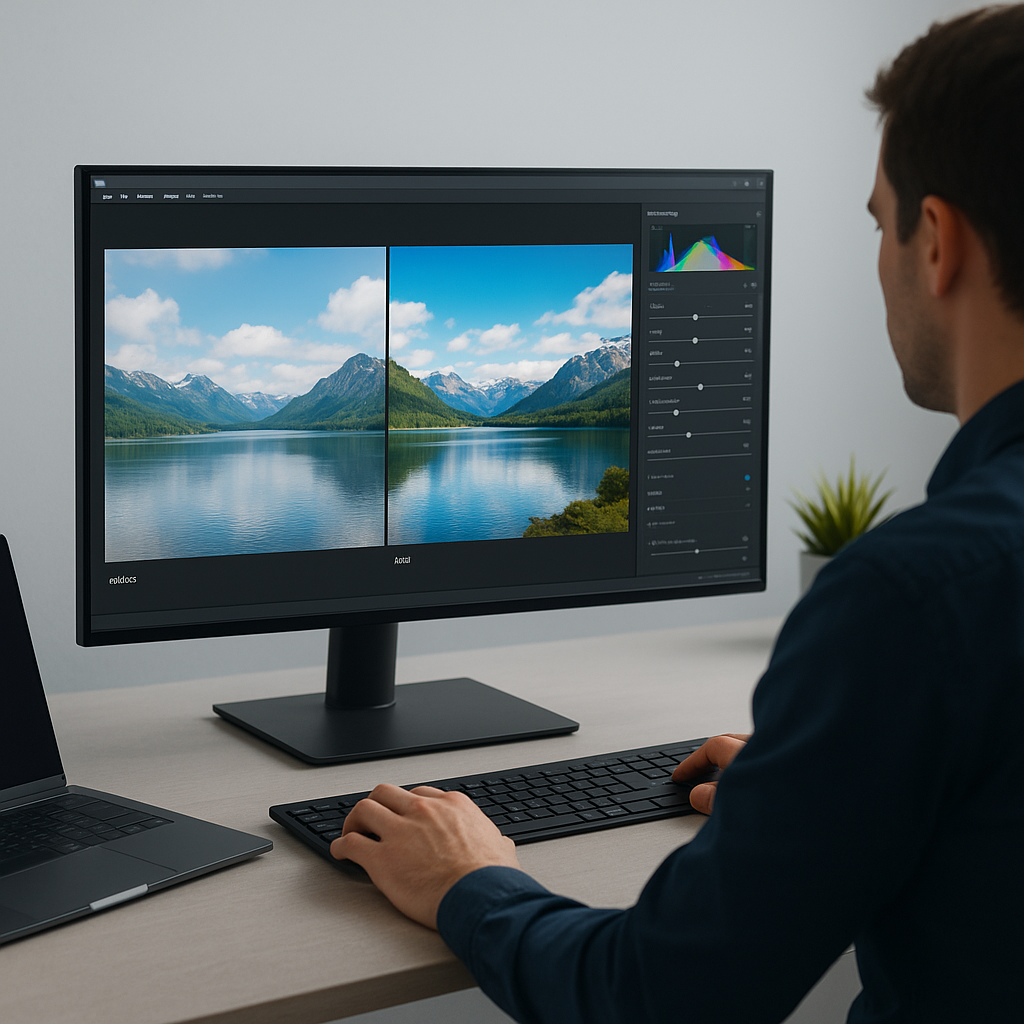
Image and Video Enhancement: Adobe’s Topaz Labs Acquisition Insights
Image and video enhancement tools are essential for digital creatives, allowing them to produce high-quality content efficiently. Adobe’s recent acquisition of Topaz Labs, a leader in this space, emphasizes the growing importance of advanced AI tools in multimedia production. This post will explore how this acquisition impacts developers and what it means for the future of AI-enhanced creative workflows.
What Is Image and Video Enhancement?
Image and video enhancement refers to the process of improving the visual quality of digital media through various techniques, often powered by AI. This field has gained traction as tools like Topaz Labs have demonstrated how advanced algorithms can upscale, restore, and refine media content with remarkable precision.
Why This Matters Now
The acquisition of Topaz Labs by Adobe signals a pivotal moment in AI-driven creative tools, particularly in the competitive landscape involving companies like Canva and Blackmagic Design. By integrating Topaz’s advanced models—such as Astra for video upscaling and Wonder for image retouching—Adobe aims to enhance its Creative Cloud offerings significantly. This integration will provide developers and creative professionals with robust tools, allowing for more efficient workflows and better quality outputs.
Technical Deep Dive
Topaz Labs has developed sophisticated AI models that are designed to run efficiently on consumer-grade GPUs, making advanced enhancements accessible to a wider audience. Their technology focuses on two primary areas:
- Video Upscaling: The
Astramodel enhances video resolution without sacrificing quality, making it ideal for content creators looking to repurpose older footage. - Image Enhancement: The
Wondermodel applies advanced retouching techniques, allowing users to enhance details while reducing noise and artifacts.
Here’s an example of a Python script that utilizes Topaz’s models (hypothetical API) for enhancement:
import topaz
from topaz.models import Astra, Wonder

# Initialize models
video_model = Astra()
image_model = Wonder()

# Enhance video
video_input = "input_video.mp4"
video_output = "enhanced_video.mp4"
video_model.upscale(video_input, video_output)

# Enhance image
image_input = "input_image.jpg"
image_output = "enhanced_image.jpg"
image_model.retouch(image_input, image_output)
By allowing integration of these tools into existing workflows, developers can significantly reduce the time and effort required for high-quality media production.
Real-World Applications
1. Film and Video Production
In the film industry, professionals can use Topaz’s technology to upscale older films for modern screens, preserving the integrity of the original footage.
2. Photography
Photographers can leverage image enhancement tools to retouch portraits or landscapes, making adjustments that are often time-consuming by hand.
3. Marketing and Advertising
Marketers can utilize these enhancements to create visually compelling advertisements that capture audience attention, particularly on digital platforms.
4. Archiving and Restoration
Organizations can restore archival footage and photographs, breathing new life into historical content and making it accessible to modern audiences.
What This Means for Developers
Developers should consider how the integration of AI-enhanced tools like those from Topaz Labs can impact their projects. Skills in machine learning, particularly in image processing and computer vision, will become increasingly valuable. Additionally, understanding how to utilize APIs for these tools will enable developers to create innovative applications that leverage advanced media enhancements.
💡 Pro Insight: As AI continues to reshape creative workflows, developers who embrace these advancements will not only enhance their skill sets but also unlock new opportunities in multimedia production. Tools that streamline the enhancement process will become integral to creative ecosystems, making familiarity with such technologies essential.
Future of Image and Video Enhancement (2025–2030)
In the next few years, we can expect significant advancements in image and video enhancement technologies. With the increasing power of consumer GPUs and the evolution of AI models, enhancements will become even more sophisticated and user-friendly. Developers will likely see a rise in demand for customized solutions that integrate these capabilities into various applications.
Furthermore, as Adobe continues to integrate Topaz’s technologies, we may witness new features that leverage AI for real-time enhancements, enabling seamless edits during live broadcasts or instant retouching in photography tools.
Challenges & Limitations
1. Quality Control
While AI models can enhance media, they may also introduce artifacts if not properly managed. Developers need to ensure that enhancements do not compromise the original content quality.
2. Resource Intensive
Running advanced AI models can be resource-intensive, requiring significant computational power, which may not be feasible for all users or applications.
3. Integration Complexity
Integrating these tools into existing workflows could pose challenges, especially if legacy systems are involved. Developers must plan for compatibility and performance optimization.
4. Licensing and Costs
As companies like Adobe acquire technology, understanding the licensing and cost implications for developers and organizations will be crucial for budgeting and planning.
Key Takeaways
- Image and video enhancement tools are essential for modern digital media production.
- Adobe’s acquisition of Topaz Labs enhances its Creative Cloud offerings with advanced AI capabilities.
- Developers should focus on integrating AI technologies into their workflows for improved efficiency and quality.
- Future advancements will likely offer real-time enhancements and customized solutions in multimedia production.
- Understanding the challenges of AI integration will be crucial for successful implementation.
Frequently Asked Questions
What are the benefits of using AI for image and video enhancement?
AI enhances the quality of images and videos by applying advanced algorithms to upscale resolution, reduce noise, and restore details. This leads to better overall visual quality and saves time in editing.
How does Topaz Labs’ technology compare to traditional enhancement methods?
Topaz Labs’ AI technology can deliver superior results more quickly than traditional methods, which often require manual adjustments and extensive time. It automates many processes while maintaining high quality.
What should developers focus on to leverage AI-enhanced tools?
Developers should build skills in machine learning, specifically in image processing and API integration, to effectively utilize AI-enhanced tools in their projects.
Stay updated with the latest advancements in AI tools and development by following KnowLatest for more insights and news.


