
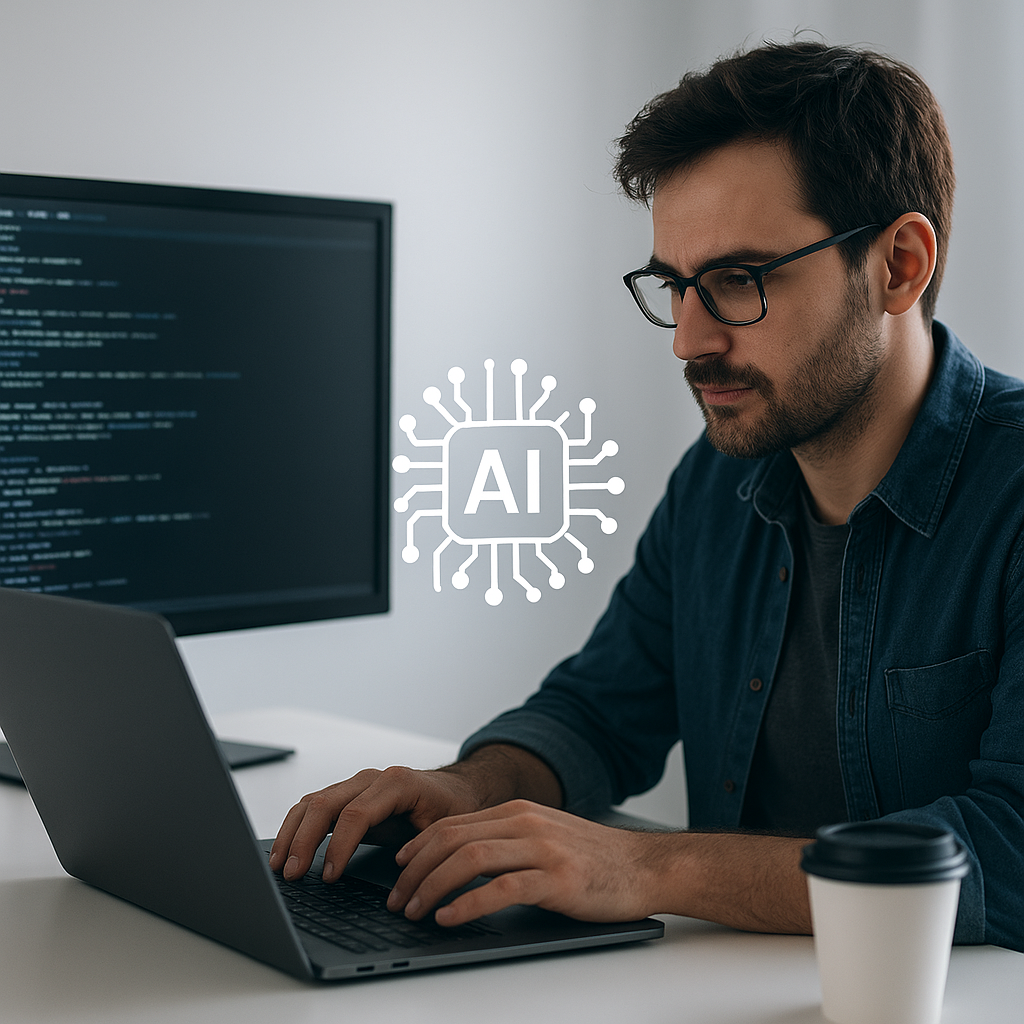
The Impact of AI in Coding: Quality vs. Productivity
Developers are increasingly reliant on AI tools for coding, with many asserting they cannot work without them. This trend, highlighted by recent research, raises important questions about the quality of code produced with AI assistance. In this post, we will explore the implications of this reliance on AI for coding, examine the potential pitfalls, and discuss both the benefits and challenges faced by developers in this evolving landscape.
What Is AI in Coding?
AI in coding refers to the use of artificial intelligence tools and systems to assist developers in the software development process. These tools can automate repetitive tasks, suggest code snippets, and even generate entire code blocks based on natural language input. This concept is crucial today as many developers now prefer to integrate AI into their workflows, believing it enhances productivity.
Why This Matters Now
The reliance on AI coding tools has reached an unprecedented level, as evidenced by a recent study from METR, which found that most developers would refuse to work without AI assistance. This shift is driven by the rapid evolution of AI capabilities, enabling faster code generation. However, this rush towards AI could lead to significant quality issues. With many developers perceiving AI as a necessary component of their productivity, it raises concerns about software quality and maintenance costs. As highlighted in a recent TechCrunch article, many developers report increased productivity without fully understanding the potential long-term implications of relying on AI-generated code.
Technical Deep Dive
To understand the impact of AI on coding practices, it’s essential to examine how these tools function and the underlying mechanisms that drive their performance.
- Code Generation: AI tools utilize machine learning models trained on vast datasets to generate code snippets. For instance, models like
OpenAI Codexcan interpret natural language instructions and produce corresponding code. - Error Detection: Many AI tools now offer features that automatically check for common coding errors. However, as found in research, these tools can introduce new bugs, leading to increased maintenance tasks.
- Code Quality Evaluation: Metrics for evaluating code quality, such as maintainability and readability, are critical. Tools like
SonarQubecan be integrated with AI systems to provide real-time feedback on code quality.
Here is a simple Python example demonstrating how AI can assist with code generation:
import openai

def generate_code(prompt):
    response = openai.ChatCompletion.create(
        model="gpt-4",
        messages=[{"role": "user", "content": prompt}]
    )
    return response['choices'][0]['message']['content']

# Example usage
print(generate_code("Create a Python function to calculate the Fibonacci sequence."))
This snippet shows how developers can leverage AI to generate code based on natural language prompts. However, relying solely on AI for code generation could lead to unforeseen maintenance issues.
Real-World Applications
1. Rapid Prototyping
Startups and development teams utilize AI to rapidly prototype applications, enabling faster iterations and testing of ideas. Tools like GitHub Copilot facilitate this process by suggesting code and functionalities based on existing codebases.
2. Bug Fixing and Code Review
AI tools are increasingly applied in bug fixing and code review processes. For example, DeepCode uses AI to analyze code changes and suggest improvements, helping teams maintain code quality while speeding up the review process.
3. Code Documentation
AI can assist in generating documentation for codebases, reducing the manual effort required by developers. Tools like DocuGenerator leverage AI to create comprehensive documentation based on the code’s structure and comments.
What This Means for Developers
As AI tools become more integrated into coding practices, developers must adapt their skills accordingly. Here’s what developers should focus on:
- Understanding AI Limitations: Developers need to be aware of potential pitfalls, such as the introduction of hidden bugs or maintenance challenges associated with AI-generated code.
- Continuous Learning: Keeping up with advancements in AI tools and methodologies is crucial for remaining competitive in the job market.
- Collaboration with AI: Understanding how to effectively collaborate with AI tools to enhance productivity without compromising code quality is essential.
💡 Pro Insight: As AI continues to evolve, developers must strike a balance between leveraging its capabilities for productivity and ensuring that they maintain a solid understanding of coding principles to mitigate long-term maintenance issues.
Future of AI in Coding (2025–2030)
The future of AI in coding is poised to be transformative. By 2030, we can expect significant advancements in AI capabilities, leading to more efficient development processes. One notable prediction is the emergence of AI systems that not only generate code but also autonomously test and optimize it for performance.
Moreover, as AI tools become more sophisticated, we may see a shift in developer roles. Developers will likely need to focus more on high-level architectural decisions while relying on AI for routine coding tasks. This evolution will necessitate a continual reassessment of skill sets and industry standards.
Challenges & Limitations
1. Quality Assurance
AI-generated code can often introduce bugs that are difficult to trace. Developers must remain vigilant and employ robust testing frameworks to ensure code quality.
2. Dependency on AI
Over-reliance on AI tools may hinder developers’ coding skills over time. It is crucial to maintain a balance between using AI and developing fundamental programming abilities.
3. Maintenance Costs
As highlighted in various studies, AI-generated code may lead to higher long-term maintenance costs. Developers must evaluate the trade-offs between rapid development and ongoing code upkeep.
Key Takeaways
- AI tools can enhance coding productivity but may introduce quality issues.
- Developers must understand the limitations of AI-generated code to mitigate risks.
- Continuous learning is crucial as AI technology evolves.
- Collaboration with AI requires a balance of productivity and code quality.
- Future roles may shift towards higher-level architectural decisions as AI tools advance.
Frequently Asked Questions
What are the benefits of using AI in coding?
AI can increase coding speed, automate repetitive tasks, and assist in debugging, ultimately enhancing productivity.
How can AI-generated code affect software maintenance?
AI-generated code may introduce bugs and increase long-term maintenance costs, necessitating careful evaluation from developers.
What skills should developers focus on to adapt to AI in coding?
Developers should focus on understanding AI limitations, continuous learning, and maintaining fundamental coding skills to avoid dependence on AI tools.
For more insights on AI and developer news, follow KnowLatest.


