
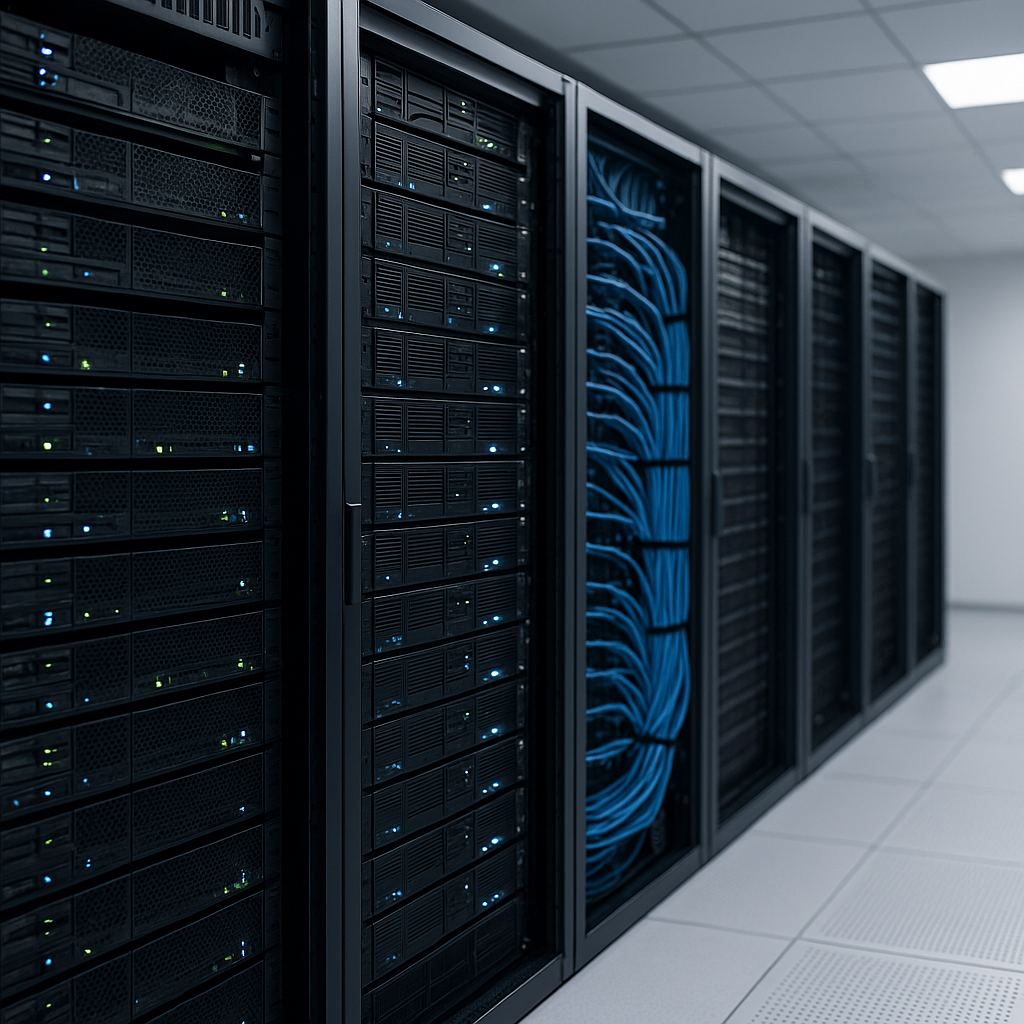
Data Center Investment: SoftBank’s €75 Billion Initiative
Data center investment refers to the financial commitment made to build or expand facilities that house computer systems and associated components. Recently, SoftBank announced plans to invest up to €75 billion in French data centers, aiming to enhance infrastructure capacity significantly. This article will delve into the implications of such investments for developers and the cloud computing landscape.
What Is Data Center Investment?
Data center investment involves allocating capital resources for the construction or enhancement of facilities dedicated to hosting IT infrastructure and services. This investment is critical for addressing growing computational needs, particularly in the AI and cloud computing sectors. The recent €75 billion investment by SoftBank is a significant step aimed at expanding data center capacity in France, specifically developing up to 5 gigawatts of additional power.
Why This Matters Now
As companies increasingly rely on cloud services and AI technologies, the demand for robust data center infrastructure has skyrocketed. The planned investment by SoftBank is not only a response to this growing need but also positions France as a pivotal player in the European cloud landscape. With environmental concerns surrounding data centers increasing, the ability to build sustainable and efficient facilities is paramount. The investment aligns with government efforts to promote AI development, making it a timely initiative for developers and enterprises alike.
Technical Deep Dive
SoftBank’s investment in French data centers aims to develop a total of 5 gigawatts of capacity, a substantial increase that could reshape the EU’s data infrastructure. Here’s a closer look at the technical implications and architectures involved:
- Capacity Planning: The planned 5 gigawatts will be distributed across various sites, including Dunkirk and Bouchain, focusing on energy efficiency and sustainability.
- Energy Sources: The centers will likely utilize a mix of renewable and traditional energy sources, emphasizing the need for efficient power management systems.
- Infrastructure Scalability: Designing modular data centers will allow for rapid scaling to meet fluctuating demands from cloud service providers.
- AI Integration: With AI workloads increasing, integrating advanced cooling and power management systems will be critical to maintaining operational efficiency.
Here’s a simplified architecture diagram for a modern data center designed to efficiently manage AI workloads:
# Example of a simplified data center architecture
class DataCenter:
    def __init__(self, capacity_gw):
        self.capacity_gw = capacity_gw
        self.servers = []

    def add_server(self, server):
        self.servers.append(server)

# Create a data center with 5 gigawatts capacity
france_data_center = DataCenter(5)
Real-World Applications
1. Cloud Computing Services
With enhanced data center capabilities, cloud service providers can offer more robust services, including AI processing, big data analytics, and enterprise applications.
2. AI Research and Development
Research institutions can leverage the increased capacity for AI training, allowing for more complex models and faster processing times.
3. Edge Computing Solutions
As IoT devices proliferate, the need for localized data processing will grow, making strategically located data centers essential for reducing latency.
What This Means for Developers
Developers should prepare for a landscape that increasingly relies on scalable, efficient data center architectures. Skills in cloud infrastructure management, AI optimization, and energy-efficient programming will be paramount. Moreover, understanding the implications of data center investments on service availability and latency will help developers architect more resilient applications.
💡 Pro Insight: The shift towards extensive data center investments is not just about capacity; it also signals a fundamental change in how businesses approach AI and cloud infrastructure. As SoftBank’s investment unfolds, developers must stay agile and ready to adapt their solutions to leverage these advancements.
Future of Data Centers (2025–2030)
By 2030, we can anticipate a significant transformation in the data center landscape, primarily driven by advancements in AI and sustainability efforts. Investments like those from SoftBank will likely lead to:
- Increased Automation: Data centers will increasingly rely on AI for managing workloads and optimizing energy consumption, minimizing human intervention.
- Enhanced Sustainability: Future data centers will prioritize renewable energy sources, aiming to achieve carbon neutrality.
- Global Distribution: As demand for cloud services grows, we may see a proliferation of smaller, more localized data centers to reduce latency.
Challenges & Limitations
1. Environmental Concerns
As data centers expand, they face scrutiny over their environmental impact, particularly regarding energy consumption and waste management.
2. Infrastructure Investment Risks
Large-scale investments carry risks, including changing regulatory environments and market volatility that could impact returns.
3. Technological Obsolescence
Rapid advancements in technology can render existing infrastructure outdated, necessitating continuous investment in upgrades.
4. Security Vulnerabilities
As data centers become more interconnected, they may become more vulnerable to cyberattacks, requiring enhanced security protocols.
Key Takeaways
- SoftBank’s €75 billion investment in French data centers aims to enhance AI and cloud capabilities.
- The focus is on developing up to 5 gigawatts of capacity, emphasizing sustainability and efficiency.
- Developers must adapt to a rapidly evolving data center landscape that prioritizes AI integration.
- Future data centers are expected to be automated, sustainable, and globally distributed.
- Challenges include environmental concerns and the risk of technological obsolescence.
Frequently Asked Questions
What is the significance of SoftBank’s investment in data centers?
SoftBank’s investment signifies a major boost in data center capacity, particularly for AI applications, positioning France as a key player in the European cloud market.
How will this investment affect cloud computing?
This investment will enhance the infrastructure available for cloud services, potentially leading to improved service quality and reduced costs for end-users.
What are the potential risks associated with large data center investments?
Risks include environmental concerns, regulatory challenges, and the possibility of rapid technological changes that could impact infrastructure viability.
For more insights on AI and cloud computing developments, follow KnowLatest.


