
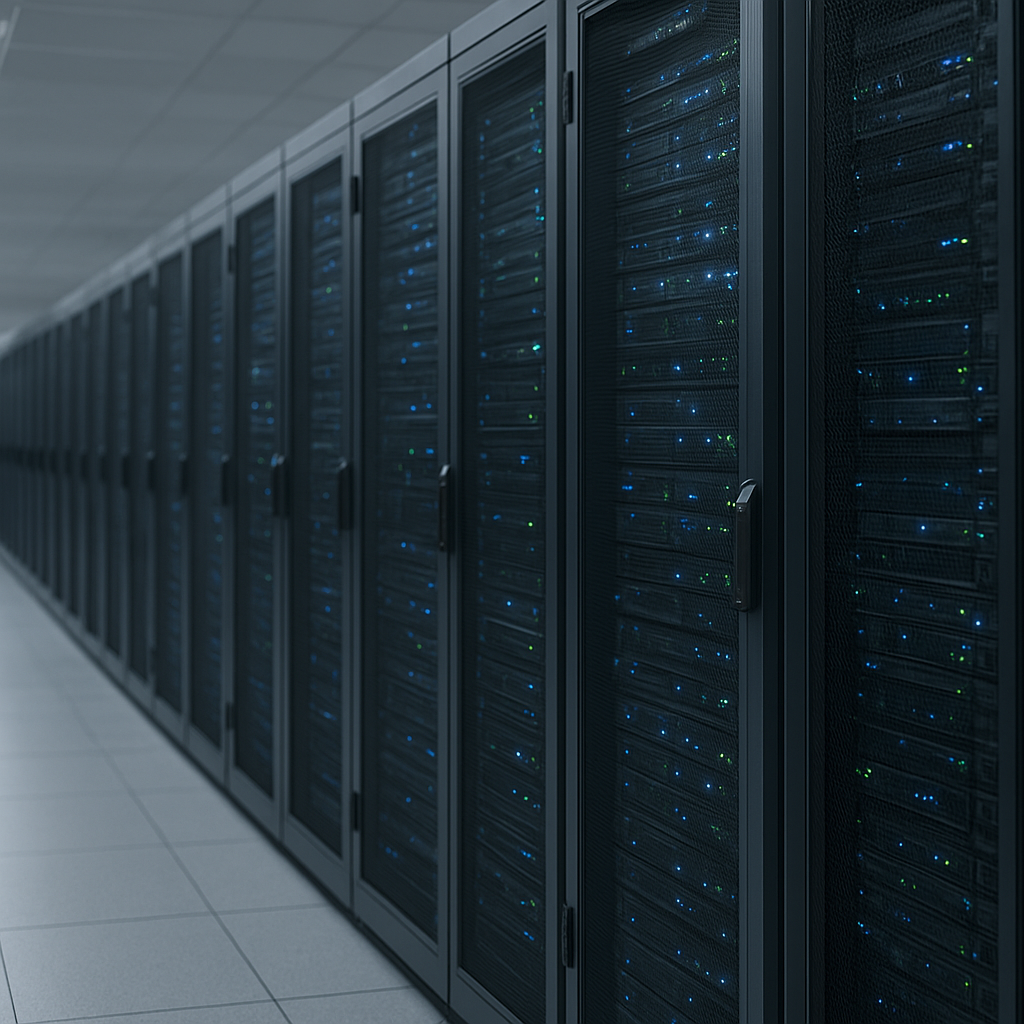
Data Center Expansion: Insights from SoftBank’s €75 Billion Investment
Data center expansion refers to the strategic development of data facilities designed to house critical IT infrastructure. Recently, SoftBank announced plans to invest up to €75 billion in building data centers in France, aiming to enhance its AI infrastructure. This post will delve into the implications of this investment for developers, the technologies involved, and what it means for the future of data centers in Europe.
What Is Data Center Expansion?
Data center expansion involves increasing the capacity and capabilities of data centers to support growing data processing and storage needs. This is particularly critical as enterprises continue to adopt cloud computing and AI technologies. SoftBank’s recent announcement to invest in French data centers highlights the urgency of scaling infrastructure to accommodate the demands of AI applications, which require substantial computational resources and efficient data management.
Why This Matters Now
The announcement from SoftBank is timely, given the rising demand for data centers driven by digital transformation and AI advancements. The company aims to develop up to 5 gigawatts of additional data center capacity, focusing on locations like Dunkirk and Bouchain in the Hauts-de-France region. The French government’s ambition to position France as a key player in the AI value chain makes this investment critical for developers looking to deploy scalable solutions.
As concerns grow about the environmental impact of data centers in other regions, such as the U.S., SoftBank’s investment could set a precedent for sustainable data center development in Europe. This strategy may influence how developers approach infrastructure design and resource optimization.
Technical Deep Dive
SoftBank’s investment will focus on several key technological aspects to maximize efficiency and capacity:
- Energy Efficiency: The data centers will leverage cutting-edge cooling technologies and renewable energy sources to minimize carbon footprints.
- Scalable Architecture: Utilizing modular designs, these data centers will allow for rapid scaling in response to client needs, particularly in AI workloads.
- Cloud Integration: Enhanced capabilities for cloud services, enabling developers to deploy applications with low latency and high reliability.
In practical terms, developers can expect to work with various tools and frameworks that optimize performance in these new environments. Consider the following code snippet that showcases how to deploy an application on a cloud platform using a scalable architecture:
import boto3

# Create a session using your AWS credentials
session = boto3.Session(
    aws_access_key_id='YOUR_ACCESS_KEY',
    aws_secret_access_key='YOUR_SECRET_KEY',
    region_name='eu-west-1'
)

# Create an EC2 instance
ec2 = session.resource('ec2')
instance = ec2.create_instances(
    ImageId='ami-0abcdef1234567890',  # Replace with your AMI ID
    MinCount=1,
    MaxCount=1,
    InstanceType='t2.micro',
    KeyName='my-key-pair'
)

print(f'Created instance with ID: {instance[0].id}')
This snippet demonstrates how to programmatically create an EC2 instance, a common requirement for deploying applications in a scalable cloud environment.
Furthermore, the following table summarizes the features of the proposed SoftBank data centers compared to traditional data centers:
| Feature | SoftBank Data Centers | Traditional Data Centers |
|---|---|---|
| Energy Source | Renewable | Fossil Fuels |
| Scalability | High (modular) | Limited |
| AI Optimization | Integrated | Not prioritized |
| Environmental Impact | Minimal | Significant |
Real-World Applications
1. AI Research and Development
Developers working in AI can utilize the massive computational resources from SoftBank’s data centers to train complex models more efficiently. This is particularly beneficial for projects involving deep learning and natural language processing.
2. Cloud Services Deployment
Businesses can leverage these data centers to deploy cloud-based applications, ensuring lower latency and higher availability for end-users. This is vital for industries that rely on real-time data processing, such as finance and e-commerce.
3. Edge Computing
With the focus on modular and scalable architecture, these data centers can support edge computing initiatives, bringing computation closer to data sources. This is crucial for IoT applications where low latency is mandatory.
What This Means for Developers
For developers, the expansion of data centers presents both opportunities and challenges. They must adapt to new architectures and frameworks that allow for efficient resource utilization. Key areas to focus on include:
- Understanding cloud-native application design.
- Familiarity with AI optimization techniques for scaling workloads.
- Awareness of sustainability practices in data center operations.
💡 Pro Insight
💡 Pro Insight: “As data demands continue to surge, the need for innovative and sustainable data center solutions will become pivotal. Developers who embrace cloud-native practices and prioritize energy-efficient designs will lead the next wave of technological advancement.” — [Your Name], Senior Cloud Architect.
Future of Data Centers (2025–2030)
Looking ahead, the future of data centers is poised for significant transformation. By 2030, we can expect a shift towards fully automated, AI-driven management systems that optimize performance and reduce costs. Moreover, as environmental regulations tighten, data centers will increasingly rely on renewable energy sources and innovative cooling technologies to mitigate their impact on climate change.
Additionally, the integration of AI into data center operations will lead to smarter resource allocation and enhanced security protocols, ensuring that these facilities can meet the evolving needs of businesses and consumers alike.
Challenges & Limitations
1. Environmental Concerns
Despite advancements, data centers still face scrutiny over their environmental impact, particularly regarding energy consumption and cooling methods. Developers must remain mindful of sustainability practices.
2. Infrastructure Costs
Building and maintaining state-of-the-art data centers requires significant investment. This may limit access for smaller companies and startups that cannot afford such expenses.
3. Regulatory Compliance
As governments impose stricter regulations on data privacy and energy use, developers will need to ensure that their applications and infrastructure comply with these evolving standards.
Key Takeaways
- SoftBank’s €75 billion investment aims to enhance AI infrastructure in Europe.
- The expansion will focus on energy-efficient, scalable data center designs.
- Developers should adapt to new technologies and prioritize sustainability in their projects.
- Future data centers will increasingly integrate AI for smarter operations.
- Environmental and regulatory challenges will shape the development of data centers.
Frequently Asked Questions
What is the significance of SoftBank’s investment in data centers?
SoftBank’s investment is significant as it aims to enhance the AI infrastructure in Europe, responding to the growing demand for data processing and storage capabilities.
How do data centers impact AI development?
Data centers provide the necessary computational power and storage for training and deploying AI models, allowing for faster and more efficient development cycles.
What are the future trends for data centers?
Future trends include increased automation, reliance on renewable energy sources, and enhanced integration of AI to manage operations efficiently.
For more insights on AI and developer technologies, follow KnowLatest.


