
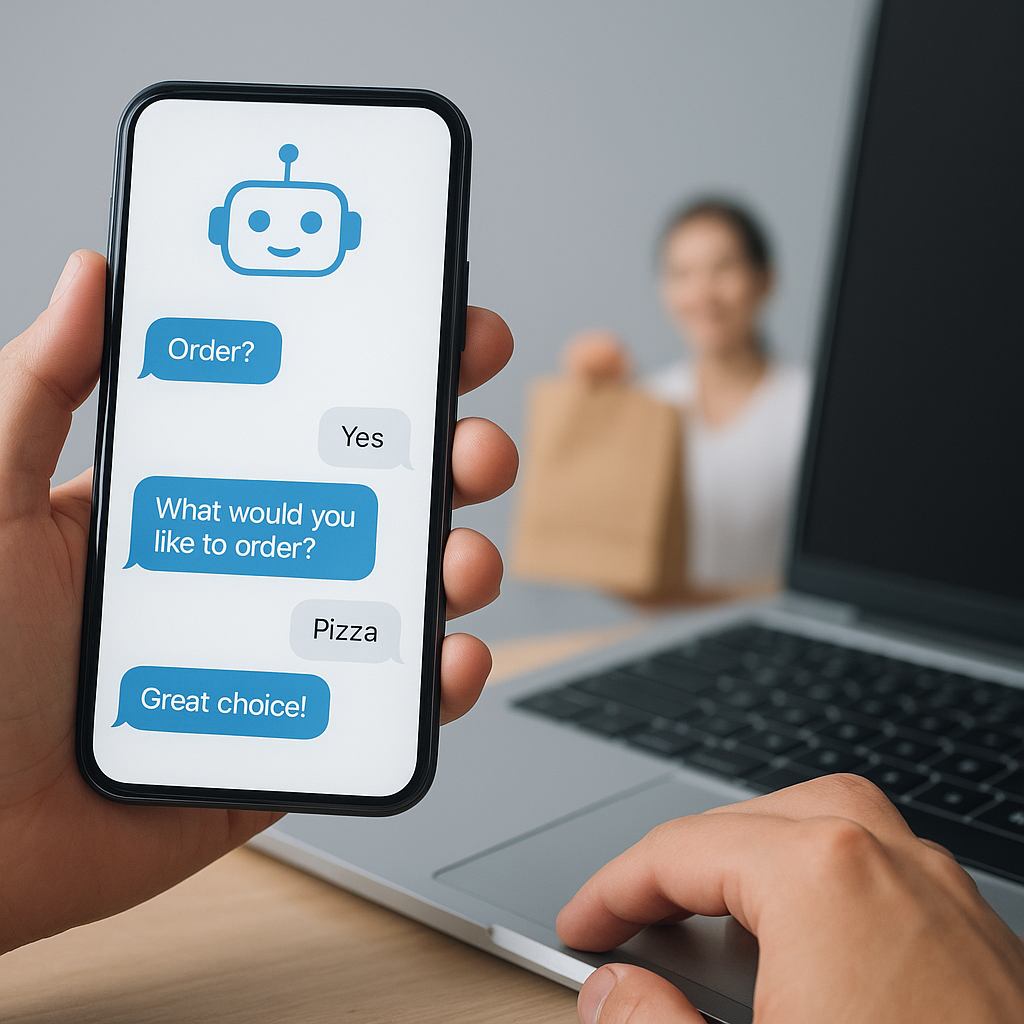
AI Chatbots in Food Delivery: Enhancing User Experience
AI chatbots are revolutionizing the way consumers interact with food delivery services. DoorDash’s new AI chatbot, known as Ask DoorDash, allows users to order food and groceries using prompts and photos, streamlining the ordering process significantly. With this innovative approach, developers can learn how to implement similar conversational AI features in their applications, making interactions more intuitive and engaging.
What Is an AI Chatbot?
An AI chatbot is a software application that simulates human conversation through voice commands or text chats. It leverages natural language processing (NLP) to understand user inputs and provide relevant responses. The recent launch of DoorDash’s Ask DoorDash chatbot exemplifies how AI can enhance user experience in food delivery by allowing users to search for items using their own words or even photos, thereby eliminating the need for tedious scrolling through menus.
Why This Matters Now
The emergence of AI chatbots like Ask DoorDash is a response to a growing demand for more efficient and personalized shopping experiences. In an era where consumers expect instant gratification, traditional search methods can feel cumbersome. The shift towards conversational AI is being driven by several factors, including:
- Increased smartphone usage for online shopping and food delivery.
- Consumer preference for personalized recommendations.
- Technological advancements in AI and machine learning that enhance chatbot capabilities.
As noted in a recent TechCrunch article, similar AI initiatives by competitors like Uber Eats and Instacart illustrate the industry’s competitive push towards integrating AI-driven features in everyday applications.
Technical Deep Dive
Developers interested in implementing AI chatbots can draw inspiration from DoorDash’s Ask DoorDash feature. This chatbot employs a combination of natural language processing (NLP) and machine learning algorithms to interpret user input and provide tailored suggestions.
Architecture Overview
The underlying architecture for an AI chatbot like Ask DoorDash typically involves the following components:
- User Interface (UI): A chat interface for user interaction.
- Natural Language Processing (NLP) Engine: To process and understand user queries.
- Recommendation System: To suggest items based on user preferences and past interactions.
- Integration Layer: For connecting with backend services to fetch data (restaurants, grocery items, etc.).
Sample Implementation
Below is a simplified Python code snippet using the transformers library to implement a basic chatbot:
from transformers import pipeline

# Initialize the chatbot model
chatbot = pipeline("conversational", model="microsoft/DialoGPT-medium")

# Function to interact with the chatbot
def chat_with_bot(user_input):
    response = chatbot(user_input)
    return response[0]['generated_text']

# Example interaction
user_query = "I'm looking for a vegetarian restaurant."
print(chat_with_bot(user_query))
This code sets up a basic conversational AI model that can be expanded with specific training data related to food and grocery queries.
Real-World Applications
1. Food Delivery Services
Companies like DoorDash and Uber Eats can utilize AI chatbots to enhance user interaction, making the ordering process more intuitive.
2. E-Commerce Platforms
Retailers can implement similar chatbots to assist customers in finding products quickly based on descriptions, images, or past purchase history.
3. Customer Support
Businesses can deploy chatbots to handle routine inquiries, freeing up human agents for more complex issues.
4. Reservation Systems
AI chatbots can assist users in booking tables or services by searching availability based on user preferences.
What This Means for Developers
Developers should focus on enhancing their skills in:
- Natural language processing to improve chatbot interactions.
- Machine learning for building personalized recommendation systems.
- APIs for integrating chatbots with existing services and databases.
Implementing AI chatbots not only enhances user experience but also opens up new avenues for engagement and customer retention.
💡 Pro Insight: As AI chatbots become increasingly sophisticated, the key to maintaining user trust will be transparency in how user data is leveraged for recommendations and personalization.
Future of AI Chatbots (2025–2030)
As we look ahead, the capabilities of AI chatbots are expected to grow significantly. By 2030, we may see:
- More Contextual Understanding: Future chatbots will likely possess a deeper understanding of user context, making interactions feel more natural.
- Integration with Smart Devices: Chatbots could extend beyond apps to interact with smart home devices, enabling a more cohesive user experience.
- Emphasis on Ethical AI: As the technology evolves, there will be a stronger focus on ethical guidelines to ensure user privacy and data security.
Challenges & Limitations
1. Data Privacy Concerns
As chatbots collect user data to offer personalized experiences, ensuring data privacy and compliance with regulations like GDPR is crucial.
2. Misinterpretation of Queries
Despite advancements, chatbots may still struggle with ambiguous queries, leading to user frustration if the system fails to understand requests correctly.
3. Resource Intensive
Developing and maintaining sophisticated chatbots can be resource-intensive, requiring continual updates and refinements.
4. Dependency on Quality Data
The effectiveness of a chatbot is directly tied to the quality and quantity of data used for training; poor data can lead to subpar performance.
Key Takeaways
- AI chatbots like Ask DoorDash are transforming the food delivery experience through user-friendly interactions.
- Natural language processing and machine learning are core technologies enabling these advancements.
- Chatbots can enhance various applications beyond food delivery, including e-commerce and customer service.
- Developers should focus on integrating AI technologies to create more engaging user experiences.
- The future of AI chatbots looks promising, with potential advancements in contextual understanding and ethical AI.
Frequently Asked Questions
What is an AI chatbot?
An AI chatbot is a software application that simulates human conversation using text or voice commands, often leveraging natural language processing for better user interaction.
How can chatbots improve e-commerce?
Chatbots can streamline the shopping experience by assisting users in finding products quickly, offering personalized recommendations, and handling inquiries automatically.
What are the main challenges in developing AI chatbots?
Challenges include data privacy concerns, potential misinterpretation of user queries, and the need for high-quality training data to ensure effective performance.
For more insights on AI and technology trends, follow KnowLatest.


