
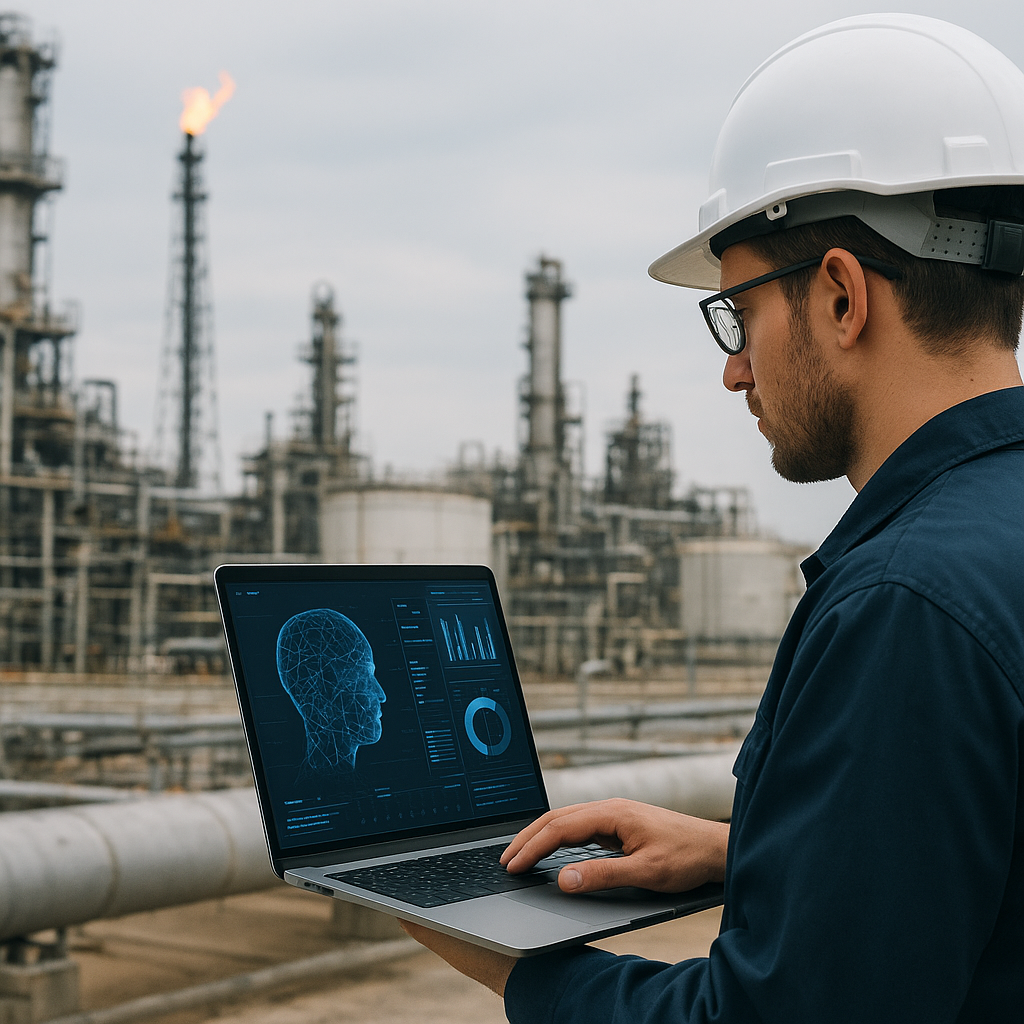
Foundation AI Models for Oil and Gas: Transforming Operations
Foundation AI models for industrial applications are gaining traction as businesses seek to optimize operations and enhance decision-making. Applied Computing has recently attracted attention by raising $20 million to develop such a model tailored for the oil, gas, and petrochemical industries. This post will explore how foundation AI models can transform operational efficiency and provide actionable insights for developers working in industrial AI.
What Is a Foundation AI Model?
A foundation AI model refers to a sophisticated machine learning architecture designed to analyze and interpret large datasets across various domains. These models leverage multiple data sources, including real-time sensor data, engineering documentation, and physical laws, to generate insights and predictions. Recently, Applied Computing’s innovative foundation model, named Orbital, aims to optimize operations within the oil and gas sector by providing quick, actionable insights derived from complex datasets.
Why This Matters Now
The oil and gas industry faces significant challenges in data utilization, often relying on less than 8% of the available sensor data for decision-making. As companies like Applied Computing pursue advanced AI solutions, understanding the implications of foundation models becomes crucial for developers. The ongoing energy transition and heightened demand for operational efficiency place foundation AI models in a pivotal position. With the ability to analyze complex systems and provide real-time feedback, these technologies are essential for modernizing the industry.
Technical Deep Dive
Foundation AI models, like Orbital, operate by integrating various data types to predict the state of industrial facilities. Here’s how it works:
- Data Integration: The model synthesizes data from sensors that monitor temperature, pressure, velocity, and viscosity.
- Physics-Based Modeling: By incorporating physics and chemistry principles, the model understands system constraints and behavior.
- Time Series Analysis: Utilizing time-series data, the model can predict future states and detect anomalies.
- Simulations: Operators can run simulations to visualize potential impacts of changes in one part of the facility on overall operations.
This integration allows for rapid anomaly detection and investigation, compressing what traditionally took days or weeks into mere minutes. Here’s a simplified Python example illustrating how a basic time-series analysis could be implemented:
import pandas as pd
import numpy as np

# Sample temperature data
data = pd.DataFrame({
    'timestamp': pd.date_range(start='2023-01-01', periods=100, freq='H'),
    'temperature': np.random.normal(loc=50, scale=5, size=100)
})

# Rolling mean to smooth data
data['rolling_mean'] = data['temperature'].rolling(window=5).mean()

# Detect anomalies
data['anomaly'] = np.where(data['temperature'] > (data['rolling_mean'] + 2), 1, 0)

print(data[data['anomaly'] == 1])  # Display anomalies
This code snippet demonstrates a basic anomaly detection technique that could be further integrated into a more complex foundation AI model.
Real-World Applications
1. Upstream Oil and Gas Operations
In upstream operations, Orbital can enhance drilling efficiency by predicting equipment failures and optimizing resource allocation based on real-time data analysis.
2. Refining Processes
In refining, real-time process adjustments can be made using simulations, leading to more efficient energy use and reduced operational costs.
3. Petrochemical Production
For petrochemical plants, the model can streamline operations by analyzing the interplay between different chemical processes and predicting outcomes.
4. Energy Management Systems
Integrating foundation AI models into energy management systems can lead to significant reductions in energy consumption and waste.
What This Means for Developers
Developers should focus on acquiring skills in data integration, machine learning model development, and system simulation. Familiarity with tools such as TensorFlow for deep learning and Pandas for data manipulation will be crucial. Additionally, understanding the specific challenges faced by the oil and gas industry will enable developers to create more tailored solutions.
💡 Pro Insight: Foundation AI models represent a shift in how industries can leverage data for operational efficiency. As companies like Applied Computing continue to innovate, the demand for skilled developers who can navigate complex integrations will only increase.
Future of Foundation AI Models (2025–2030)
Over the next five years, foundation AI models are expected to evolve significantly, with advancements in real-time data processing and machine learning algorithms. One key prediction is that the integration of edge computing will enhance the ability of these models to process data closer to the source, reducing latency and bandwidth issues. Additionally, as industries continue to embrace digital transformation, we can anticipate a growing emphasis on interdisciplinary teams that merge AI research with domain-specific expertise, further refining the capabilities of foundation AI models.
Challenges & Limitations
1. Data Fragmentation
While foundation AI models can process various data types, the fragmentation of data sources in industry can hinder integration efforts.
2. Computational Requirements
The processing power required for real-time analysis can be substantial, necessitating investment in infrastructure.
3. Industry Resistance
The oil and gas sector has entrenched practices and software solutions, making it challenging for new technologies to gain traction.
4. Regulatory Compliance
Adhering to industry regulations while implementing AI solutions can complicate deployment and ongoing operations.
Key Takeaways
- Foundation AI models can revolutionize operational efficiency in the oil and gas industry.
- Real-time data integration is key to maximizing the utility of AI models.
- Developers need to focus on both technical skills and industry-specific knowledge.
- Anticipate a future where edge computing enhances AI capabilities.
- Challenges like data fragmentation and regulatory compliance must be navigated carefully.
Frequently Asked Questions
What is a foundation AI model?
A foundation AI model is an advanced machine learning architecture that integrates multiple data sources to generate insights and predictions across various domains, particularly in complex industrial environments.
How can foundation AI models benefit the oil and gas industry?
These models can optimize operations by providing real-time insights, improving decision-making, and enabling more efficient resource allocation, ultimately leading to cost savings and enhanced productivity.
What skills should developers focus on for foundation AI model development?
Developers should concentrate on data integration, machine learning techniques, and understanding the specific needs of the oil and gas sector, utilizing tools such as TensorFlow and Pandas.
For more insights into AI and developer news, follow KnowLatest.


