
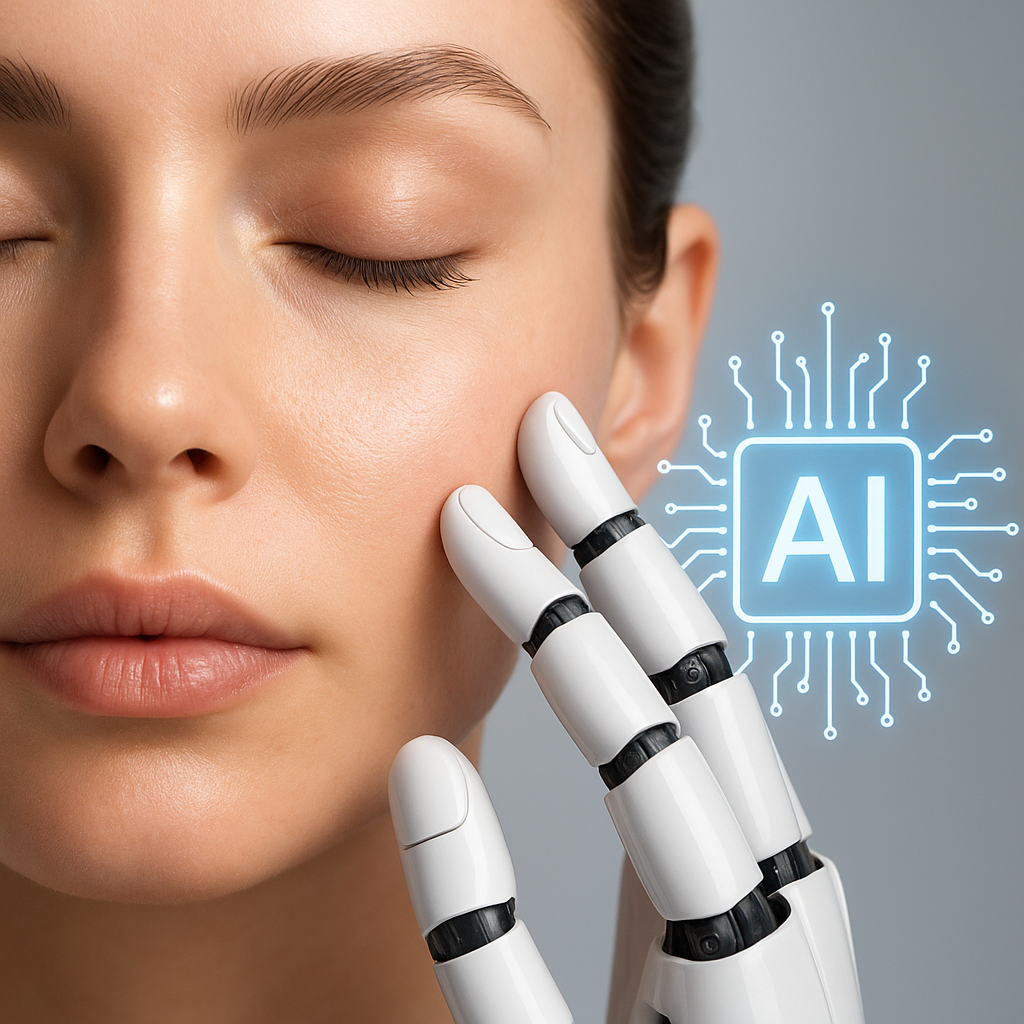
AI on Living Skin: Revolutionizing Skincare Development
AI models that leverage biological tissues represent a groundbreaking intersection of technology and biotechnology. Recently, Michael Polansky has unveiled a project that harnesses AI to train models on living human skin tissues kept alive outside the body for weeks. This innovative approach aims to discover new skincare compounds and has significant implications for developers interested in AI applications in the biomedical field. In this article, we will explore what this technology entails, its relevance today, and how developers can engage with it.
What Is AI on Living Skin?
AI on living skin refers to the use of artificial intelligence models trained on human skin tissues that are kept viable outside the body. This technology allows researchers to simulate biological responses and develop new skincare compounds with unprecedented accuracy. Michael Polansky’s startup, Outer Biosciences, has pioneered this method, enabling living skin tissues to survive for extended periods, a feat that could revolutionize the skincare industry.
Why This Matters Now
The integration of AI in biotechnology is rapidly transforming how we approach healthcare and cosmetics. As consumers demand more effective and personalized skincare solutions, companies are under pressure to innovate. The recent unveiling of Polansky’s project highlights this urgency. By using living tissues, developers can create products that better reflect human biology, leading to more effective skincare solutions. Additionally, this technology is crucial for reducing animal testing in product development, aligning with ethical standards and consumer expectations.
Technical Deep Dive
Understanding how AI interacts with living skin tissues involves several technical layers, including tissue preservation, AI model training, and data analysis. Here’s a breakdown of the process:
- Tissue Preservation: The primary challenge is keeping skin tissues alive outside the body. Polansky’s team has developed a system that maintains nutrient flow and cellular viability, enabling tissues to survive for weeks.
- Data Collection: Sensors and imaging technologies continuously monitor the tissues, collecting data on cellular responses to various compounds.
- AI Model Training: The gathered data is then used to train AI models, which can simulate how skin would react to different skincare ingredients. For example, using Python and libraries like TensorFlow or PyTorch, researchers can implement models as follows:
import tensorflow as tf
from tensorflow import keras

# Sample data representing the response of skin tissue to different compounds
data = [...]  # Replace with actual data
labels = [...]  # Replace with actual labels

# Define a simple neural network model
model = keras.Sequential([
    keras.layers.Dense(64, activation='relu', input_shape=(data.shape[1],)),
    keras.layers.Dense(32, activation='relu'),
    keras.layers.Dense(1, activation='sigmoid')
])

model.compile(optimizer='adam', loss='binary_crossentropy', metrics=['accuracy'])
model.fit(data, labels, epochs=10)
This model can be fine-tuned to predict the efficacy of new compounds on living skin tissues.
Real-World Applications
1. Skincare Development
Companies can leverage this technology to create more effective skincare products tailored to individual skin types, improving customer satisfaction and outcomes.
2. Drug Testing
The pharmaceutical industry can utilize living tissues to test drug efficacy and safety, reducing reliance on animal models and expediting the development process.
3. Personalized Medicine
AI models trained on specific patient-derived tissues could lead to breakthrough treatments customized to individual biological responses, enhancing therapeutic effectiveness.
4. Educational Tools
Developers can build simulations or educational platforms that help students and professionals understand skin biology and the effects of various compounds.
What This Means for Developers
For developers, engaging with AI technologies in biotechnology opens up new avenues for innovation. Skills in machine learning, data science, and bioinformatics will be increasingly valuable. Developers should consider:
- Learning how to work with biological data, including understanding its unique characteristics and requirements.
- Gaining expertise in frameworks like TensorFlow or PyTorch to build and train predictive models.
- Exploring partnerships with biotech organizations to apply AI solutions in real-world scenarios.
💡 Pro Insight: The future of skincare and drug development will increasingly rely on the collaboration between AI and biological sciences. As technologies like Polansky’s gain traction, developers who specialize in this intersection will shape the next frontier of personalized medicine and consumer products.
Future of AI on Living Skin (2025–2030)
In the next 3–5 years, we can expect significant advancements in the use of living tissues for AI model training. This technology will likely lead to more sophisticated predictive models, capable of simulating a wider range of biological responses. Furthermore, as regulatory frameworks evolve to accommodate these innovations, we may see broader adoption across various sectors, including cosmetics, pharmaceuticals, and personalized medicine. The integration of AI with biotechnology will not only enhance product development but also lead to breakthroughs in understanding skin health and disease prevention.
Challenges & Limitations
1. Ethical Considerations
The use of living tissues raises ethical questions regarding sourcing and consent. Developers must navigate these issues carefully to ensure compliance with moral standards.
2. Technical Challenges
Maintaining the viability of living tissues over extended periods is complex and requires advanced technology, which may not be readily available to all developers.
3. Data Privacy
As with any AI application, data privacy concerns must be addressed, particularly when handling sensitive biological data.
4. Regulatory Hurdles
Developers must be aware of the regulatory landscape, which can vary significantly by region and may pose challenges to product development and commercialization.
Key Takeaways
- AI on living skin represents a revolutionary approach to skincare and drug development.
- Michael Polansky’s work is a significant step toward reducing animal testing in the cosmetics industry.
- Developers can leverage skills in machine learning to innovate in the biotechnology sector.
- Ethical considerations and regulatory compliance are paramount in this field.
- The future will likely see broader adoption of AI in personalized medicine and skincare solutions.
Frequently Asked Questions
What is AI on living skin?
AI on living skin refers to the application of artificial intelligence to train models using human skin tissues that are kept alive outside the body. This innovative approach helps in studying biological responses and developing new skincare products.
How does this technology impact skincare product development?
This technology allows for the development of more effective and personalized skincare products by simulating human biological responses, thereby improving customer outcomes and satisfaction.
What skills should developers focus on to engage with this technology?
Developers should focus on machine learning, data science, and bioinformatics, as well as familiarize themselves with frameworks like TensorFlow and PyTorch for building predictive models.
To stay updated on the latest in AI and technology, follow KnowLatest for more insights and developments.


