
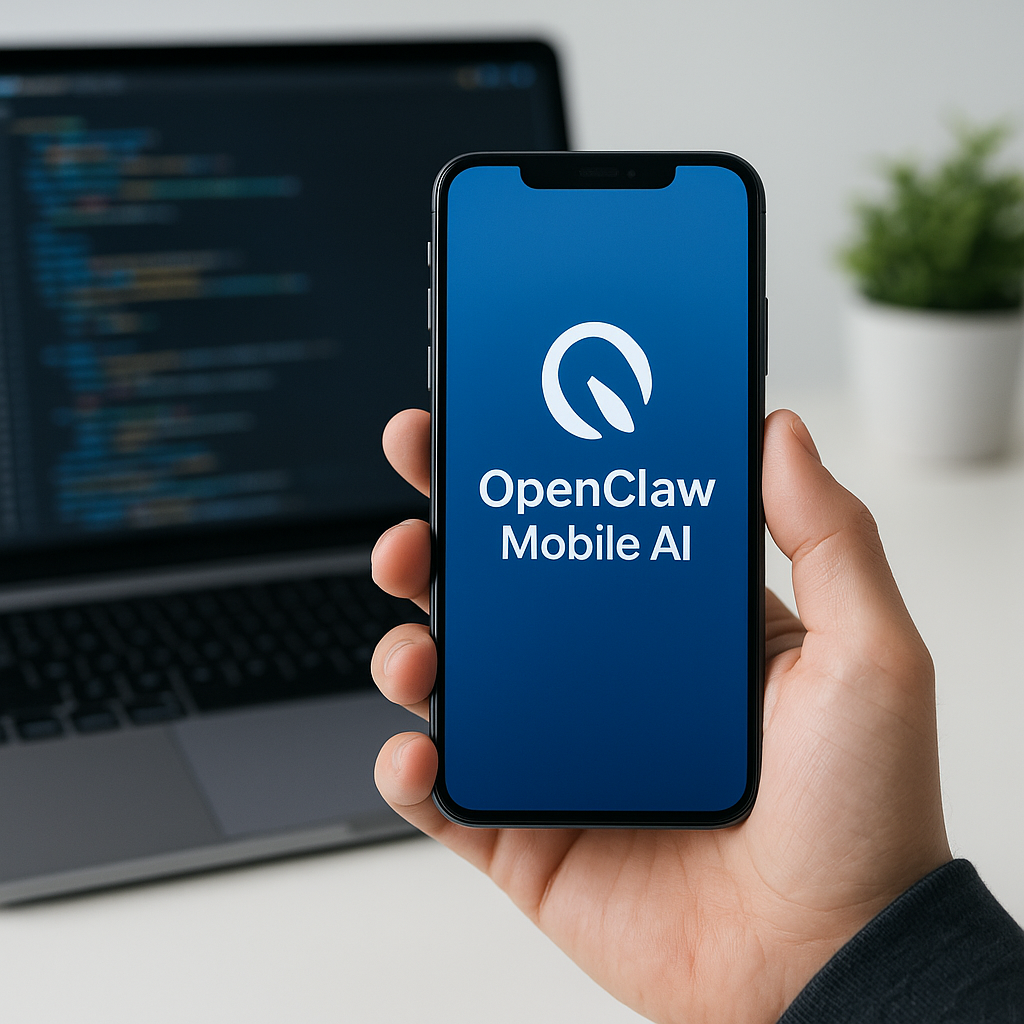
OpenClaw Mobile AI: Revolutionizing Automation on Android and iOS
OpenClaw refers to a free, open-source AI agent program designed for automation tasks. Recently, it has become available on both Android and iOS platforms, expanding its accessibility to mobile users. In this article, you will learn how OpenClaw operates, its technical architecture, and the implications for developers looking to leverage AI in mobile applications.
What Is OpenClaw?
OpenClaw is an open-source AI agent that automates various tasks, allowing users to run agents that can perform functions ranging from coding assistance to meal planning. With its recent mobile app release on Android and iOS, users can now manage these agents directly from their phones. This capability is essential for developers and tech enthusiasts who require on-the-go access to AI functionalities.
Why This Matters Now
The rise of mobile AI applications has created a significant shift in how developers and users interact with automation tools. OpenClaw’s expansion into mobile platforms is timely, given the increasing reliance on AI for personal and professional tasks. Recent developments in AI, such as the viral response to the MoltBook platform, emphasize the growing interest in agentic AI systems. Developers should care about this trend as it opens new opportunities for creating innovative applications that utilize mobile AI capabilities.
Technical Deep Dive
OpenClaw utilizes a client-server architecture where the mobile application (client) connects to an OpenClaw Gateway, which serves as a routing layer for requests to various AI agents. Here’s how you can set up OpenClaw on your mobile device:
- **Install OpenClaw**: Download the app from the Google Play Store or Apple App Store.
- **Set Up OpenClaw Gateway**:
docker run -d --name openclaw-gateway -p 8080:8080 openclaw/gatewayThis command starts the OpenClaw Gateway using Docker, exposing it on port 8080.
- **Configure Agents**: Customize the agents you want to deploy by editing their configurations in the OpenClaw Gateway settings.
- **Pair the App**: Use the mobile application to scan for the OpenClaw Gateway and establish a connection.
Developers can leverage OpenClaw’s API for integrating custom functionalities. The following is a simple Python example demonstrating how to interact with OpenClaw’s API:
import requests

def run_agent(agent_name, parameters):
    url = "http://localhost:8080/api/run"
    response = requests.post(url, json={"agent": agent_name, "params": parameters})
    return response.json()

result = run_agent("ExampleAgent", {"input": "Test"})
print(result)
This code snippet sends a request to run a specified agent with given parameters, showcasing how developers can automate tasks programmatically.
Real-World Applications
1. Task Automation in Development
Developers can use OpenClaw to automate repetitive coding tasks, such as generating boilerplate code or performing refactoring.
2. Personal Assistants
OpenClaw can act as a personal assistant on mobile devices, helping users manage schedules, send reminders, and perform quick searches.
3. Meal Planning
Users can utilize OpenClaw to create personalized meal plans based on dietary preferences and available ingredients.
4. Data Analysis
By integrating with data analytics tools, OpenClaw can assist in generating reports or visualizations based on real-time data inputs.
What This Means for Developers
For developers, the availability of OpenClaw on mobile platforms means new opportunities for creating AI-driven applications that empower users with automation capabilities. Familiarizing oneself with OpenClaw’s architecture and API will be essential for leveraging these features effectively. Developers should focus on:
- Understanding the OpenClaw API for seamless integration.
- Exploring use cases specific to their domains, such as finance or healthcare.
- Learning about mobile development best practices to create user-friendly AI applications.
💡 Pro Insight: The future of mobile AI applications like OpenClaw lies in their ability to seamlessly integrate into users’ daily routines. As these technologies evolve, developers must prioritize user experience and functionality to drive adoption.
Future of OpenClaw (2025–2030)
Looking ahead, OpenClaw is likely to expand its capabilities significantly by incorporating advanced machine learning algorithms that enhance agent performance. The adoption of federated learning could allow agents to improve their functionalities while maintaining user privacy. Additionally, as mobile devices become more powerful, the potential for real-time AI processing will increase.
By 2030, we may see OpenClaw integrated into various smart devices, enabling a truly interconnected ecosystem where users can control multiple devices through a single AI interface. This could revolutionize the way we interact with technology in our daily lives.
Challenges & Limitations
1. Security Concerns
With the integration of AI agents into mobile devices, security risks such as data breaches and unauthorized access become critical. Developers must implement robust security measures to protect user data.
2. Performance Overheads
Running complex AI models on mobile devices can lead to performance issues. Developers need to optimize their applications to ensure smooth user experiences.
3. User Trust
Users may be hesitant to rely on AI for critical tasks due to past experiences with malfunctioning AI systems. Building trust through transparency and reliability is essential.
4. Limited Capabilities
While OpenClaw offers powerful automation, its capabilities are still limited by the underlying AI models. Continuous improvement of these models is necessary for broader applications.
Key Takeaways
- OpenClaw is now available on Android and iOS, bringing AI automation to mobile users.
- The architecture relies on a client-server model, connecting mobile devices to AI agents via the OpenClaw Gateway.
- Real-world applications range from task automation to data analysis, enhancing user productivity.
- Developers must focus on security, performance, and user experience when integrating OpenClaw into applications.
- The future of OpenClaw includes advancements in machine learning and increased integration into smart devices.
Frequently Asked Questions
What can OpenClaw do? OpenClaw can automate various tasks such as coding assistance, meal planning, and personal scheduling.
How does OpenClaw work? OpenClaw connects mobile devices to an OpenClaw Gateway, which routes requests to AI agents capable of performing specified tasks.
Is OpenClaw secure? While OpenClaw offers automation capabilities, developers must implement robust security measures to safeguard user data.
Stay ahead in the world of AI and mobile development by following KnowLatest for the latest updates, insights, and tools.


