
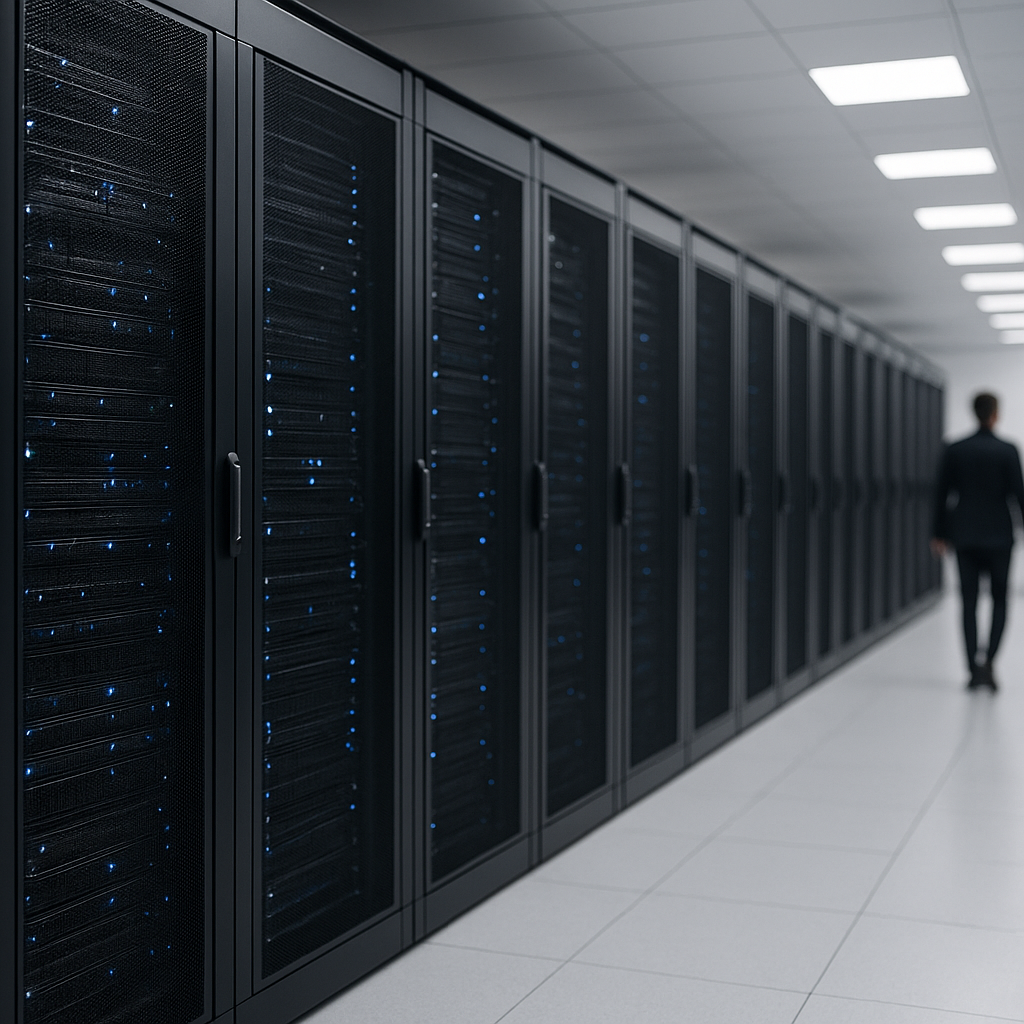
Data Center Investment Insights: SoftBank’s €75B Commitment
Data center investment is a critical component in expanding digital infrastructure. Recently, SoftBank announced a plan to invest up to €75 billion in building data centers in France, aiming to develop an additional 5 gigawatts of capacity. This investment not only highlights the growing demand for data processing but also underscores the importance of regional data infrastructure. In this article, readers will learn about the implications of this investment for developers and the future of cloud computing.
What Is Data Center Investment?
Data center investment refers to the financial commitment made to build, expand, or upgrade data center facilities that house servers and networking equipment. This investment is crucial for enhancing data processing capabilities and meeting increasing demand for digital services. SoftBank’s recent announcement about a €75 billion investment in French data centers, aimed at developing 5 gigawatts of additional capacity, illustrates the strategic importance of data centers in today’s cloud-centric economy.
Why This Matters Now
The current digital landscape necessitates substantial investments in data centers due to the exponential growth in data generation and consumption. With trends like remote work, IoT, and the proliferation of AI applications, the demand for robust data infrastructure has never been higher. SoftBank’s investment in France is particularly significant as it positions the country as a leading hub for AI and cloud computing, appealing to developers and enterprises alike. This aligns with global trends where data center development is increasingly influenced by sustainability concerns and regulatory frameworks.
Technical Deep Dive
Understanding the architecture and operations of data centers is essential for developers. The following sections will cover the key components involved in data center investments like those announced by SoftBank.
Key Components of Data Centers
- Power Supply: Data centers require a reliable power supply, often involving multiple power sources and backup systems.
- Cooling Systems: Effective cooling mechanisms are necessary to prevent overheating of servers, utilizing technologies like liquid cooling and air conditioning.
- Network Infrastructure: High-speed internet connectivity and robust networking equipment are critical for data transfer.
- Security Measures: Physical and cybersecurity protocols are essential to protect data integrity and availability.
Data Center Capacity Planning
Capacity planning involves estimating the future needs of the data center, including power, cooling, and space requirements. Developers should consider the following steps:
- Assess current usage and growth trends.
- Forecast future data needs based on business expansion.
- Plan for redundancy to ensure uptime.
- Evaluate energy efficiency to reduce operational costs.
Case Study: SoftBank’s French Data Centers
SoftBank plans to develop data centers in Dunkirk, Bosquel, and Bouchain, targeting 3.1 gigawatts of capacity by 2031. This phased approach allows for scalable growth and adaptation to emerging technologies.
Real-World Applications
1. Cloud Services
With the rise of cloud computing platforms like AWS, Azure, and Google Cloud, developers can leverage enhanced data center capabilities for scalable application deployment and management.
2. AI and Machine Learning
AI workloads require substantial computational power. Data centers like those planned by SoftBank will support machine learning model training and inference at scale.
3. IoT Solutions
As IoT devices proliferate, data centers facilitate the aggregation and processing of data from these devices, enabling real-time analytics and decision-making.
4. Disaster Recovery
Robust data centers provide backup and disaster recovery solutions, ensuring business continuity for enterprises across various sectors.
What This Means for Developers
Developers should take note of the evolving landscape of data center investments and their implications on application architecture. Skills in cloud computing, data management, and infrastructure automation are increasingly valuable. Tools such as Terraform for infrastructure as code (IaC) or Kubernetes for container orchestration will become essential as organizations leverage new data center capabilities.
💡 Pro Insight
💡 Pro Insight: The ongoing investment in data centers, particularly in Europe, is not just about capacity but also about creating sustainable and resilient infrastructure. As developers, understanding how to optimize applications for these new environments will be crucial for leveraging the full potential of emerging technologies.
Future of Data Centers (2025–2030)
The future of data centers will likely be shaped by advancements in energy efficiency and sustainability. By 2030, we can expect a significant shift towards renewable energy sources as companies strive to meet environmental standards. Furthermore, the integration of edge computing will allow data centers to process information closer to the source, reducing latency and improving service delivery. Ultimately, the landscape will evolve to support more sophisticated AI applications and complex data workloads.
Challenges & Limitations
Environmental Concerns
Data center construction often faces scrutiny due to energy consumption and carbon footprints. Developers must navigate regulations and public sentiment regarding sustainability.
Infrastructure Costs
The financial burden of building high-capacity data centers can be significant, requiring a careful balance between investment and anticipated returns.
Technological Obsolescence
Rapid advancements in technology can render existing infrastructure outdated. Continuous investment in upgrades is necessary to stay competitive.
Security Risks
With increasing cyber threats, the security of data centers remains a critical challenge, requiring robust security frameworks and protocols.
Key Takeaways
- SoftBank’s investment reflects the growing demand for data infrastructure in Europe.
- Data center capacity planning is essential for effective resource management.
- Developers must evolve their skills in cloud computing and data management.
- Sustainability will be a key focus for future data center projects.
- Understanding security measures is crucial for safeguarding data integrity.
Frequently Asked Questions
What is the significance of SoftBank’s investment in data centers?
SoftBank’s investment highlights the increasing demand for data processing capabilities in Europe, particularly for AI applications and cloud services.
How will data center advancements impact developers?
Developers will need to adapt their skills to leverage the capabilities of new data centers, focusing on cloud infrastructure and automation tools.
What challenges do data centers face today?
Data centers face challenges including environmental concerns, high infrastructure costs, and the need for robust security measures.
For more insights on AI and cloud computing, follow KnowLatest.


