
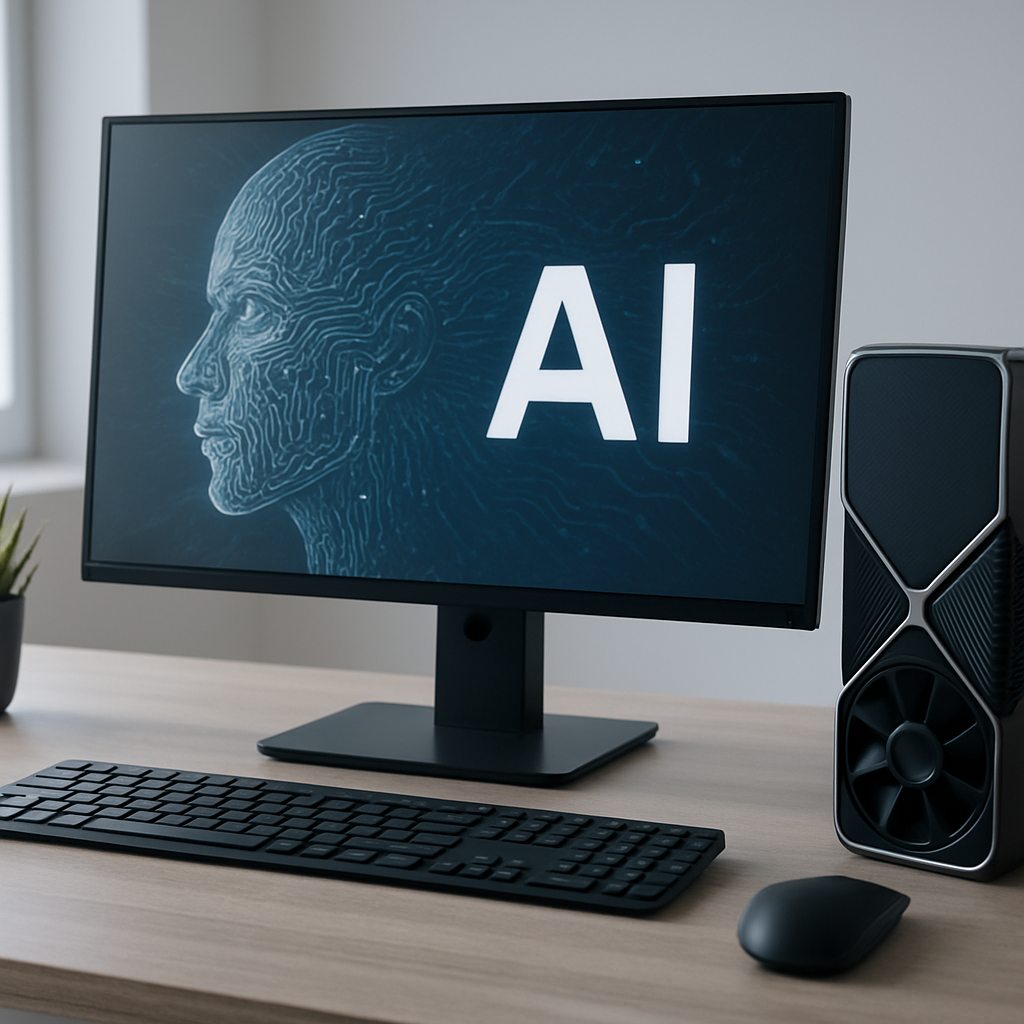
AI PCs: Transforming Computing with Nvidia’s RTX Spark
AI PCs are computing systems designed to run advanced AI applications and agents seamlessly. With Nvidia’s recent unveiling of its RTX Spark chip, the company aims to capture a significant share of the $200 billion CPU market. This post will explore the implications of AI PCs, their technical specifications, and what developers need to know about this emerging technology.
What Is AI PCs?
AI PCs refer to personal computer systems specifically designed to run artificial intelligence applications and agents efficiently. These systems leverage advanced processing power and architectures to deliver high performance for tasks like natural language processing, image recognition, and gaming. Nvidia’s recent announcement of the RTX Spark chip marks a pivotal moment in AI PC development, as it promises to enhance the capabilities of personal computing with integrated AI functionalities.
Why This Matters Now
The rise of AI agents and applications necessitates a new class of computing hardware tailored for performance and security. With Nvidia’s ambition to tap into the $200 billion CPU market, the timing aligns perfectly with increasing demand for AI-driven solutions. The RTX Spark chips, set to power systems from major manufacturers like Dell and HP, aim to facilitate secure environments for running AI agents such as OpenClaw and Hermes Agent. Developers should care about this evolution as it opens new avenues for creating applications that utilize AI capabilities effectively.
Technical Deep Dive
The architecture of AI PCs, particularly those powered by Nvidia’s RTX Spark, is designed to handle intensive AI workloads efficiently. Here are the key technical specifications and features:
- Processing Power: The RTX Spark delivers 1-petaflop performance, significantly enhancing computational capabilities for AI tasks.
- Secure Sandboxes: Jointly developed with Microsoft, these secure environments provide safe execution for AI agents.
- CUDA Software: Nvidia’s CUDA software suite enables optimized performance for deep learning and AI model deployment.
- Compatibility: The hardware is designed to support local versions of large language models, making it ideal for developers working on cutting-edge AI applications.
# Example: Running a simple AI model using TensorFlow on RTX Spark
import tensorflow as tf

# Load a simple dataset
mnist = tf.keras.datasets.mnist
(x_train, y_train), (x_test, y_test) = mnist.load_data()

# Preprocess the data
x_train, x_test = x_train / 255.0, x_test / 255.0

# Build a simple model
model = tf.keras.models.Sequential([
    tf.keras.layers.Flatten(input_shape=(28, 28)),
    tf.keras.layers.Dense(128, activation='relu'),
    tf.keras.layers.Dropout(0.2),
    tf.keras.layers.Dense(10, activation='softmax')
])

# Compile and train the model
model.compile(optimizer='adam',
              loss='sparse_categorical_crossentropy',
              metrics=['accuracy'])

model.fit(x_train, y_train, epochs=5)
Real-World Applications
Creative Workflows
AI PCs are set to revolutionize creative industries. With their enhanced processing capabilities, tools like Adobe Creative Cloud can leverage AI for tasks such as image enhancement and automated content creation.
Gaming Enhancements
For gamers, Nvidia’s RTX Spark PCs promise improved performance in over 1,000 games and applications. Enhanced graphics and AI-driven gameplay mechanics can lead to more immersive experiences.
Enterprise Solutions
In enterprise environments, AI PCs can streamline operations by running AI models locally, reducing latency and securing sensitive data. Industries such as healthcare and finance can benefit significantly from this capability.
Education and Research
Academic institutions can utilize AI PCs for research purposes, allowing students and researchers to experiment with large datasets and complex AI models without requiring extensive infrastructure.
What This Means for Developers
Developers should start honing their skills in AI and machine learning frameworks optimized for Nvidia’s hardware. Understanding how to utilize CUDA effectively and exploring AI libraries compatible with RTX Spark will be essential. Additionally, exploring secure coding practices for AI applications will be crucial as the landscape evolves.
💡 Pro Insight: The integration of AI capabilities directly into personal computing is transforming how developers approach software design. As Nvidia aims to deliver billions of AI agents, the skills to build and secure these systems will become invaluable in the coming years.
Future of AI PCs (2025–2030)
As we look towards the future, the demand for AI PCs is expected to skyrocket. By 2030, we can anticipate a more integrated approach to AI, where personal computing devices will not only perform traditional tasks but also operate autonomously through AI agents. This shift will necessitate further advancements in hardware capabilities, particularly in processing power and energy efficiency.
One specific prediction is the emergence of AI PCs that can adapt to user needs in real-time, creating personalized experiences. These systems will likely incorporate advanced machine learning algorithms to learn from user behavior, optimizing performance on-the-fly.
Challenges & Limitations
High Costs
AI PCs, particularly those featuring the latest Nvidia chips, may come with a premium price tag. This could limit accessibility for individual developers and small startups.
Technical Complexity
Developing for AI PCs will require developers to have a deep understanding of AI frameworks and hardware architecture, which can be a barrier to entry for some.
Security Risks
While secure sandboxes are a promising feature, the integration of AI agents introduces potential vulnerabilities. Developers must prioritize robust security measures to mitigate risks.
Compatibility Issues
As new hardware emerges, legacy software and applications may face compatibility challenges, necessitating updates and optimizations.
Key Takeaways
- AI PCs are designed to run AI applications efficiently, marked by Nvidia’s RTX Spark chip.
- They promise significant advancements in creative workflows, gaming, and enterprise solutions.
- Developers should focus on mastering AI frameworks and secure coding practices.
- Future AI PCs are expected to be adaptive, creating personalized computing experiences.
- Challenges include high costs, technical complexity, and security risks that need addressing.
Frequently Asked Questions
What are AI PCs?
AI PCs are personal computers specifically designed to efficiently run artificial intelligence applications and agents, featuring advanced processing power and security measures.
How does the RTX Spark chip enhance AI capabilities?
The RTX Spark chip delivers 1-petaflop performance, enabling high-speed processing for AI tasks and supporting secure environments for running AI agents.
What industries can benefit from AI PCs?
Industries such as gaming, creative services, education, and enterprise sectors can leverage AI PCs to enhance productivity and streamline operations.
To stay updated on the latest developments in AI and technology, follow KnowLatest for more insights.


