
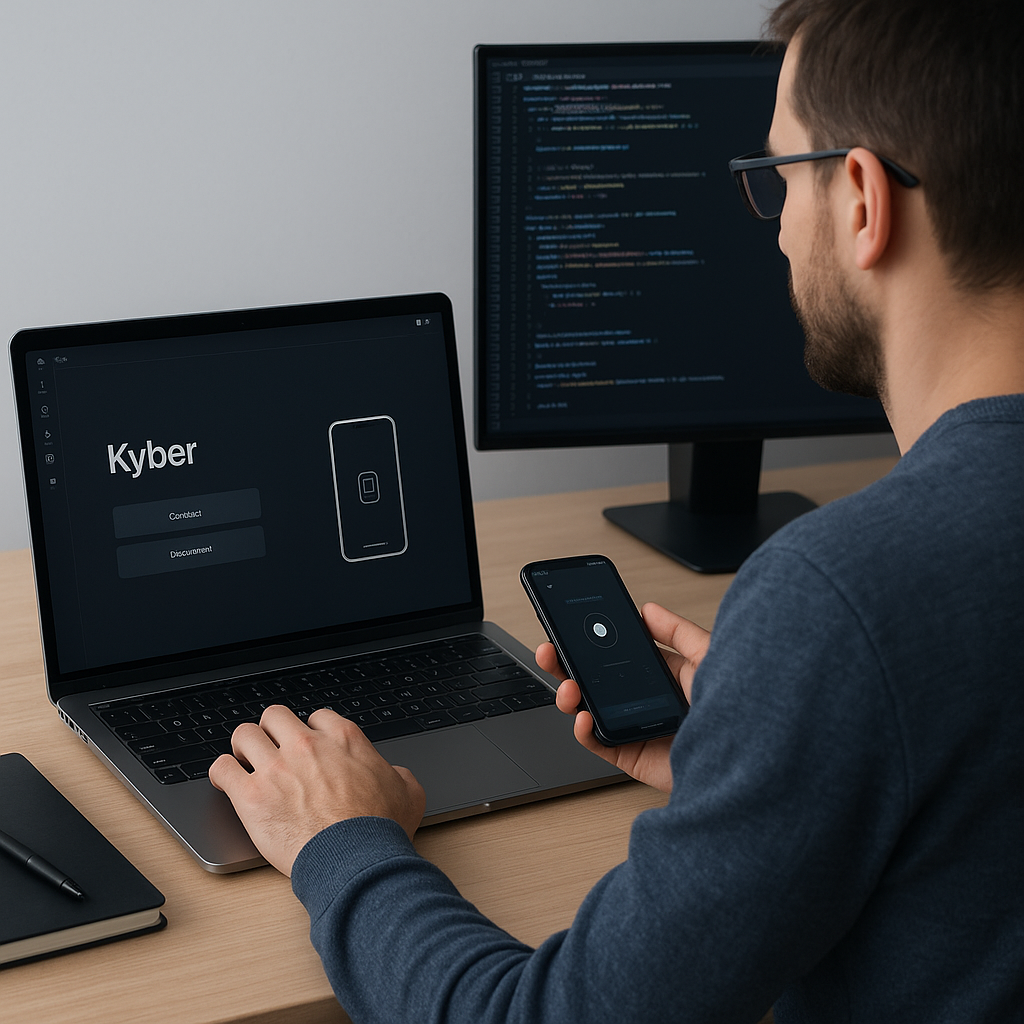
Kyber: Real-Time Remote Device Control for Developers
Real-time control of remote devices is becoming increasingly important as the use of robotics expands across various industries. Jean-Baptiste Kempf, known for his work on VLC Media Player, has now ventured into this realm with Kyber, an infrastructure layer designed to facilitate the remote control of devices with minimal latency. This post will explore what Kyber is, its implications for developers, and how it addresses the challenges of real-time device management.
What Is Kyber?
Kyber refers to an infrastructure layer designed for the real-time control of remote devices, focusing on minimizing latency. Developed by Jean-Baptiste Kempf, it synchronizes video, audio, sensor data, and control inputs, making it suited for various applications from robotics to remote IT access.
Why This Matters Now
The rise of physical AI is creating a pressing need for effective remote device management systems. As Kempf noted, “hundreds of millions of robots and drones” may soon operate in urban environments. This rapid expansion underscores the necessity for robust infrastructure, particularly in industries like defense, telecommunications, and robotics, where efficiency and reliability are paramount. The recent funding of $5 million for Kyber reflects growing investor confidence in this technology’s potential.
Technical Deep Dive
Kyber’s architecture is built upon principles derived from streaming technology, which is essential for ensuring low-latency communication. The main components of Kyber can be summarized as follows:
- SDK for Synchronization: The core software allows real-time synchronization of multimedia streams and sensor data.
- Optimized Performance: It adapts to the available compute resources of each device, ensuring that performance is tuned appropriately.
- Scalability: Kyber is designed to manage everything from small fleets to potentially millions of devices, addressing a critical gap in the market.
Here’s a simplified Python example demonstrating how to set up a basic connection to a remote device using Kyber’s SDK:
import kyber

# Initialize the Kyber SDK
kyber_client = kyber.Client()

# Connect to the remote device
device_id = "device_123"
kyber_client.connect(device_id)

# Send a command to the device
response = kyber_client.send_command(device_id, "start")
print("Response from device:", response)
This simple code snippet illustrates how developers can leverage Kyber to interact with remote devices easily. The SDK abstracts many complexities, allowing developers to focus on application logic rather than low-level communication details.
Real-World Applications
Robotics
In robotics, Kyber can facilitate remote control of robotic arms in manufacturing, which is particularly beneficial for tasks requiring precision and efficiency. This technology allows operators to manage multiple robots from a centralized location.
Drones
For drone operations, Kyber offers real-time control and monitoring, essential for applications such as aerial surveying and agriculture. The low-latency communication helps ensure that drones can respond effectively to dynamic environments.
Remote IT Access
In IT, Kyber enables remote troubleshooting and software updates without the need for physical access to devices, enhancing operational efficiency in enterprise environments.
What This Means for Developers
As Kyber gains traction, developers should focus on building skills around real-time data synchronization and remote device management. Understanding the underlying technology will be crucial for creating applications that can leverage Kyber’s capabilities effectively. Developers may also need to familiarize themselves with the SDK and its best practices for optimizing performance.
💡 Pro Insight: As industries increasingly adopt physical AI, the demand for robust infrastructure like Kyber will only grow. Developers who embrace this shift and equip themselves with the necessary skills will be at the forefront of a technological revolution.
Future of Kyber (2025–2030)
Looking ahead, Kyber is poised to evolve significantly. By 2030, we can expect enhanced features that integrate AI-driven decision-making into remote device control systems. These advancements will likely focus on improving observability and management capabilities, enabling organizations to effectively oversee large fleets of devices.
The scalability of Kyber suggests that it will play a pivotal role in various sectors, from logistics to healthcare, where the need for real-time data processing will be critical. Partnerships with leading AI firms could further enhance its offerings, making it an indispensable tool for developers.
Challenges & Limitations
Latency Concerns
Despite its goal of minimizing latency, achieving real-time communication across vast networks remains a challenge. Any delay can adversely affect the performance of time-sensitive applications, especially in robotics and drones.
Security Risks
The remote management of devices introduces potential security vulnerabilities. Ensuring robust security protocols and data encryption is essential to protect against unauthorized access.
Scalability Issues
While Kyber is designed to scale, managing millions of devices presents logistical challenges, including consistent performance monitoring and troubleshooting across diverse environments.
Integration Complexity
Integrating Kyber with existing systems can be complex, requiring developers to possess a solid understanding of the infrastructure to ensure seamless operation.
Key Takeaways
- Kyber provides real-time control for remote devices with minimal latency.
- The SDK facilitates synchronization of multimedia streams and sensor data.
- Applications span robotics, drones, and remote IT access.
- Developers should focus on mastering real-time data synchronization.
- Future advancements may include AI-driven decision-making features.
Frequently Asked Questions
What is Kyber used for?
Kyber is primarily used for the real-time control of remote devices, enabling applications in robotics, drones, and IT management.
How does Kyber minimize latency?
Kyber minimizes latency by synchronizing video, audio, and sensor data, utilizing technology derived from video streaming protocols.
Is Kyber open source?
Yes, the core project of Kyber is open source, allowing developers to contribute and customize the software for their specific needs.
For more insights on AI tools and developer news, follow KnowLatest.


